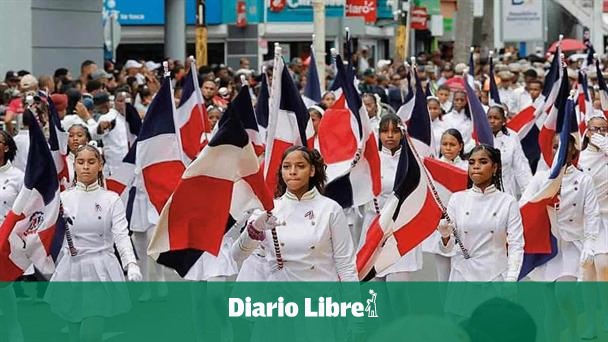
Full of enthusiasm, energy and at the top of their lungs, the citizens of Saint Christopher they celebrated the traditional civil-military parade on the occasion of the 181st anniversary of the Constitution Dominican.
For approximately an hour and a halfthe sancristobalenses witnessed the brio of the military forcespolice and representatives of civil society.
In this celebration that exalts national sovereignty, the special agencies of the military corps and law enforcement entities marched in millimetrically coordinated formations, dressed in their representative uniforms and distinctive emblems.
The parade also included the passage of special vehiclesas buggies and motorcycles. Meanwhile, Air Force helicopters took to the skies carrying the national flag.
Cultural representations
The civil party was led by students from different educational centers in the province, who praised culture through marches, historical representations and dances, such as the virtuoso presentation of the Dominican Ballet Baton. As is customary, the activity was headed by the President of the Republic, Luis Abinader, along with the main officials of the Executive Branch.
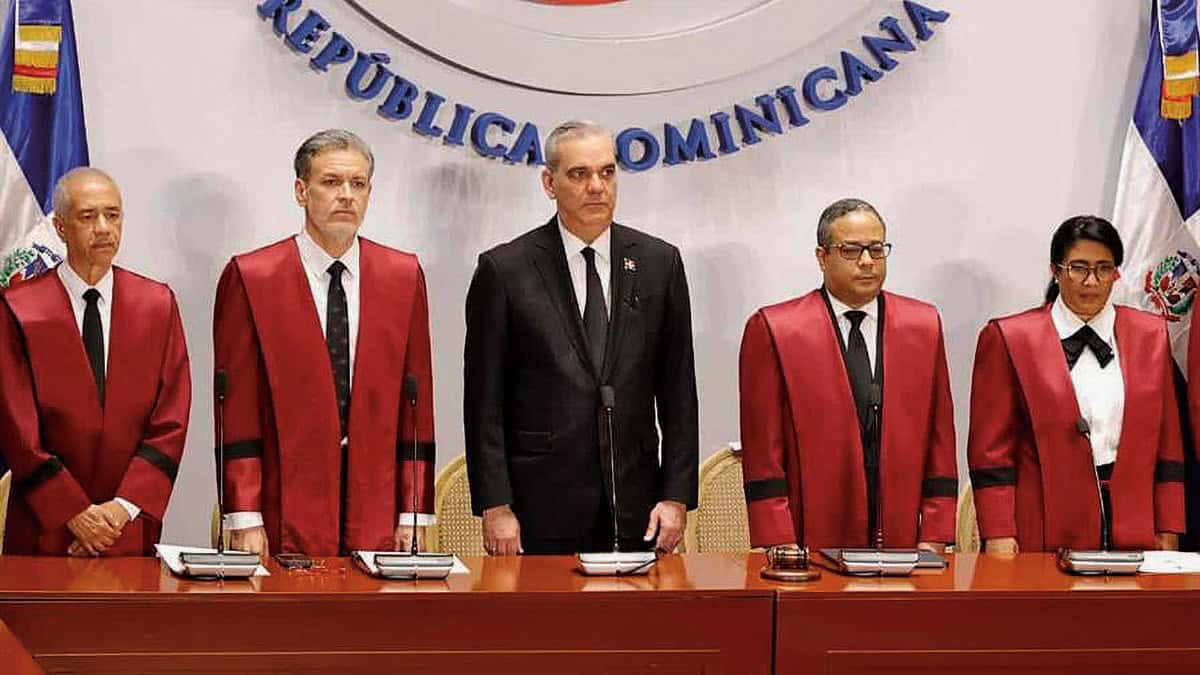
Earlier, the president participated in a solemn audience of the Constitutional Court in the smaller auditorium of the Loyola Polytechnic Institutewhere the full of the high court expressed the importance of civil duties for strengthening democracy.
Freedom and sovereignty
During the celebration of the Day of the Constitutionthe judges of the Plenary of the Constitutional Court (TC) defended the importance of citizen duties for the strengthening of democracy.
The interventions of the 13 judges of the Constitutional Courtin the solemn audience this Thursday, were based on civil responsibilities, contemplated in article 75 of the Constitution.
The intention of this celebration is to strengthen the ties of the constitutional body to deepen its relations with citizens and guarantee the supreme exercise of the Magna Carta.
For the occasion, the stand was headed by President Luis Abinader and, in addition to fullthe Attorney General of the Republic, Yeni Berenice Reynoso.
The president of the TC, Napoleon Estevezhighlighted the validity of the historical legacy of the Magna Carta of 1844, stating that that first text was the starting point of a political community founded on freedom, equality and sovereignty.
The magistrate stressed that the Constitution It is much more than a set of supreme rulessince it represents the public soul of the nation.
Message to citizens
The first substitute for the president of the TC, Miguel Aníbal Valera Monterohighlighted that citizenship is built not only through the demand for rights, but mainly through the fulfillment of duties.
The robe addressed the fundamental duty of ensuring the strengthening of democracy, respect for public assets and the transparent exercise of public function.
Valera Montero stressed that maintaining a solid democracy is a constant work that transcends generations.
The second substitute for the president of the TC, Eunisis Vasquezreflected on the value of service as an essential principle of democracy and citizen life. He highlighted that serve It should not be seen as an obligation, but as an act of loveempathy and commitment with the neighbor.
The judge Sunday Gil highlighted the importance of solidarity as one of the institutional values fundamentals established in the Magna Carta.
Gil explained that this provision not only represents a legal mandatebut also a called moral to action and empathy, which requires men and women to actively commit to the collective well-being.
The magistrate Fidias Aristy Payano he elaborated on the citizen duty to contribute to the financing of public expenses and investments of the State and pointed out that this provision, although sometimes not well received by some sectors, has a profound social sensesince it seeks to guarantee that the resources raised reach the most vulnerable sectors of the country.
On the other hand, the robe Jose Alejandro Vargas explained the duty to defend the homeland, by refraining from carrying out any act harmful to stability, independence or national sovereignty.
He pointed out that this commitment It should not be understood only as a legal obligation, but as an expression of civic awarenessmoral responsibility and love for the Dominican Republic.
The judge Sonia Diaz addressed the citizen duty of voting as an essential expression of democracy and civic participation. He remembered that the suffrage constitutes both a democratic privilege like a social responsibilityessential to guarantee the transparency, equity and objectivity of the electoral processes.