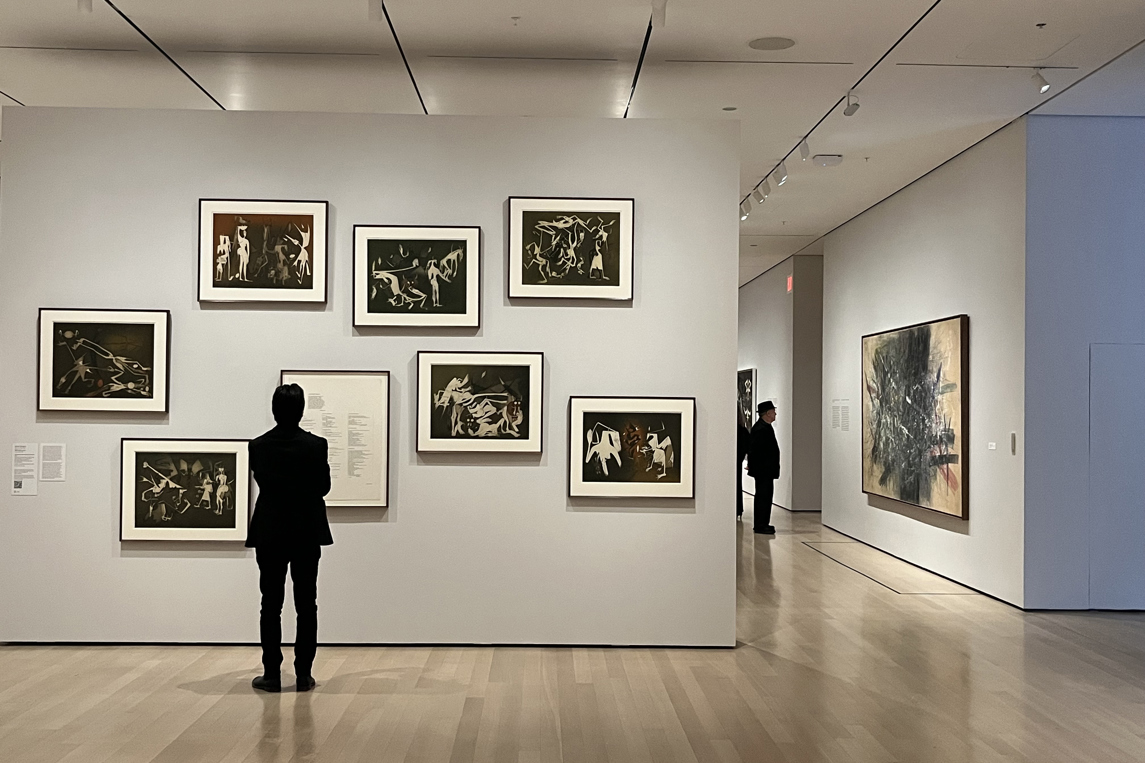
The Museum of Modern Art in New York (MoMA) dedicates the Cuban painter, poet and sculptor Wifredo Lam his largest retrospective in the United States, with more than a hundred works that follow his life journey and value him as an example of the “transnational artist” of the 20th century.
“Wilfredo Lam: When I don’t sleep, I dream”, which will open on November 10, includes 130 works from different disciplines by the artist, of African and Chinese descent, spanning from 1920 to 1970 and drawing on his experience spent in several countries as an exile in the interwar period.
It is the strong bet of the museum for this season and, specifically, of its new director, Christophe Cherix, who was in charge of organizing the exhibition and today highlighted in a press screening how Lam had a difficult life but “took the problems and turned them around”, turning to art despite the lack of means.
One of the examples is his emblematic work the jungle (1942-43), a mural in oil and charcoal on paper that captures an exuberant chaos of human bodies, plants and animals, and in which, upon his return to Cuba after 18 years, he incorporated elements of Santeria, Cuban culture and the Caribbean landscape.
Another large piece is also on display for the first time in the US, The civil warin which he portrays the confrontation of the conflict in Spain, where he settled in 1923 to study and stayed for 15 years, until he had to exile to Paris and there he met other contemporary avant-garde figures.
From that hard time he also left Pain of Spainwhich describes the Republican defeat, and mother and childin which he recreates the image of his first wife cradling their baby after both of their deaths from tuberculosis, which was purchased by MoMA’s founding director, Alfred H. Barr Jr, in what was his first sale to a museum.
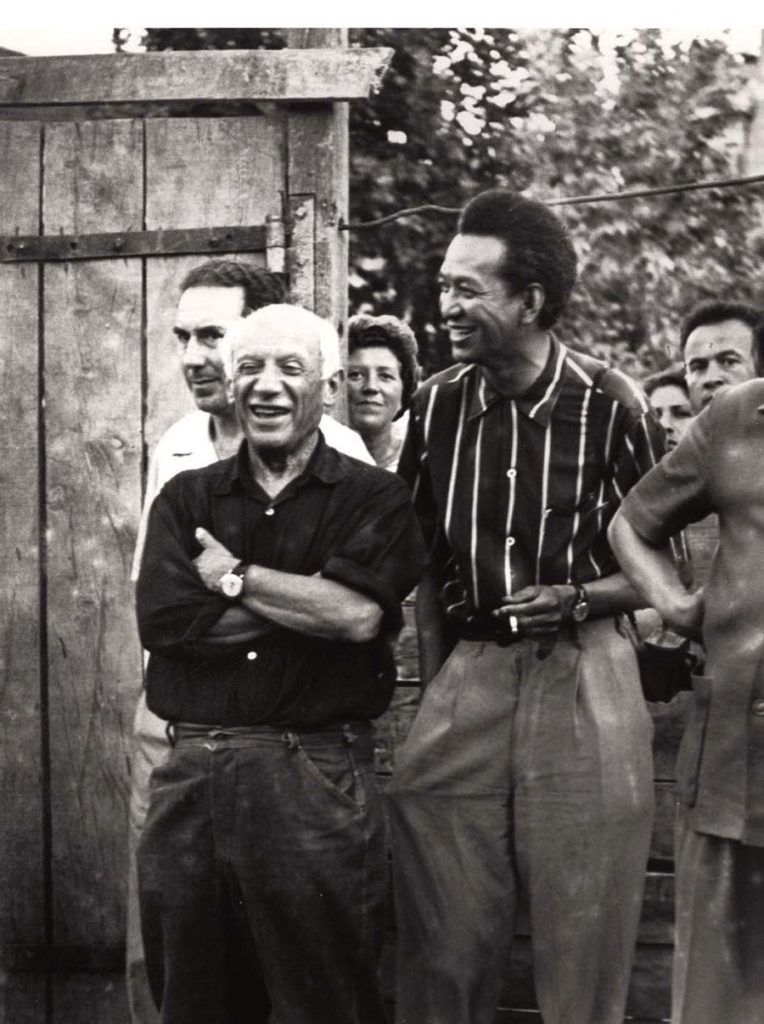
Precisely, a descendant of the artist and manager of his estate, his son Eskil Lam, said there on behalf of his family that he was happy because “the time has come” for the modernist to be recognized at MoMA, and expressed his desire for “the way in which he is perceived to expand.”
Another of the stars of the exhibition is a mural that the museum has just acquired from a private collector in Paris who had it in his home and that has not been seen in more than 60 years, the largest of his career and, as experts highlighted today, perhaps the most significant. Large Compositionfrom 1949.
In that mural, Lam, who saw painting as an “act of decolonization,” brings together figures with faces that refer to African, Native American and Oceanic art, as well as birds, with which he said he identified and which are repeated in his work, united by diagonal lines and arrows.
The curator of the exhibition, Beverly Adams, also addressed today that Lam’s “legacy” was also his impact on the artists of his generation, from Pablo Picasso to André Breton, with whom he collaborated, something that can also be seen in his magazines and collections of poems with Éduard Glissant and René Char.
The retrospective does not include works from the Museum of Fine Arts in Havana due to the entity’s fears that they could be seized in the United States following demands from Cuban exiles seeking compensation for properties confiscated during the Revolution, according to publication The New York Times.