Havana/The sudden fall of the dollar in the Cuban informal market has put several private businesses and resellers in trouble, forcing them to readjust prices and purchasing strategies. Until a few days ago, the US currency was close to 500 pesos, but this November 6 it dawned at 410, a collapse that few expected.
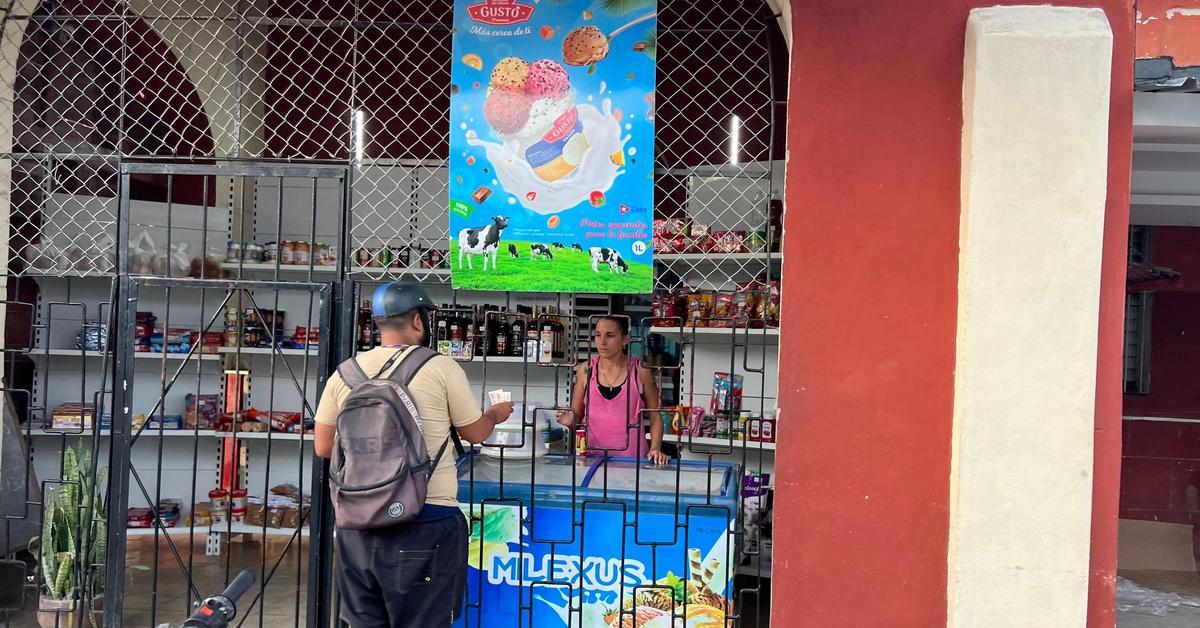
Alain, 37, owner of a small market in the Havana municipality of Guanabacoa, says that in recent days “people have not stopped coming to sell dollars.” “I do sell in that currency, because with that I pay wholesalers who only accept foreign currency. This week I bought a bag of powdered milk and several bales of rice like that, without a problem. They sell and buy in dollars, they don’t care,” he explains.
Everyone knows that it is illegal to sell in dollars and the products are not priced in that currency, but in pesos. In small businesses in Guanabacoa, most transactions are made in CUP, but many customers also use them as a Cadeca (exchange house) for small sums, generally $10 bills.
The rapid depreciation of the currency has left small businesses in a very precarious position: “The speed with which it is falling is alarming and strange. It is not doing business right now,” explains Alain.
/ 14ymedio
Yudith, an employee of a foreign company, usually uses part of her salary in dollars to stock up on food in her neighborhood. But this week – he says – it has been almost impossible for him to place those bills. “When the dollar goes down a little, those who buy them stop for a few days, waiting for it to stabilize. But it has been falling for a week and no one wants to buy them. If they accept them, it is 15 or 20 pesos below what they publish The Touch”he complains.
Alain says that, in the WhatsApp groups where suppliers and merchants gather, messages proliferate against the independent media that publishes the value of currencies daily. “An image appeared with red letters that said ‘No to Toque’, accompanied by the message: ‘share, otherwise we will all go bankrupt’. That was shared every day while the dollar rose until it reached 490 pesos,” he says.
The merchant remembers the anguish of those days: “I couldn’t buy oil, hot dogs, pasta, or detergent, because the wholesalers were selling me above the ceiling price. How was I going to resell that?”

/ 14ymedio
In a country where education has for more than six decades demonized the dynamics of the market and the law of supply and demand, many buy the propaganda of the regime that accuses The Touch of manipulating the exchange rate with their daily publications on the informal currency market. Several of those interviewed ask that this type of information stop being published, so that “the market regulates itself and that people buy and sell without a reference, so perhaps the dollar would not rise so much.”
Pedro, a self-employed worker with a point of sale near the Guanabacoa traffic light, fears losing thousands of pesos this week. “I buy on Mondays, just once. I bought everything I have when the dollar was 450. I bought cases of beer for 200 pesos, and today the same suppliers have it for 180. Until I pay off what I have, I can’t lower the prices. But the customers don’t understand. It’s very difficult to start a business here. Every day something new happens and you have to run,” he laments.
To mitigate losses, Pedro decided to stop accepting payments in dollars, at least for now. “I don’t even want to see them this week,” he says with resignation.
Meanwhile, MSMEs that operate as wholesalers continue to cling to the dollar. “Those who sell you boxes and containers of products only work with foreign currency,” says Alain. “Those who are stopping accepting dollars are self-employed workers and retail stores, because they no longer have the business of paying in dollars for things that wholesalers sell in national currency. The same thing or worse happens with transfers: many suppliers simply do not accept them, and you are left with the money trapped, not knowing what to do.”