The IV CELAC-EU Summit will be held in this capital, in which Colombia, at the head of CELAC, seeks a more unified voice vis-à-vis Europe.
Courtesy of the Foreign Ministry of Colombia.
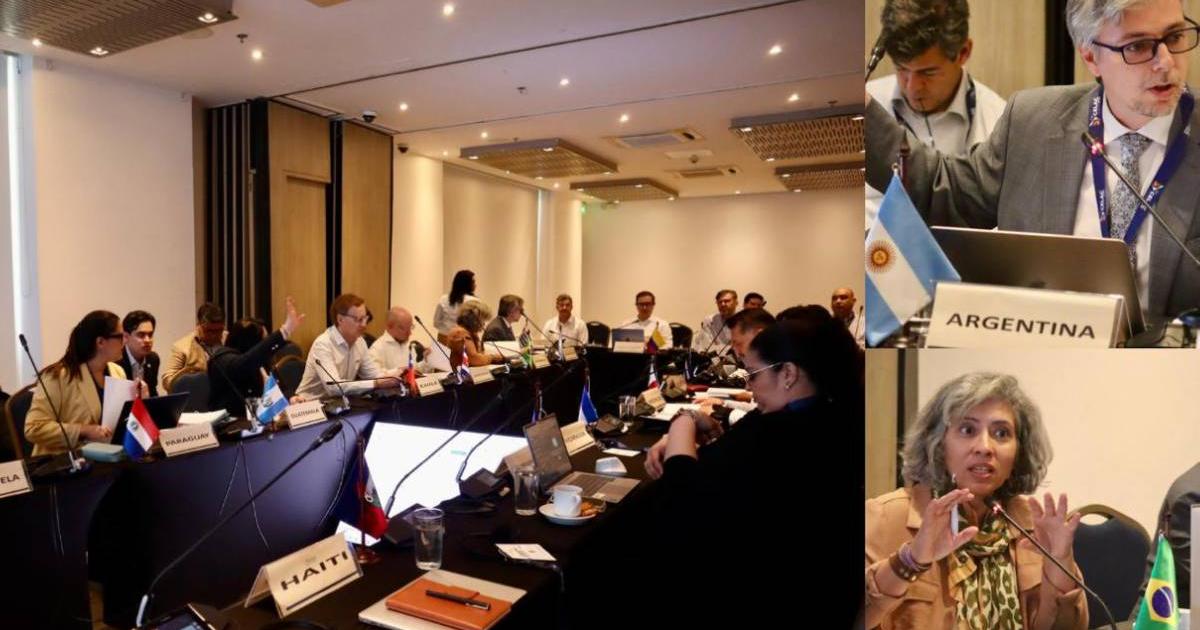
As a preamble to the IV CELAC–EU Summit, scheduled for November 9 and 10, Negotiations of the declaration that will emerge from this meeting are advancing in Santa Marta, a document that will define the political position and bi-regional cooperation within the framework of the most important diplomatic event ever held in this historic city.
The preparatory meetings are headed by the vice minister of Multilateral Affairs, Mauricio Jaramillo Jassir, who together with the national coordinators of the 33 countries that make up CELAC, have the mission of building a common text in an environment where Latin America seeks to reaffirm its political autonomy without breaking its ties with Europe.
Read also: Cartagena tightens immigration filters: 230 people could not enter in 2025
“I invite you to find a balance between national positions and consensus that reflects the unity that has characterized us and that allows us to negotiate today the Declaration of Santa Marta”, said Vice Minister Jaramillo Jassir during his speech.
The so-called “Declaration of Santa Marta” will be more than a diplomatic pronouncement; will mark the direction of the agreements on energy transition, digital transformation and environmental commitments, the three axes that Colombia has promoted since taking office. Pro Tempore Presidency of CELAC in April.
However, behind the work tables tensions typical of a region that oscillates between divergent development models and that faces the challenge of speaking with a single voice before Brussels.
It may help you: Comptroller’s Office reiterates risk of energy and gas rationing in Colombia
While Europe tries to reinforce its presence in a continent historically relegated by its foreign policy, Latin America seeks to reposition itself as a bloc with identity own against powers such as China and the United States.
On this board, Colombia’s role is strategic: Its leadership aims to project a more cohesive CELAC, capable of translating its demands into concrete agreements.
With this negotiation underway, Santa Marta becomes a turning point for a relationship bi-regional that tries to renew itself on the basis of equality and effective cooperation.
What is signed here could define the tone of the political and economic alliances of the coming years between both continents.
Source: Integrated Information System