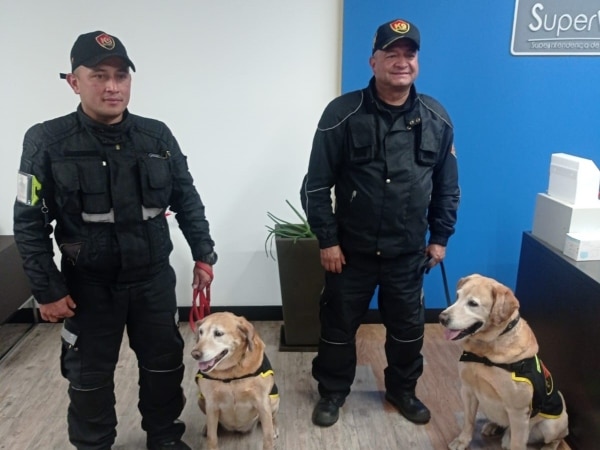
The Limonar case and the so-called Lorenzo Law give rise to a profound change in the rules of animal surveillance.
News Colombia.
For years, the dogs that guarded warehouses, airports and residential complexes in Colombia worked days as long as those of any human guard, but without the protection or rest that sentient beings deserve.
That reality begins to change with the new resolution of the Superintendency of Surveillance and Private Securitywhich imposes hour limits, veterinary checks and wellness protocols for all canines used in private security.
The measure develops what is established in the Law 2454 of 2025known as the Lorenzo Lawa rule born after several cases of abuse and neglect of dogs that provided guard service.
With this regulation, Colombia becomes one of the few countries on the continent that explicitly regulates the working conditions of animals working in the security sector.
From “vigilantes” to workers with rights
According to the resolution, the dogs that detect narcotics or explosives they will only be able to comply shifts of up to six hours a daywhile those dedicated to controlled accompaniment or defense will have a maximum of eight hours. Companies must record these days in a log, guarantee rest spaces and have veterinary care available 24 hours a day.
The superintendent Larry Alvarez He explained that the objective is to stop the indiscriminate use of animals as simple operational resources:
“It is not about eliminating canine work, but about recognizing that these animals feel and need decent conditions. There are cases in which they worked day and night shifts without health control or adequate rest,” said the official.
Companies must also annually present health certifications, civil liability policies and proof of training for each dog.
No dog may operate without being registered in the National Private Security Dog Systemwhich the Superintendency will enable for individual monitoring.
A resolution with history: the case of “Limonar”
The decision did not come out of nowhere. In November 2023, during an inspection in an industrial area of Bogotá, authorities found dead lemon grovea dog that provided service for a private company. Initially there was talk of an accidental hanging, but the necropsy revealed that the animal died of asphyxiation, after remaining hours without supervision or ventilation.
The case caused public outrage and opened a debate about the use of dogs in surveillance settings. “Limonar showed that the country needed to move from discourse to regulation. Good intentions were not enough,” Álvarez acknowledged.
That event reactivated the discussion about another emblematic story: that of Lorenzoa dog victim of abuse in 2022 whose name was adopted by Congress to name the law that now supports this new policy.
What the Lorenzo Law requires
Law 2454 established parameters that until recently were non-existent in Colombia:
- Defines a minimum and maximum age of service (from 1 to 6 years).
- Prohibits the breeding and reproduction for commercial purposes by companies.
- demands sterilization, periodic medical check-ups and adequate nutrition.
- Requires that animals removed from service be relocated or given up for adoption under institutional supervision.
The new Supervigilance resolution converts these principles into practical and auditable obligations, with the possibility of sanctioning companies that fail to comply.
Technology instead of collars
Although the standard focuses on animal welfare, the underlying commitment is much more ambitious: progressively reduce the use of dogs in private security and replace them with detection and patrol technologies. Smart cameras, thermal sensors and surveillance drones are part of the roadmap that the Government seeks to promote in the medium term.
“We want to move towards more modern security, where technology assumes the role that animals play today. Meanwhile, we must guarantee that the dogs that remain active do so in decent conditions,” Álvarez pointed out.
What happens to the state dogs?
The resolution It does not affect the canines of the National Police or the Armywhich have their own wellness and training programs. However, the Lorenzo Law also obliges public entities to observe the principles of protection and dignified treatment, which implies that official bodies must review their protocols for resting, transporting and removing animals in service.