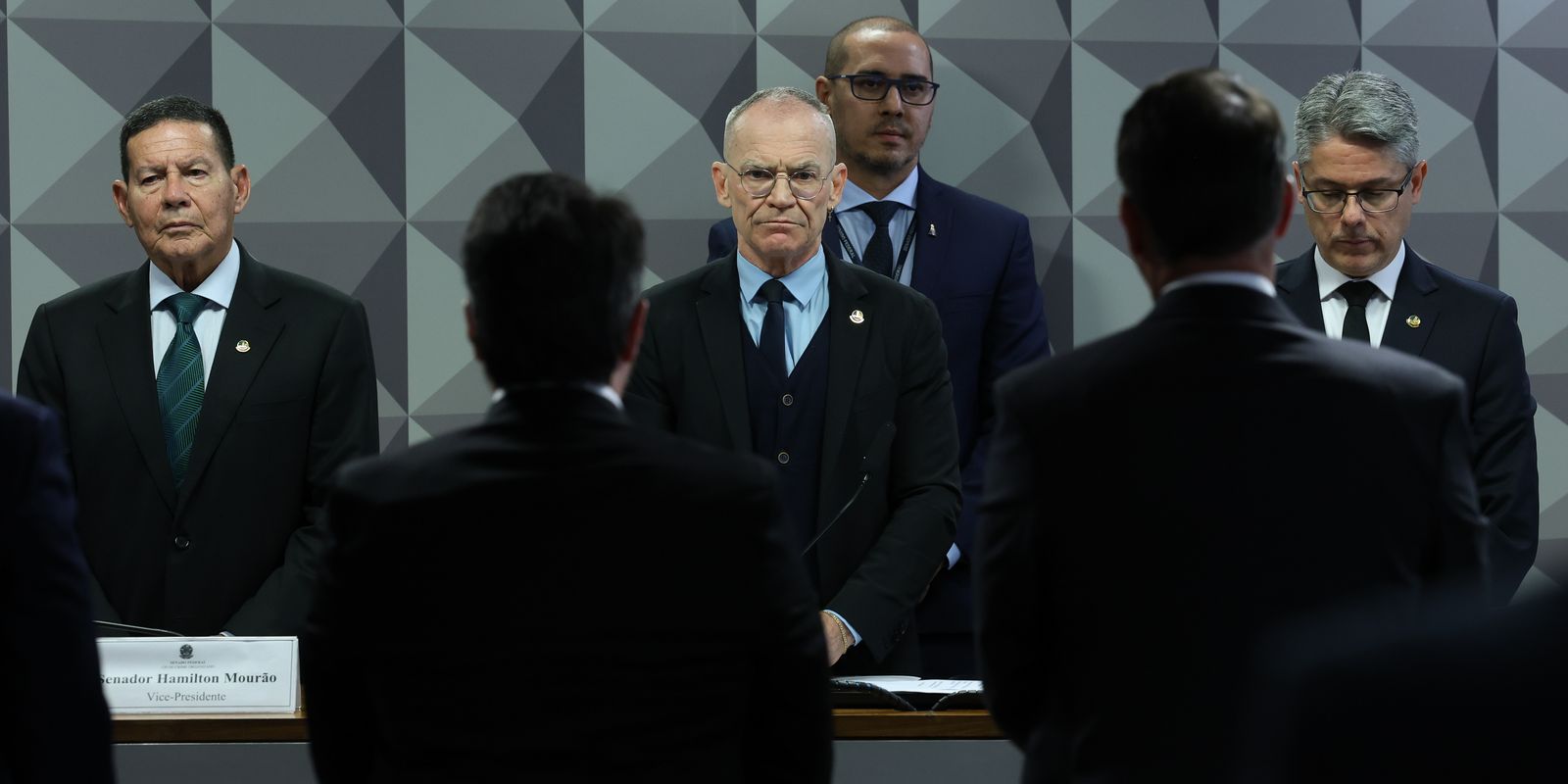
The Parliamentary Organized Crime Inquiry Commission (CPI), installed this Tuesday (4) in the Senate, approved the invitations for two State ministers and 11 governors to attend the collegiate, in addition to public security experts and heads of security agencies.
The requests were presented by the rapporteur, senator Alessandro Vieira (MDB-SE), who also requested information on combating organized crime from the ministries of Justice and Public Security and Defense.
Initially, the CPI approved a request to hear the Minister of Justice and Public Security, Ricardo Lewandoviski; the Minister of Defense, José Múcio; in addition to the general director of the Federal Police (PF), Andrei Rodrigues; and the director general of the Brazilian Intelligence Agency (Abin), Luiz Corrêa, among other representatives of the federal government’s security bodies.
Installed this Tuesday (4)the commission has 120 days to produce a diagnosis of organized crime in Brazil and propose measures to combat factions and militias.
A request was also approved that calls for urgency in the processing of legislative proposals on public security approved in the Senate in the Chamber of Deputies.
>> Follow the channel Brazil Agency on WhatsApp
Governors
Rapporteur Alessandro Vieira also asked to hear 11 governors and their respective Secretaries of Security. Vieira decided to invite the heads of the most and least safe states, according to indicators from the Ministry of Justice and Public Security and the National Public Security Forum.
“I request that you be invited to appear before this commission, in order to, together with your technical team from the areas of intelligence, investigation and the prison system, present your vision on organized crime in Brazil and your own experience”, argues the rapporteur in the request.
From the states considered “less safe”, the governors and security secretaries of Amapá, Bahia, Pernambuco, Ceará and Alagoas were invited. Of those considered safest, representatives from Santa Catarina, Paraná, Rio Grande do Sul and the Federal District were invited.
The states of Rio de Janeiro and São Paulo are on the list not because they are more violent or safer, “but because they are the original base of the main criminal factions in Brazil”, explained Alessandro Vieira.
Experts
The Organized Crime CPI also approved a request presented by the rapporteur to hear public security experts or people with “notorious experience” working in the area. Among them is the prosecutor of the Public Ministry of the State of São Paulo Lincoln Gakiya, “due to his extensive experience in issues related to the PCC”; Renato Sérgio de Lima, CEO of the Brazilian Public Security Forum; and professors and researchers Joana da Costa Martins Monteiro and Leandro Piquet Carneiro.
The CPI rapporteur also asked to hear from professionals who work in communication “related to crimes – investigative journalists, commentators and consultants”.
In this group, Josmar Jozino, investigative journalist from the UOL portal; Rafael Soares, investigative journalist for the newspaper O Globo; and Cecília Olliveira, investigative journalist at Instituto Fogo Cruzado.
Also invited were Bruno Paes Manso, USP researcher and former journalist; Allan de Abreu, investigative journalist at Revista Piauí; and Rodrigo Pimentel, columnist and public security consultant, who served at Bope of the State of Rio de Janeiro as captain.
Finally, the CPI approved a request for information from the Ministries of Public Security and Defense regarding arms control, and intelligence reports produced on criminal factions or militias.
“We have spoken here several times, over the last 7 years, about the difficulty we have in identifying and tracking firearms and ammunition in Brazil”, said Alessandro Vieira, when justifying the requests for information.