The Minister of Cities, Jader Barbalho Filho, stated this Tuesday (4) that Brazilian municipalities need resources to face climate change. According to him, in Brazil, resources often do not reach the end, in the cities. When they arrive, they end up concentrated in large urban centers, with more technical capacity, leaving other locations, which also need work to become more resilient, without the necessary investments. 
“If the money doesn’t reach the end, forget it, there won’t be infrastructure. And we will continue to see scenes like we have seen repeatedly in the world”, emphasizes Jader Barbalho Filho.
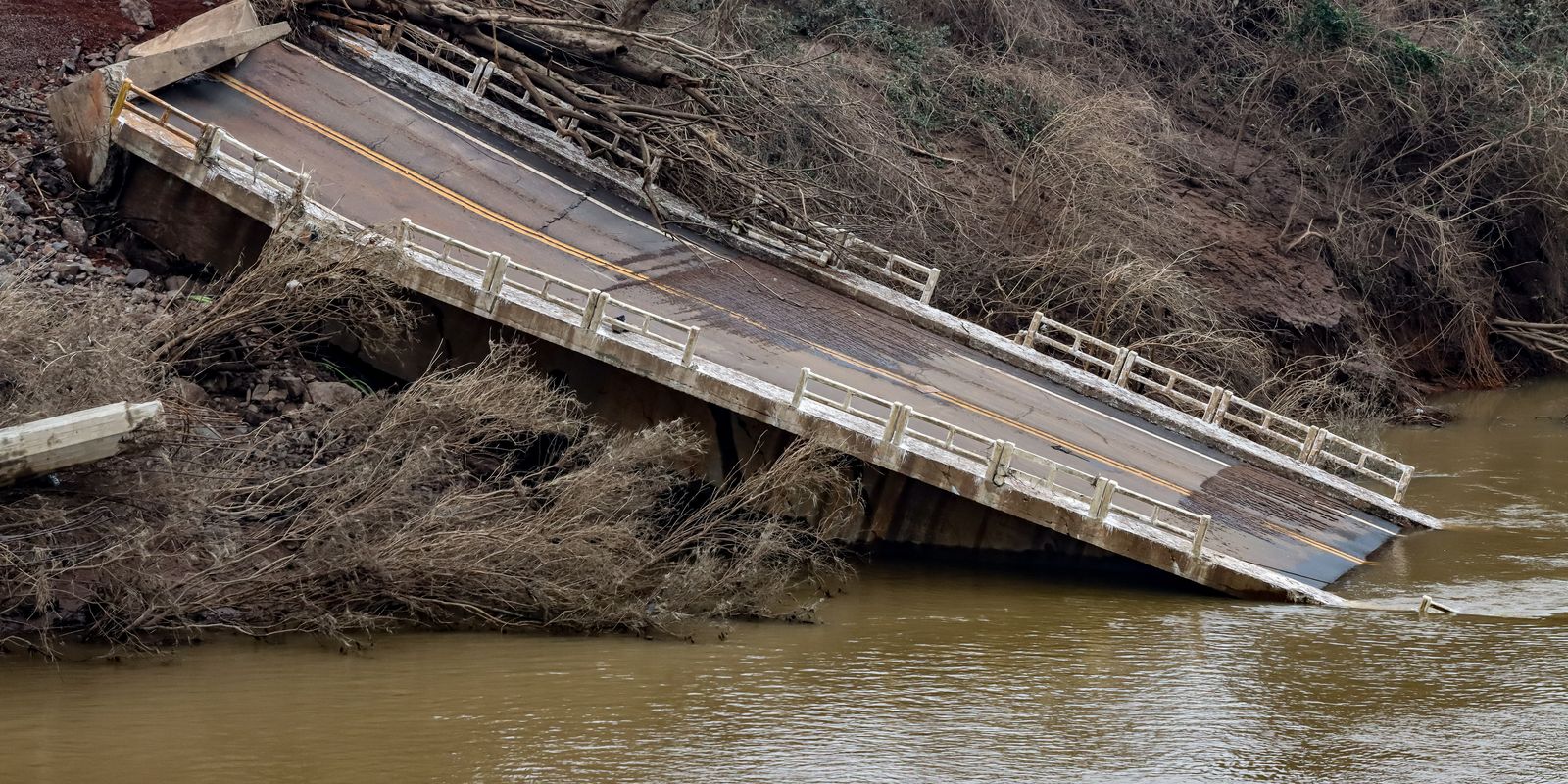
The minister cites as an example of climate disasters in Brazil related to climate change: floods in Rio Grande do Sul and the drought in the Amazonwhich impacted cities and the population.
“Who first feels extreme weather events? It’s the cities, it’s our outskirts”, he says. “How are we going to build infrastructure in the municipalities, if we don’t have the money to do it? Will this fall from the sky?”, he asks.
The minister participated today in a panel at the COP30 Local Leaders Forum, in Rio de Janeiro. The forum, which ends this Wednesday (5), brings together more than 300 mayors, subnational authorities and global experts, with the aim of discussing climate solutions, mobilizing commitments and reinforcing the role of cities and regions as strategic partners in action against the climate crisis.
The event is organized by the presidency of the 30th United Nations Conference on Climate Change (COP30) and by Bloomberg Philanthropies, the foundation of Michael R. Bloomberg, United Nations (UN) special envoy for Ambition and Climate Solutions.
Technical capacity
According to Jader Barbalho Filho, Brazil has made investments to mitigate the effects of climate change. According to the minister, the country recently made an infrastructure selection of US$ 25 billion [o equivalente a R$ 135 bilhões] for drainage works, mobility, slope containment, among others.
But, he points out, these resources do not reach all the municipalities that need them, as there is a lack of technical capacity.
“What ends up happening is that the resources end up only in the large municipalities, because they have the infrastructure, they have the technicians to be able to deliver a project, a project that is sufficiently anchored, structured. And that doesn’t solve our problem”, he says.
The minister adds: “We have sent resources, but the projects do not have enough structured technical work for these works to get off the ground. So, the process gets in the way. Many times you have the money, but the project is not structured enough for these works to happen.”
The minister also emphasized that the solution to the climate issue passes through cities, since 80% of global emissions come from cities and urban centers are home to the majority of the population. In Brazil, 82% live in cities.
The mayor of Abaetetuba (PA), Francineti Carvalho, who also participated in the panel, reinforced the need for technical support.
“There are, financially, many resources, there is money. Why don’t municipalities access them? Lack of technical capacity. We have, in the Amazon region, cities that don’t even have an engineer in their human resources”, he says.
Carvalho argues that selection requirements should be made more flexible so that more municipalities can have access to them. “We also need to think about some problems with the demands that are made, something called equity is not respected”.
Private sector participation
For the president of the Inter-American Development Bank (IDB), Ilan Goldfajn, the climate crisis requires investment and the participation of as many actors as possible. He highlighted one of the bank’s actions that has involved the private sector in financing works. According to him, as the bank’s resources come from governments, it is limited. “We need to mobilize capital from the private sector,” he says.
“Are you from the private sector, want to develop a project in a specific city and are worried about initial losses? We offer the necessary guarantees. We can do it alone or in partnership with other development banks”, he explains.
Goldfajn points out: “We need to prepare cities to be resilient to natural disasters. This is a big problem we face. Every week, some city in some country suffers a natural disaster.”
Letter from city halls
Also at the COP30 Local Leaders Forum, this Tuesday, more than 100 mayors from medium and large Brazilian cities launched a letter that will be officially delivered during COP30, in Belém. The text, prepared by the National Front of Mayors and Mayors (FNP), in full, is available available online.
The document reaffirms the essential role of municipalities in the global climate agenda and proposes the strengthening of subnational governments in the proposed actions.
“Climate federalism is the path to this transformation. Climate action requires multi-level governance between the national government, states and municipalities, based on co-responsibility and permanent dialogue. The FNP defends the strengthening of the Federation Council, in conjunction with the Interministerial Committee on Climate Change, so that both ensure effective federative coordination of national climate policy — aligning plans, capabilities and means of implementation to enable a fair and sustainable transition throughout the Brazilian territory”, argue the mayors.
According to the letter, the municipalities request, among other measures, the participation of local governments in the formulation of Nationally Determined Contributions (NDCs) – documents in which each country undertakes to reduce greenhouse gas emissions and adapt to the impacts of climate change.
Furthermore, they call for the democratization of climate technologies, with equitable access to innovation, data and digital solutions; and, training on the climate agenda for municipal employees and managers.