Cuba’s public health system has treated 20,062 cases of chikungunya to date, according to the vice minister of Public healthCarilda Peña García, who leads the Hygiene and Epidemiology area.
The provinces The most affected are Havana, Matanzas, Camagüey, Cienfuegos, Artemisa and Villa Clarahe pointed out Latin Press.
The official stated that the Attention focuses on dengue (serotype 4) and chikungunyawith protocols that include the active search for people with fever and immediate attention in intensive surveillance rooms in cases with alarm signs.
Currently, a decrease in serious cases of dengue is reported, and reagents and rapid tests are available in hospitals for the most complex diagnoses, they reported.
Most affected provinces
The rate of dengue suspects remains at 20.66 per 100 thousand inhabitants, with the highest incidence in Cienfuegos, Guantánamo, Matanzas, Ciego de Ávila, Sancti Spíritus, Mayabeque, Villa Clara and Pinar del Río.
62% of mosquito outbreaks Aedes aegypti They are concentrated in Havana, Santiago de Cuba, Camagüey and Villa Clara.
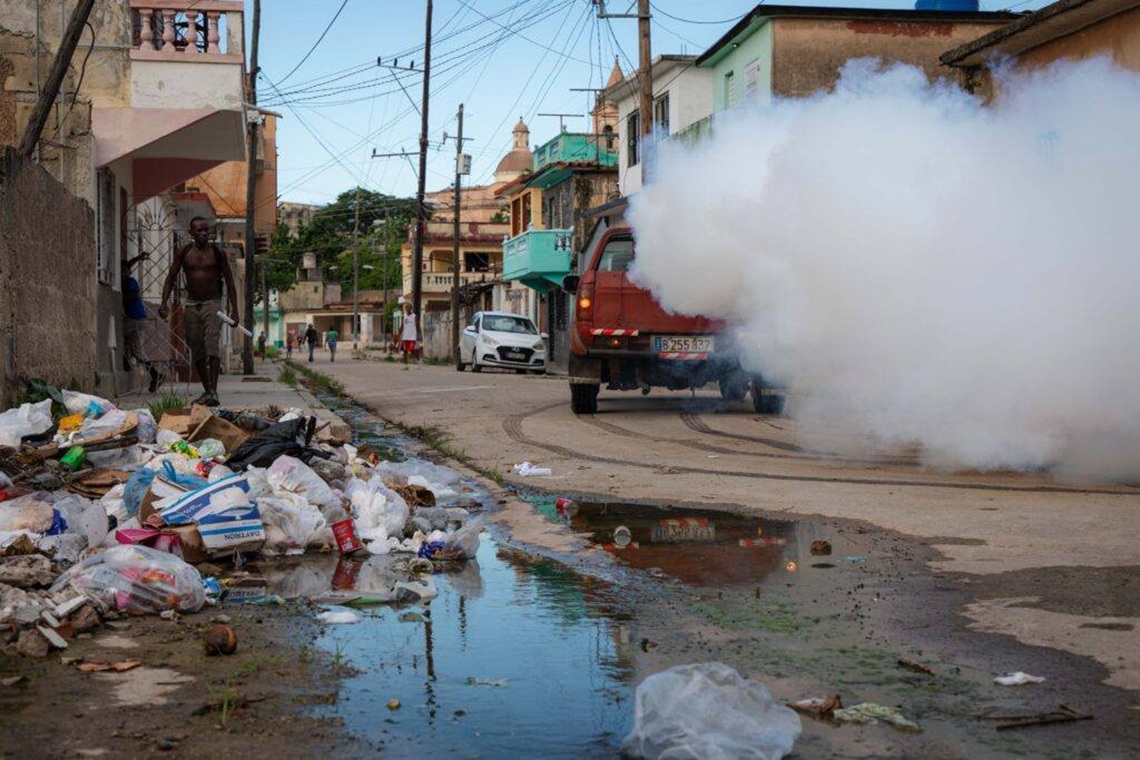
Peña García highlighted the role of Medical Sciences students, who carry out active research, and the extension of intensive fumigation to new urban and rural areas.
However, he explained that the adulticidal treatment could not be fully applied in the east of the country due to the ravages of Hurricane Melissa, which interrupted vector control efforts in that region.
In the territories affected by the cyclone – where the sale of hypochlorite for water treatment was also reinforced – 30% of hospital beds are allocated to possible epidemiological contingencies.
Besides, Priority is given to pregnant women, young children and patients with chronic diseases.including those in hemodialysis programs.
A team of 20 mental health specialists was deployed to eastern Cuba to provide psychological support to families who lost homes and belongings during the hurricane.
Chikungunya outbreak in Cuba: How is it dealt with?
The Minsap also reported that they are developing clinical trials in Matanzas with the medicine Jusvinza, used during the COVID-19 pandemic.
According to the ministry, the objective is to evaluate its effectiveness in the chronic phase of chikungunya, especially in cases with arthritis or persistent joint inflammation. Others drugs are being tested in Havana.
Dr. Ileana Morales Suárez, director of Science and Technological Innovation at Minsap, explained that the Government is promoting a national scientific strategy with three priority lines:
- Reduce the infestation of the mosquito vector.
- Improve the clinical treatment of the disease.
- Mitigate post-acute joint sequelae.
The increase in cases occurs in a critical economic context, which limits the country’s ability to confront the proliferation of the Aedes aegypti mosquito, aggravated by sanitation problems, water leaks and accumulation of waste in several cities.
Clinical studies will begin on medication to counteract chikungunya symptoms