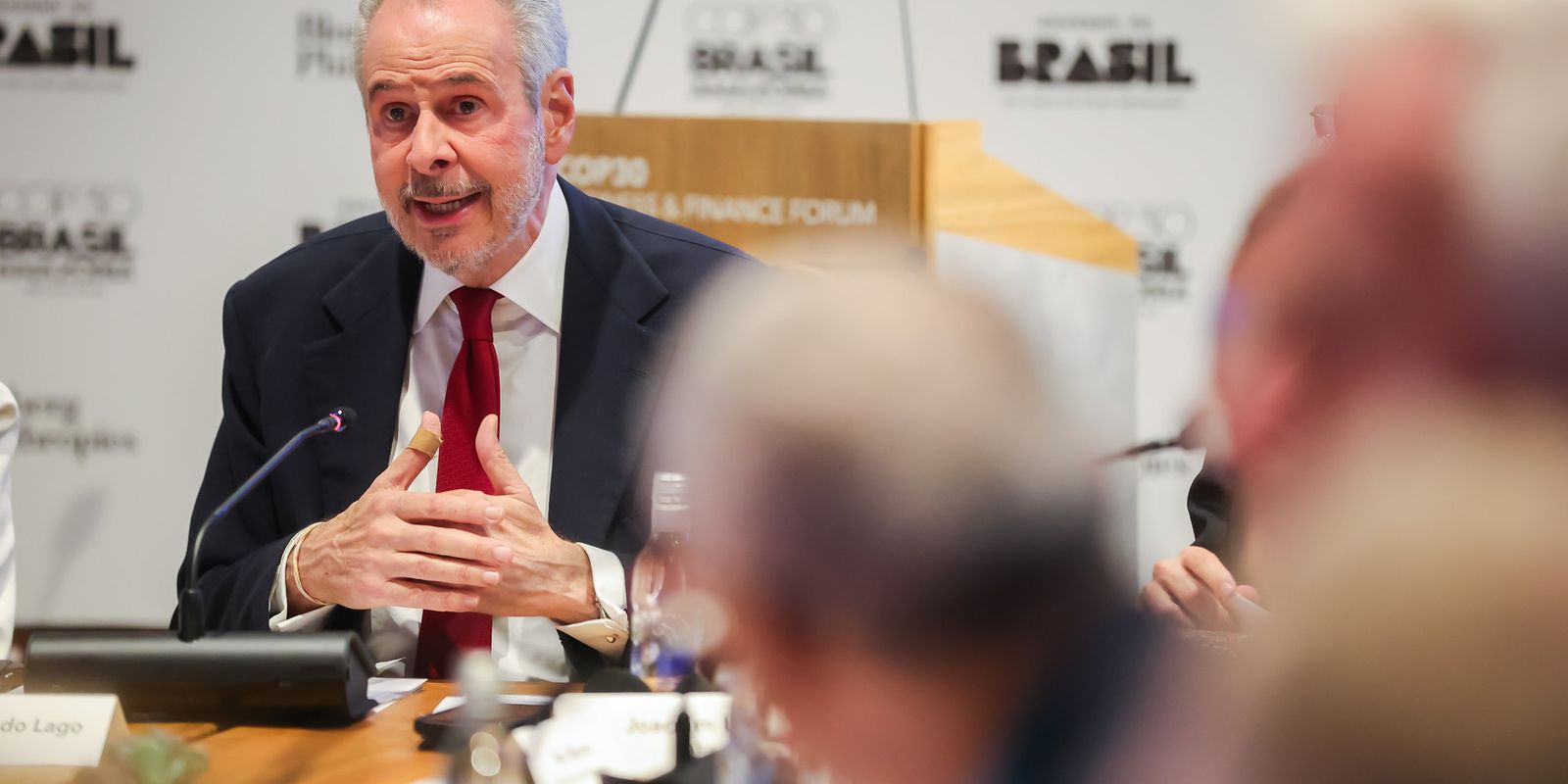
Ambassador André Corrêa do Lago, president of the 30th United Nations Conference on Climate Change (COP30), said this Monday (3), in São Paulo, that he hopes that the issue of climate adaptation will be an “absolute priority” for COP30, an event that will be held this month in Belém (PA).
“Climate negotiations in general are divided into mitigation, which is the reduction of emissions, and adaptation, which many people thought: ‘we are not going to work on adaptation, because otherwise we would give up on working on mitigation’. That was not the case, but now even less so, because with the acceleration of climate change, you need enormous adaptation and the world’s population is much more sensitive to adaptation efforts because it affects people’s lives. So, adaptation is an absolute priority of this COP”, he declared.
“I hope people remember this COP as a COP of adaptation”, he highlighted to journalists, after participating in the event COP 30 Business & Finance Forumpromoted by Bloomberg Philanthropies, in the capital of São Paulo.
In general, the COP uses two major strategies to deal with climate change: mitigation actions, which refer to the reduction of greenhouse gas emissions to stop warming; and adaptation, which would be a form of adjustment to deal with the existing or inevitable impacts of the climate crisis.
Just a few days before the start of COP30, just over 60 countries have delivered their mitigation targets, that is, their commitments to reducing greenhouse gas emissions, called Nationally Determined Contributions (NDCs). During the opening of the event, the ambassador stated that this could be a result of the fact that countries want to present goals that are actually possible to achieve.
“We didn’t expect this because the deadline [para apresentação] of NDCs was February, but the truth is that countries realized how complex it is to make a good NDC. And now that many people have all the structure, support and verification, countries want to present NDCs that are credible and they need to negotiate them within their respective countries to ensure that they are actually proposing something that is doable,” he explained.
Fund for forests
The ambassador also commented on the Brazilian government’s expectation of being able to reach US$10 billion in public investments from countries for the Tropical Forest Fund (TFFF) by the end of Brazil’s presidency at the COP. The fund is a mechanism aimed at protecting forests and which provides that countries that preserve their tropical forests will be financially rewarded via a global investment fund.
“I think it is an immense success because this is a very innovative mechanism”, commented Lago.
Earlier, during the same event, the Minister of Finance, Fernando Haddadcommented that this is an ambitious proposal, but possible. “If we finish the first year with US$10 billion in public resources, it would be a great achievement,” he said.
For the ambassador, this proposal from the Brazilian government could be successful.
“Perhaps it will contribute to solving one of the most difficult things in the economy, which is being able to give a value to standing forests. For years everyone has said that this has to happen, it has to be done and that it has not been achieved. Therefore, the idea is good and the way in which it is being prepared has been very careful precisely to attract the world’s trust. I think the evolution has been truly exceptional”, he declared.