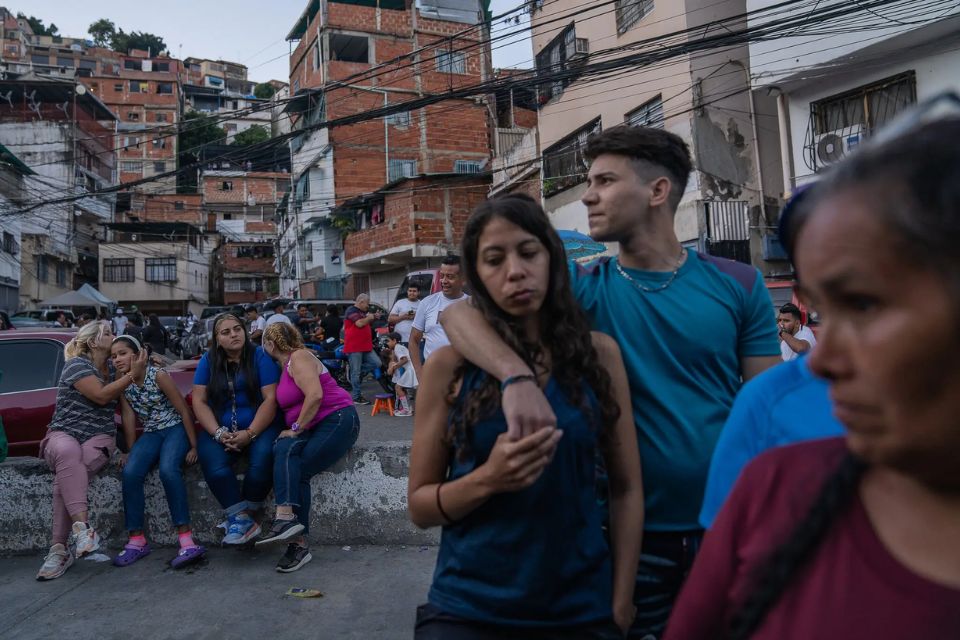
Political scientist Benigno Alarcón warns that in Venezuela a “silence by design” is imposed: distrust, denunciation and exemplary punishments inhibit protest and dismantle the social fabric. This circuit of fear, he says, pushes people to adapt to survive or to emigrate, while repression becomes increasingly dependent on itself.
Political scientist Benigno Alarcón warns that in Venezuela a climate of silence, mistrust and exemplary punishments prevails that inhibit protest and dismantle the social fabric. In his opinion, it is not an accidental phenomenon but “by design”, which seeks to make people “adapt to survive” or leave the country.
in conversation with Víctor Amaya in Night DAlarcón described an “expectant, but silent” societywhere “people could say many things and talk about their expectations, but they prefer not to.” This self-censorship is anchored in general distrust, which “It has a devastating effect on the social fabric” and reduces the coordination capacity to defend rights or demand services.
The academic emphasizes that the current situation does not occur by chance: “This does not happen by accident. This happens by design.” He cites as an example the use of neighborhood reporting channels through official applications: “An extraordinarily toxic environment is generated… a call with an insinuated reward to ‘know’ anyone who says something contrary to the interests of the government.”
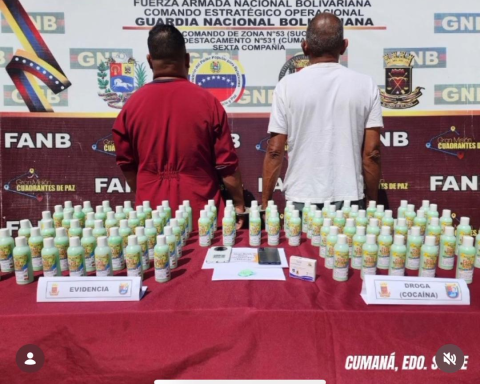
The consequence, he claims, is widespread inhibition: “The best repression is the one you don’t have to exert”. According to Alarcón, disproportionate punishments and “surgical” cases against community leaders or citizens who complain for social causes seek to avoid major outbreaks: “If people stop protesting out of fear of punishment, you have the most effective repression.”
This closing of valves, he warns, accumulates pressure: “If it is not released in small acts, in small ways of expressing discontent, this grows and can have much greater consequences.” He compares it to a “pressure cooker” or to the telluric energy that accumulates before an earthquake. That is why he sees two recurring solutions when the population does not find institutional ways: “adapt to survive” or emigrate.
The unpredictability of which topics “annoy” aggravates self-censorship. Even in economic matters, he says, official overreaction does not erase everyday reality: “When people go to the supermarket they don’t need the economist to tell them what is happening, preventing them from talking ends up working against them because reality is there.”
*Read also: NGO denounces “worrying increase” in arrests and forced disappearances in the country
The effect also hits journalism and the credibility of information, with the increasingly frequent recourse to anonymity of sources: “It is very difficult to give credibility to content when I don’t even know who is saying it.” At the same time, relatives of political prisoners refrain from reporting abuses for fear of reprisals: “It’s like blackmail, the abuse goes under the radar because you can’t report it.”
Regarding the argument of “conserving spaces” in political, academic or media spheres, Alarcón clarifies: “It can be valuable only if those spaces are useful and have value. A news media that does not provide news, or an academy that does not investigate or publish freely, is of little use.”
For the political scientist, the regime enters a “vicious circle”: “To the extent that I repress, I lose legitimacy; and to the extent that I lose legitimacy, I become more dependent on repression.”. That is why it resorts to exemplary punishments to inhibit the majority and avoid having to repress on a large scale.
By placing the phenomenon in global trends, he recalls the democratic retreat: “Today autocracies are more numerous than democracies.” And he claims the citizen role: “Democracy does not sustain itselfis sustained by a permanent effort by citizens to strengthen it and maintain it over time.”
*Journalism in Venezuela is carried out in a hostile environment for the press with dozens of legal instruments in place to punish the word, especially the laws “against hate”, “against fascism” and “against the blockade.” This content was written taking into consideration the threats and limits that, consequently, have been imposed on the dissemination of information from within the country.
Post Views: 95