November brings with it a series of essential economic supports for the stability of thousands of Chilean households. These contributions, which range from incentives for female employment to basic pensions, become a vital resource for financial planning. It is essential that beneficiaries know in detail the payment dates and updated requirements to ensure they receive these bonuses on time.
Learn about the 6 bonuses that are paid in November in Chile:
Two of the most relevant benefits for the female segment are Bond to Women’s Work (BTM) and Maternal Allowance. The BTM is specifically aimed at women between 25 and 64 years old who are part of the most vulnerable 40% of the population, according to the information recorded in the Social Household Registry (RSH).
The monthly payment to be made in November corresponds to the remunerations obtained during the month of August 2025. It is important to highlight that, although there is an annual payment option (which would take place in 2026), the majority of beneficiaries opt for the monthly modality, thus receiving a bond constant that complements your salary.
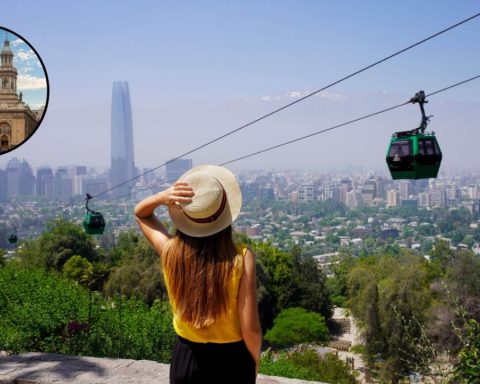
Source: Shutterstock.
For its part, the Maternal Allowance, closely linked to pregnancy protection, benefits pregnant women and dependent or independent workers whose spouses are expecting a child. This bond ensures a monthly amount for each accredited family member during the pregnancy period.
Along with the BTM, there is the Youth Employment Subsidy (SEJ), a bond designed to encourage the labor formalization of men and women. This support focuses on workers between 18 and 24 years old who also belong to the most vulnerable 40% in the country, maintaining coherence with the BTM in terms of targeting. Like the latter, the monthly payment will be made on November 28.
In the area of the most vulnerable households and those with dependents, there are the Single Family Subsidy (SUF) and the Automatic Family Subsidy. The first, the SUF, delivers a bond fixed amount for each recognized family dependent ($22,007) and a doubled amount ($44,014) if the dependent is a person with a disability.

Source: Shutterstock.
In contrast, the Automatic Family Subsidy is assigned without the need to apply to those families that, being within the most vulnerable 40% and registered in the RSH, meet other requirements established by the regulations. Both seek to reduce the income gap in the most needy households and represent an important bond for the family economy.
Below are the common and specific requirements to receive the bonuses
- Belonging to the most vulnerable 40% of the population: Fundamental condition to access the BTM, SEJ, and the Automatic Family Subsidy, verified through the Social Household Registry (RSH).
- Age and Employment Status: The BTM requires that women be between 25 and 64 years old with gross annual or monthly income less than the established limits, while the SEJ is for workers between 18 and 24 years old.
- Acceptance of Invitation: To receive the Protection Bonus, it is enough to accept the invitation to participate in the Chile Seguridades y Oportunidades programs.
- Accredited Family Allowances: Essential requirement for the SUF and the Family and Maternal Allowance, where the amount is calculated for each dependent.
- Being 65 years old or older: Base condition to be a beneficiary of the Universal Guaranteed Pension, meeting the other IPS requirements.
- It is crucial to keep the RSH updated to ensure correct targeting and allocation of the corresponding bonus.