The combination of health, food, economic and service crises, together with repression and the deterioration of security, has placed Cuban society in one of its moments of greatest tension in decades.
HAVANA.- Cuba closed October with 1,249 protests, complaints and civic actions, the highest number documented by the Cuban Conflict Observatory (OCC) since it began its measurements. The number exceeds September’s records by more than a hundred (1,121) and represents more than 200 additional actions compared to August.
The increase represents 10.25% more than in September and 30% compared to the same month of the previous year, in a scenario of growing discontent that affects all provinces. Havana led the protests with 417 actions, followed by Santiago de Cuba (164) and Matanzas (159). 70% of the claims were associated with economic and social rights, and the rest with civil and political rights.
Challenges to the State and physical protests
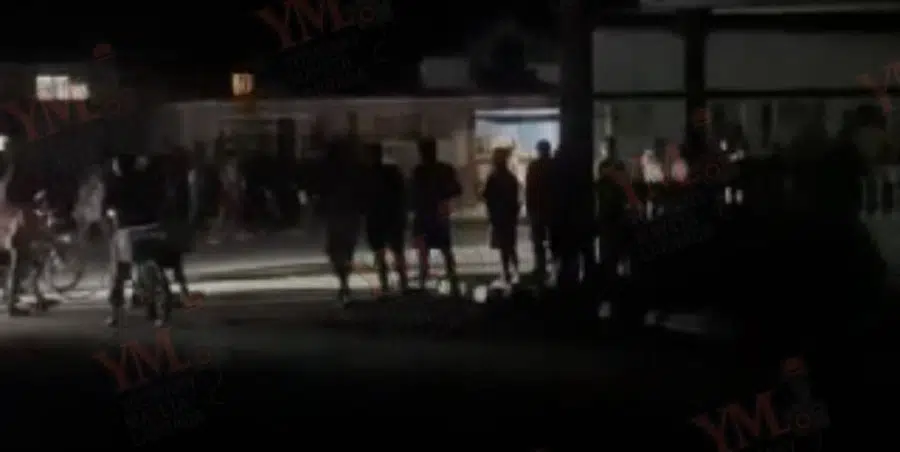
The Challenges to the Police State category returned to first place with 261 actions, after having fallen to second place in September. It included 12 in-person protests, including two massive demonstrations in Baire (Santiago de Cuba) and in the Ho Chi Minh neighborhood of Guantánamo, as well as banging pots and street blockades.
On social media, the climate was equally tense: direct criticism of the government—even from usually pro-government voices—dominated the public debate. Requests that the rulers “hand over power and leave the country” have become a recurring mantra.
Public services accounted for 254 protests, driven by blackouts of up to 30 hours and extended periods without running water. Added to this is the unhealthiness, with mountains of garbage that, according to the OCC, have directly contributed to the expansion of several epidemics.
Citizen actions to complain about health services were also reflected. A reflection of a national epidemiological emergency. Dengue, chikungunya and other arboviruses spread throughout the island, infecting entire communities and saturating hospitals.
The OCC denounced that, despite having billions in reserves, the regime did not acquire garbage trucks or fumigation equipment, nor basic supplies such as malathion, abate, analgesics or antipyretics. The lack of electricity also multiplied the population’s exposure to transmitting mosquitoes.
Food shortages and rising prices generated 127 protests of various types. Viral images showed empty refrigerators, lines to receive rice delayed since June, and extreme scenes such as that of an old man found naked inside a garbage tank, eating remains “like a stray cat.”
The OCC documented 134 complaints linked to citizen insecurity, including 17 murders or homicides and 29 violent crimes. These include 122 robberies and thefts, 5 vehicle thefts, 4 assaults, 5 livestock thefts and 3 frauds. The United States Embassy in Havana issued an alert following the murder of a foreign visitor stabbed in Santa Clara during a robbery.
Housing: the devastating footprint of Hurricane Melissa
The housing category registered 56 complaints, more than double that of September. The number, although low in relation to other sectors, does not reflect the magnitude of the disaster caused by Hurricane Melissa, which affected more than a million people in the east of the country and left roofs torn off, houses flooded and structures collapsed.
The government reported 16,400 damaged homes, but citizens denounced a lack of state aid, an absence of transparency in the management of international donations, and dramatic situations among the elderly and vulnerable families.
The Conference of Catholic Bishops of Cuba described the scenario as a “national tragedy,” and OCC experts warned that the emergency adds to a reality already marked by prolonged blackouts, food shortages and epidemic outbreaks.
With October, the OCC records three months of uninterrupted rise in citizen dissent actions. The organization concludes that the combination of health, food, economic and service crises, together with repression and the deterioration of security, has placed Cuban society in one of its moments of greatest tension in decades.