The Non-Governmental Organization (NGO) Human Rights Watch stated that the Rio de Janeiro police committed “crucial” failures in the investigation of 121 deaths that occurred during Operation Containment, on October 28. In a public note, the organization linked these failures to a “purposeful lack of interest”, as they involve a majority black and low-income population.
According to Human Rights Watch, the police “did not preserve the location of the shootings for analysis, a very important measure in determining the circumstances of the deaths.”
“We are very concerned that crucial steps in the investigation have not been carried out and that important evidence may have already been lost,” said César Muñoz, Brazil director at Human Rights Watch.
The operation
Operation Containment, which involved 2,500 police officers from various units in Rio de Janeiro to attack strategic points belonging to the Comando Vermelho faction in neighborhoods in the Alemão and Penha complexes, in the north of Rio de Janeiro, saw intense shootings and recorded the deaths of 64 people on its first day, including unarmed civilians and children.
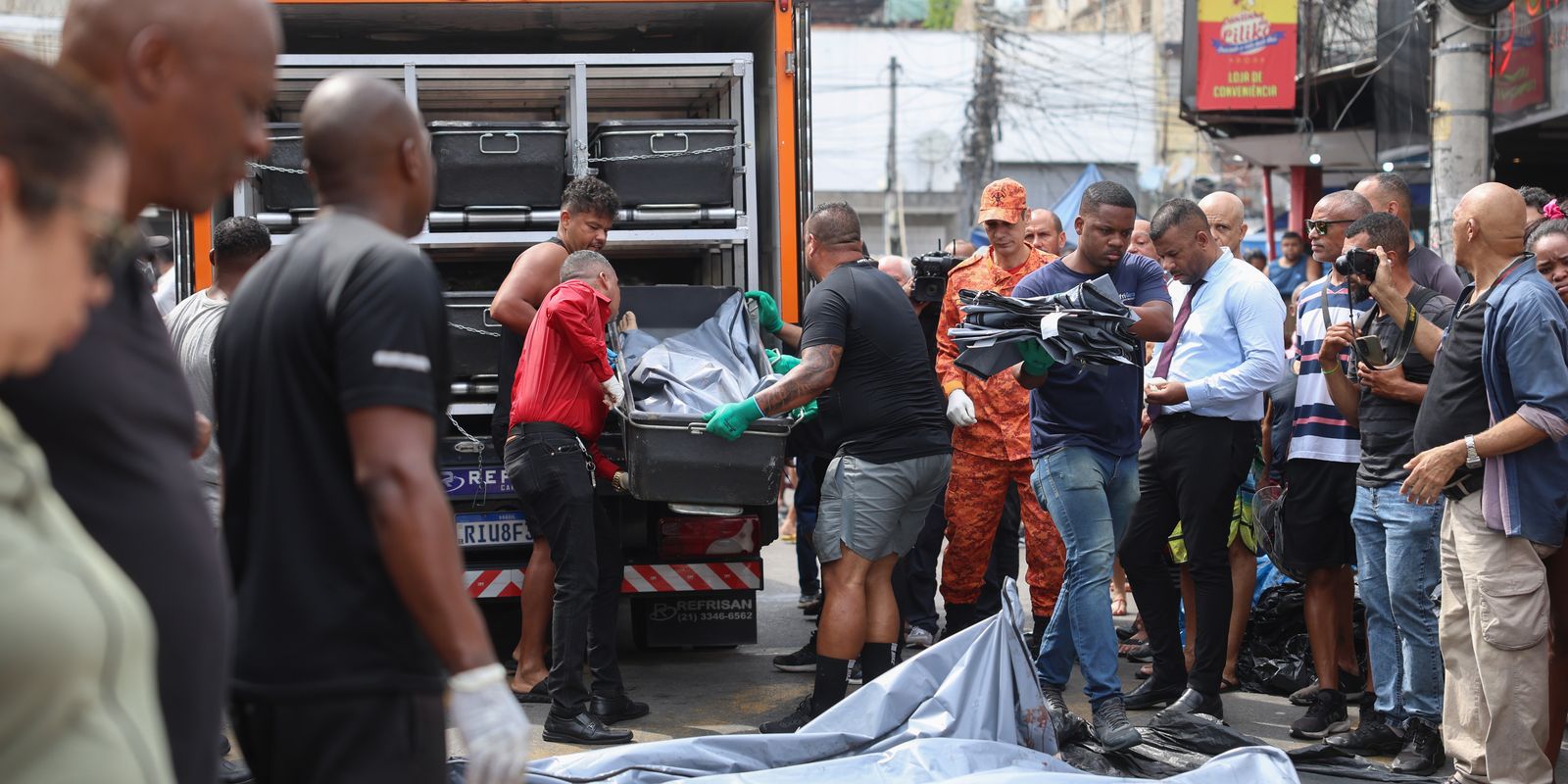
The other deaths were recorded in a forested area in the Serra da Misericórdia, after an ambush by Bope, an elite police troop, on one of the faction’s escape routes. The deaths, mainly from this group, were discovered after residents carried the bodies to a square in the Penha neighborhood, but not before making extensive records of the barbaric scene on cell phones.
Before the middle of the 29th, Wednesday, these images were already circulating, including outside Rio de Janeiro. Relatives of the dead reported signs of surrender, such as tied hands and legs, and execution and torture of their loved ones, to journalists who recorded the row of bodies. There is also, says Human Rights Watch, a predominance of black people and almost all poor people among the victims.
In the entity’s assessment, the lack of expertise and isolation of the places of death contributes to the loss of crucial information, such as whether or not the dead fired firearms.
“Brazilian authorities must ensure a rapid, complete and independent investigation into each of the deaths, as well as the decisions and planning that led to such a disastrous operation,” said Muñoz.
“The case also shows the urgent need for the governor of Rio de Janeiro to present a bill to separate expertise from the Civil Police and invest in independent, high-quality forensic analyses, which are a fundamental part of any criminal investigation,” he added.
The NGO also criticized the difficulty in accessing the Public Defender’s Office and independent observers to the Legal Medical Institute, where the bodies were removed. Among the measures recommended by Human Rights Watch is the presence of independent experts and the conduct of investigations by the Public Prosecutor’s Office.
When contacted, the civil and military police of Rio de Janeiro did not comment on the criticisms reported in this report.