On the 20th of this month, the president of the United States, Donald Trump, celebrated nine months since he took up residence in the White House for the second time, giving rise to a turbulent administration in which threats were fired in all directions, including that of a possible military attack against Venezuela (for which he has surrounded its coasts), which have formed a fundamental part of a style in which he has clashed with many sectors both inside and outside his country.
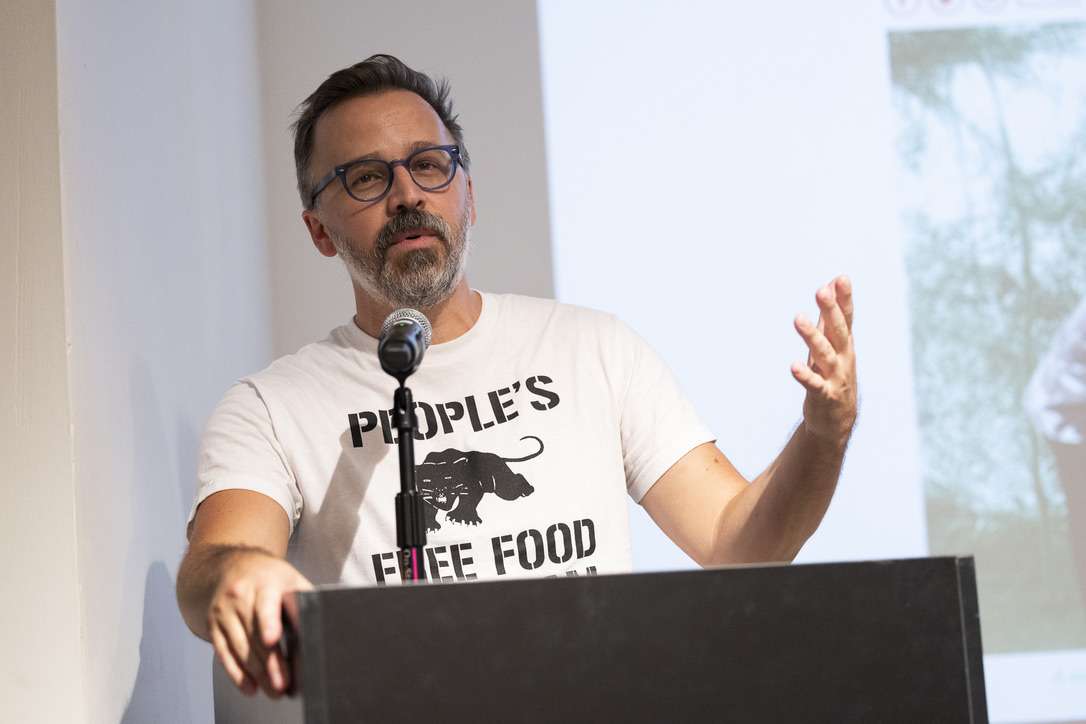
The political scientist Geo Maher, coordinator of the WEB Du Bois School of Pictures in Philadelphia and author of the book We Created Chávez, among others, answered some questions for Últimas Noticias in order to offer an idea of what is happening inside the American country, seen from a viewer who lives in the North American country.
—From Venezuela it seems that Trump faces increasing internal opposition. What is the reality?
—In some ways yes, but in others no. First, we are seeing an unprecedented response to ICE raids, initially in Los Angeles and now in Chicago, and most inspiringly, while this resistance began with small groups of activists organized into rapid response networks, it has broadened into massive, spontaneous pushback against ICE and other federal agents in cities across the country. This gives us a lot of hope.
However, resistance to other aspects of the Trump Administration’s policies, and particularly that of the Democratic Party, has been minimal and ineffective. Democrats are focused on trying to deflect blame for the month-long government shutdown, while seeking legal action in the courts (which have been packed with Trump loyalists). For example, except for minor complaints from high military levels, there is no resistance to extrajudicial executions in the Caribbean.
Between the massive spontaneity of the grassroots and the futility of the Democrats there is a huge gap, which has always existed, but which was dramatically exacerbated by the party’s support for Israel and the genocide in Palestine.
—What are the main problems that Trump faces within his own country?
—The Trump phenomenon is difficult to interpret. For example, a normal administration would implement policies with a clear and rational plan for their success and sequential adoption. However, Trump’s strategy, derived largely from Steve Bannon, consists of radical disruption, aggressive and multifaceted attacks, and what is now known as “flooding the zone” with multiple offensives at once. This means you know you won’t win in every case, but that’s not the goal.
Now, this strategy has its limitations and dangers, particularly overreaching. The fundamental challenge is economic. His tariff strategy did not improve the economic situation in the short term, but it also did not generate the catastrophic results that Democrats predicted. The objective was, to a large extent, to take advantage of the threat of tariffs to achieve preferential agreements with the countries that gave in, recovering that benefit in the short term and repositioning the US as a global leader through the supply of rare earth minerals. His current challenge is to generate short-term economic benefits while maintaining a climate of panic among his base and a state of demobilization among his opponents, in the run-up to next year’s midterm elections.

—Numerous media outlets have reported different opinions about alleged authoritarian practices in this second Trump Administration. What are the main indications of this alleged authoritarian behavior?
—For me, “authoritarianism” is not the most useful metric. For example, Chávez himself was branded as an authoritarian for trying to transform a corrupt and decadent political system. I want to be absolutely clear: I reject any attempt to compare Trump to Chávez; These comparisons have become common practice in the liberal media, but I recognize that, on a tactical level, he is doing precisely from the right what we should be doing from the left: disrupting the so-called norms and civility of status quo politics, openly seeking to transform political institutions rather than simply operating by their rules and pushing a radical attack strategy. There is quite a bit of Leninism here.
The difference, of course, is the most important that exists: he does it for fascist, reactionary, racist and capitalist purposes. To those ends, it has packed courthouses, unleashed paramilitaries on the streets of major cities to intimidate working-class communities, targeted left-wing activists and organizers with deportation, and is carrying out state-level campaigns of mass disenfranchisement through the redistricting process known as gerrymandering.
—It is also stated that he uses his government for a persecution against his political enemies, a hunt for vengeful purposes.
—Yes, and this is absolutely worrying. Not so much the attacks on Democrats, Federal Reserve board members or disloyal former officials like John Bolton. Most worrying is the direct targeting of radical organizers by extrajudicial means, particularly the revocation of visas and deportation of students simply for organizing around Palestine, and the designation of the specter of Antifa as a domestic terrorist organization (and the current threat to also designate it as a foreign terrorist organization, a classification that opens up a much broader range of repressive responses). This is fascism and it is already underway.

—We have seen demonstrations against these policies, the most recent being that of the No Kings, with millions of people in the streets. Do they have an impact within the US?
—The No Kings are an important indicator of liberal rejection of certain Trump policies, but also a sad and ineffective demonstration of the limits of liberalism and even its suicidal nature. The dominant middle class is unaware of the seriousness of the situation, in part because what worries them most is their pockets and the false image of the United States as a beneficial global force. They are not fundamentally opposed to genocide, for example, and there were many cases of No Kings participants attempting to deter protesters with pro-Palestinian flags and signs. And, of course, they are not seriously opposed to attacks in the Caribbean; After all, it was Obama who, more than any other president, deployed a policy of extrajudicial drone killings.
—What has been the impact of the immigration raids? Mass deportations were one of his main campaign promises.
—Again, we must distinguish very carefully between the real objectives of Trump’s policies and what we assume they are. This means that their goals have been largely symbolic and provocative. If you want to deport migrants en masse, you don’t do it by parading federal troops through downtown Chicago. So, of course, the goal is mainly to send a message to his base, intimidate his opponents and in his logic, deter migrants from coming. We could say that it has succeeded in the first, has failed in the second and could never achieve the third (although many are waiting to migrate for now).
A dangerous dialectic arises here. ICE simply lacks the capacity to do this work, which is why they are desperately hiring everyone they can, promising huge hiring bonuses. In other words, they are hiring the worst of the worst: failed cops, stalkers, and domestic abusers.
We have already seen the consequences of this in the violence unleashed in the streets and this will inevitably have consequences.
But here we must also remember that Trump is using the institutional capacity (ICE forces, detention centers) built and expanded by right-wing Democrats.
—Those raids are also generating rejection. Recently there was a strong protest in New York. Do these demonstrations in different cities of that country have any weight?
—Yes, absolutely and the most important impact also occurs on a symbolic level. Communities across the country see images of people fighting against ICE and protecting their loved ones, and this is precisely how the action spontaneously spreads and becomes a mass movement. Now, everyone knows what to do when they see ICE in their communities, everyone knows that they are there to rob their neighbors, and everyone knows how to resist with taunts, words, and also with force when possible. The economic losses in businesses due to the raids are significant and have a great impact on inflation, one of Trump’s Achilles heels. As he continues, his administration will weaken, and as businesses are hurt by ICE raids and tariffs, the electorate that opposes him will only grow.
—How is your international policy viewed among the US people?
—Unfortunately, it is not clearly seen or understood. At least nationally, there has been a sort of empathetic breakthrough: we can see our neighbors being harassed, assaulted, and kidnapped by ICE. Migrants have become an integral part of American life, such that their existence has been naturalized and their absence would seem unnatural even to many on the right.
But the same progress has not been seen internationally, with the exception of the situation in Palestine, where Zionism is in terminal decline. There, yes, an entire generation of young people is dedicated to the liberation of Palestine and is immune to Zionist propaganda.
But this falls on both Democrats and Republicans, and Trump has contradictorily managed to position himself as an aggressive international force, speaking as much about ending the Palestinians as reaching a peace agreement. As a result, there is much less resistance internationally and also much less differentiating the Democrats in electoral terms.
Venezuela
“On Venezuela, there is very little understanding of the deployment in the Caribbean (and now the Pacific), with Trump flooding the area on so many fronts. There is little room for empathy with those fishermen incinerated from the sky. In my opinion, Trump is testing not so much Venezuela’s defenses as the general American interest in a conflict in the Caribbean and unfortunately, even though the pretext of drug trafficking is incredibly weak, it does not seem to matter. Communities are fighting ICE in the streets, but Democrats are not “They do nothing to stop this acceleration towards conflict. In the absence of resistance, my fear is that the next step will be direct attacks against mainland Venezuela. In that scenario, the question will be what it has always been for me: to what extent will Venezuelans, not the high military commanders or the leaders of the State, but ordinary Venezuelans, organize themselves at the grassroots level to resist US aggression and show the world that the Revolution still has teeth and is capable of biting?”