China’s growing institutional and economic influence in Latin America marks a milestone in international relations, consolidating Beijing as a strategic and alternative partner for regional development, openly challenging the traditional primacy of the United States.
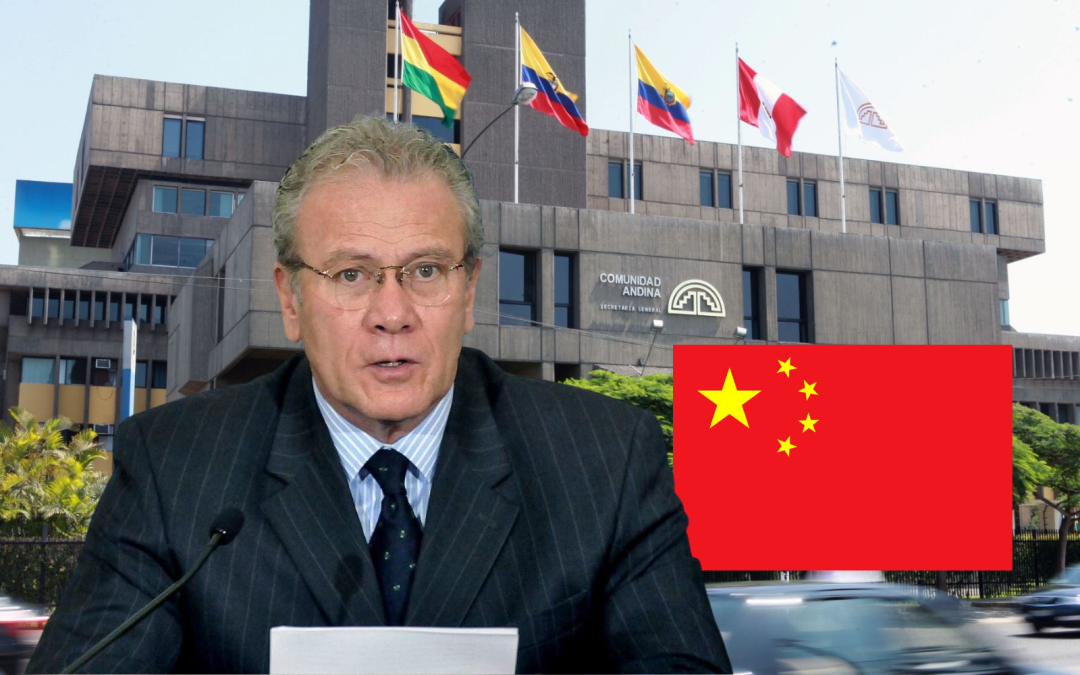
At the beginning of October, there was a diplomatic movement that underlines the new geopolitical reality of the region: the Andean Community (CAN), made up of Bolivia, Colombia, Ecuador and Peru, approved China’s request to join as an Observer Country.
The Secretary General of the CAN, Ambassador Gonzalo Gutiérrez, highlighted that this new status seeks to strengthen reciprocal relations through intensified political dialogue and deeper cooperation. The decision is especially significant, given that China is already the main destination for CAN exports outside the bloc.
Growing Institutional Integration: An Indispensable Partner
Today, the Russian media highlights that beyond trade, China’s incorporation into the CAN is a momentous step in Beijing’s South-South diplomacy strategy. China already has status or membership in nine Latin American organizations, giving it a direct voice in shaping agendas, trade rules and development priorities from within the region.
According to international media analysis, China sees Latin America not only as a market, but as a “political laboratory” to test an alternative association model to Western powers. This model is projected as cooperative and non-interventionist, a narrative that resonates in Latin American capitals that seek greater autonomy.
The China-CELAC Forum is the central axis of this relationship, which goes beyond lines of credit and exports, even encompassing the fight against corruption and judicial cooperation.
Contrast with Washington: Pragmatic vs. Coercive
China’s strategy contrasts sharply with US policy, which is often perceived as stepping up pressure for the alignment of regional governments with its security interests, evoking a kind of “revived Monroe Doctrine.”
The Chinese Model: It is more coherent and pragmatic, focused on the Belt and Road Initiative (with 24 partner states in the region) and a negotiation model that offers rapid financing, limited conditions and tangible results. Many Latin American governments consider this approach more aligned with their urgent development goals.
The Washington Dilemma: US coercive attempts (tariffs, sanctions) have often been counterproductive, accelerating the quest for independence and, paradoxically, Chinese penetration. Concern in Washington is deep about the possibility of China consolidating itself as a key actor in solving regional problems.
Magnitude and Risks of Influence
The magnitude of Chinese influence is undeniable: with $520 billion in 2024, China is the second most important trading partner of Latin America and the main partner of giants such as Brazil, Chile, Peru and Uruguay.
Beijing’s expansion goes beyond the economic, encompassing:
• Security and Defense: Sale of weapons and military training.
• Space Technology: Installation of ground stations and the China-CELAC Space Cooperation Forum.
This dynamic, although it offers fiscal stability and access to markets, also entails risks for the region, such as greater competition from Chinese products and the continuation of a raw materials export model (such as lithium and copper, resources of strategic interest in the subregions).
In essence, observer status in the CAN symbolizes the normalization of Chinese participation in Latin America’s domestic institutions. It gives China access to resource-rich regions and the opportunity to shape standards, while it allows the Andean countries to establish themselves as autonomous actors with the ability to collaborate with multiple partners. Latin America is no longer the “backyard” and is increasingly positioned between two poles of global power.