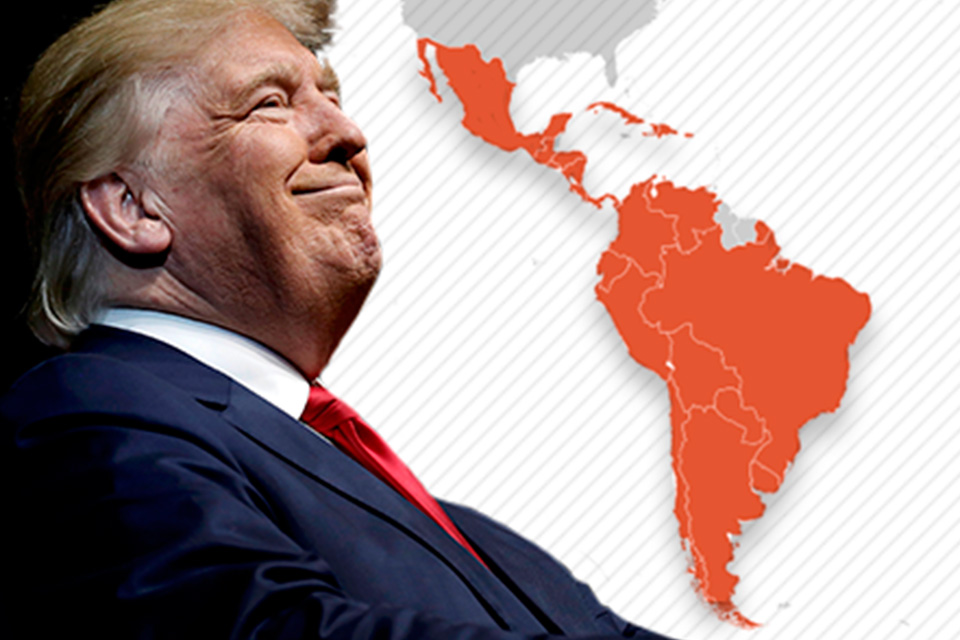
The Republican has interfered in the internal politics of countries such as Brazil, Colombia and Argentina. Trump justifies the military deployment in the Caribbean due to the “armed conflict” that his government is waging against drug cartels
For a president of the United States who denounced in May that he was against “interventionists” or those who seek to give “lessons on how to govern,” Latin America seems to be his own counterexample.
In that speech in Riyadh, Saudi Arabia, Donald Trump was referring to the Middle East. However, since his return to the White House, he has tried to extend his influence in Latin America, applying a carrot and stick policy that plunges the region into uncertainty.
The Republican has interfered in the internal politics of countries such as Brazil, Colombia and Argentina, while Naval deployment in the Caribbean raises questions about possible US military intervention in Venezuela to overthrow Nicolás Maduro.
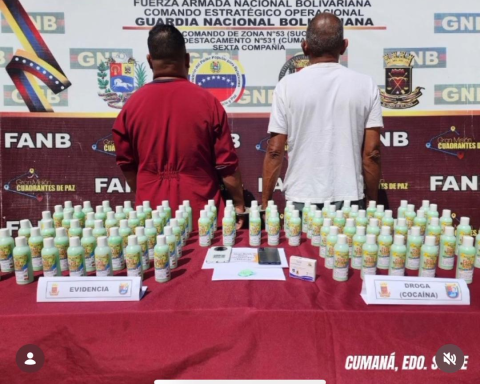
The US president justifies this deployment due to the “armed conflict” that his government is waging against drug cartels, classified by Washington as “terrorist” organizations.
However, Democratic Senator Mark Kelly said on ABC News that a combat group is not moved to the Caribbean “unless the intention is to intimidate a country” or “begin military operations in Venezuela.”
Trump even said that he approved covert CIA operations in Venezuela and has not ruled out ground attacks.
*Read also: CIA intervention and ground attacks: two cards that Trump plays with Venezuela
“Backyard” of the US
History has not been kind to American interventions in Latin America, as demonstrated by the fiasco of Operation Bay of Pigs in Cuba in 1961, which aimed to overthrow Fidel Castro.
In certain aspects, the president seems to resurrect the old Monroe doctrine, named after President James Monroe in the 1820s, when Washington consolidated his hegemony against the Europeans in Latin America, which they considered the “backyard” of the United States.
From the first days of his second term, Trump attacked Panama, threatening to take control of the interoceanic canal, in the name of his “America First” program and to counter the influence of China.
Then came pressure, with threats of tariffs on allied and rival countries to accept deported migrants, which unleashed a first diplomatic crisis with the Colombian government.
In the following months, the US president denounced a “witch hunt” against former far-right Brazilian president Jair Bolsonaro, who was convicted of attempted coup d’état, sparking the anger of Brasilia.
More recently, Washington made billions of dollars of support for the Argentine economy conditional on the victory of its ally Javier Milei in the legislative elections, which was later finalized. He also flattered other “friendly” leaders such as the Ecuadorian Daniel Noboa or the Salvadoran Nayib Bukele.
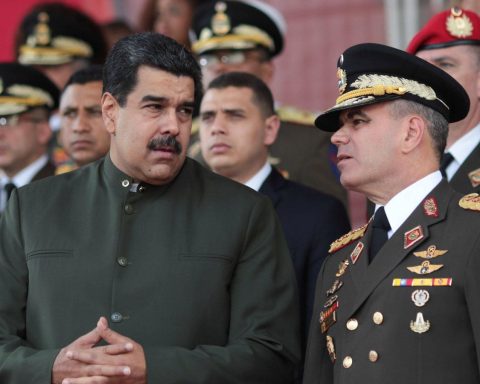
And, on the contrary, he vilified his detractors. Colombian President Gustavo Petro, for example, was described as a “drug trafficking leader” and imposed economic sanctions. Nicolás Maduro was described as the leader of a drug cartel and offered a $50 million reward for his capture.
While the relationship with Mexico and its president Claudia Sheinbaum, who has been cautious in her statements about Trump, has been marked by tariff tensions and trade negotiations.
Venezuela in the spotlight
Deep down, “the goal of the Trump administration is clearly to shape Latin American policyaccording to the MAGA (Make America Great Again) program,” Renata Segura, who directs the Latin America and the Caribbean program at the International Crisis Group, told AFP.
But it is Venezuela that raises the most concern among Latin American governments, a policy that has been promoted by the Secretary of State, Marco Rubio, of Cuban origin and a fierce opponent of Havana and Caracas.
Rubio is seen as the architect of the aggressive turn toward Caracas, with the hope that Maduro’s fall will have a domino effect that will even topple the Cuban regime.
With the Pentagon’s attacks against suspected drug traffickers’ vessels, “the United States sends a very clear signal” according to which “they will act unilaterally when they consider it appropriate,” Segura explained.
Trump, however, already tried during his first term (2017-2021) to overthrow Maduro, even forming a coalition with Latin American and European governments.
Maduro stood firm, with the support of his own base, that of Cuba, China and Russia.
“If the goal is to use militarized pressure to cause an internal rupture that leads to Maduro’s departure, I am concerned that that was already tried during Trump’s first term and it did not work,” said Roxanna Vigil, a researcher at the Council on Foreign Relations (CFR).
*Journalism in Venezuela is carried out in a hostile environment for the press with dozens of legal instruments in place to punish the word, especially the laws “against hate”, “against fascism” and “against the blockade.” This content was written taking into consideration the threats and limits that, consequently, have been imposed on the dissemination of information from within the country.
Post Views: 223