The MINSAP has not published updated figures on the number of confirmed cases, but medical sources consulted by CubaNet assure that polyclinics report dozens of infections daily.
Havana — Yaneisy, a 33-year-old woman living in Havana, began to feel pain in her ankles in the middle of this month after her work day. What seemed like simple fatigue turned into a very high fever, over 40 degrees that could not be lowered with medicine, then came swelling and joint pain.
“The symptoms are horrible. I can’t move or get out of bed yet. I can’t run my business or generate income for my family,” he told CubaNet.
His story comes from Alamar, a neighborhood east of the Cuban capital, but is similar to that of many other Cubans throughout the island. In common they have been infected with a “strange virus”.
Judging by the symptoms, these are several arboviruses. However, almost no one has been able to confirm with certainty which virus they suffer from because there is no availability of reagents to diagnose.
After weeks of silence and in the face of an avalanche of complaints on social networks, the Ministry of Public Health (MINSAP) recognized the simultaneous circulation of several viruses transmitted by mosquitoes in at least 12 provinces of the country.
Last week, Vice Minister Carilda García Peña reported that the rate of suspected cases of dengue It reached 24.3 per 100,000 inhabitants, which means that in the country, of 9.7 million inhabitants, there are about 2,360 affected by this disease.
He also admitted that its most serious variant, hemorrhagic, predominates.
In statements collected by state television and cited by EFE, the official admitted that 13,071 febrile cases were detected in the last week alone.
The epidemiological crisis is rapidly spreading through several Cuban provinces, aggravated by the accumulation of wastewater, the lack of fumigation and the precariousness of the public health system. The cases of Dengue, Oropouche and Chikungunya are multiplying, and a doctor interviewed by CubaNet warns about a new strain of the Chikungunya virus with more intense and prolonged symptoms.
Matanzas: the point of origin of the outbreak
The current outbreak had its first reports in July in the province of Matanzas, specifically in the España Republicana popular council, in the Perico municipality. Since then, the disease has spread to the rest of the island.
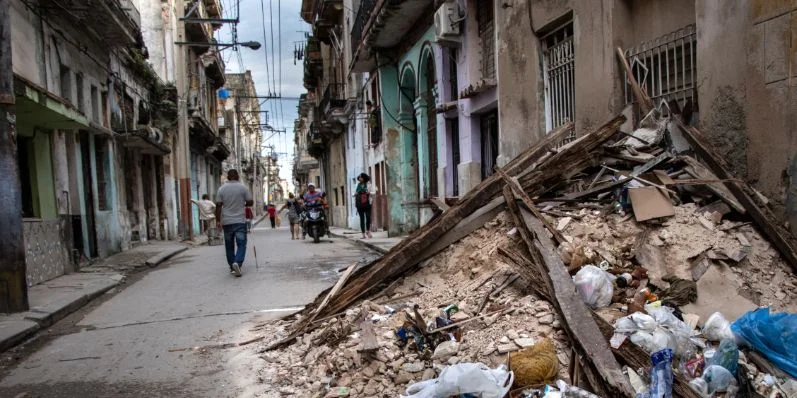
He Aedes aegyptivector of Dengue and Chikungunya, has found optimal conditions to reproduce due to rains, the collapse of drains and the accumulation of garbage. On the other hand, for years now there has been no fumigation inside the houses, nor have we seen that truck passing by at dawn and dusk emitting smoke on the streets.
According to the Cuban Observatory of Human Rights (OCDH), 72% of Cubans claim to live near garbage dumps or overflowing septic tanks. The lack of waste collection, the scarcity of clean water and the lack of fumigation have increased the health risk.
The government’s solution has been to make the victims themselves, that is, the citizens, responsible for the cleaning and sanitation of the stables. They have been asked to burn citrus fruits and They have offered repellents in foreign currency that are not available to the majority. This month, the state-owned company Tiendas Caribe promoted on social networks the sale of repellents in MLC.
“The proliferation of mosquitoes and the lack of hygiene in homes are creating an endless cycle of contagion,” explained an Immunology specialist consulted by CubaNetwho requested anonymity.
The new pathology that is affecting many citizens, according to the specialist, tends to be confused with the rest of the present viruses, however, there are always unique aspects in its cycle and evolution to differentiate it.
The expert explained that this strain of Chikungunya causes “more severe and long-lasting inflammation in the joints, as well as high fever and skin rashes.”
“In cases of children and older adults, it can cause fatal complications if their evolution is neglected, although it is not frequent,” he points out.
The virus, also known as hunchback diseasehas an incubation period of between three and seven days, and although it is rarely fatal, it can leave chronic consequences.
Nobody cares
Currently hospitals lack basic reagents and medications. Most patients are treated at home with anti-inflammatories and rehydration serums purchased on the informal market because pharmacies are practically empty. They acquire medications at high prices in network groups intended for sale. They are not sure whether they are paying for authentic or compliant medicines, but they have no choice.
“It is worrying that many people do not go to the doctor due to mistrust or lack of transportation,” the immunologist warned, but also recognized that health centers “do not have the capacity to admit more cases.”
Deteriorating medical conditions are combined with blackouts, water shortages and increased waste in the streets. It is very difficult to maintain hygiene inside homes and the streets are full of filth and leaks.
Rolando, 43 years old and resident of Cotorro, has been bedridden for several days with a high fever. His 10-year-old son is also infected.
“My child caught him first. They never admitted him; everything is at home. We have spent more than 2,000 pesos on medicine. The mosquitoes come out of a pit in the corner. This is not life,” he said.
A neighbor of his, who is over 50 years old, managed to recover, but continues to suffer from the consequences: “I have been cured for a month, but my ankles are still swollen. I can’t stand for long; the pain is unbearable,” he told this medium.
The MINSAP has not published updated figures on the number of confirmed cases, but medical sources consulted by CubaNet They assure that polyclinics report dozens of infections daily. The situation in Matanzas got out of control and they had to send more health personnel. The panorama in the rest of the country is not very different.
Cuba is currently facing a serious health crisis after the loss of more than 5,000 doctors in 2024, which brings the total casualties to more than 30,000 since 2021. Without medicines, with extremely deteriorated hospitals and a shortage of personnel, the authorities are unable to control this virus deployment.
Meanwhile, Cubans try to cope with the disease with home remedies and improvised treatments. “The virus passes, but the consequences remain,” says Yaneisy. “The worst thing is that we don’t know when it will come back or if it will be stronger next time.”