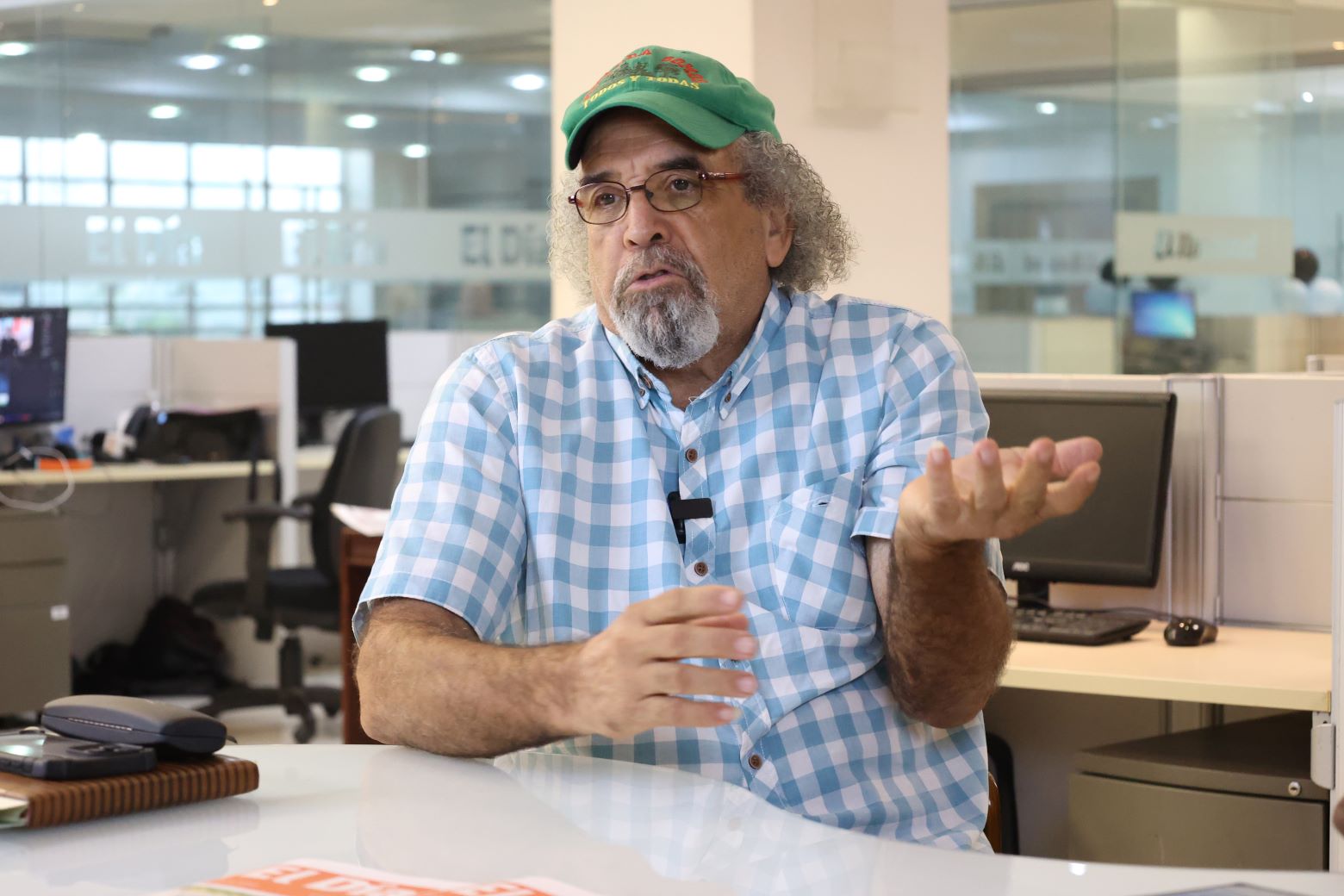
SANTO DOMINGO.- A prophet is, from the perspective of Father Rogelio Cruz, one who announces and denounces.
He got tired of the first and made the second a life vocation.
Speaking in EL DÍA for this series, he detailed the motivations for his way of being by declaring that he does not conceive of the priesthood without social commitment.
“How to talk about God to those who are hungry? How to talk about God to those whose rights are being violated?” he asks with the serenity of someone who has already found the answer: to serve.
His time in Mexico in his first years of life led him to encounter liberation theology,
current that would mark his entire pastoral vision.
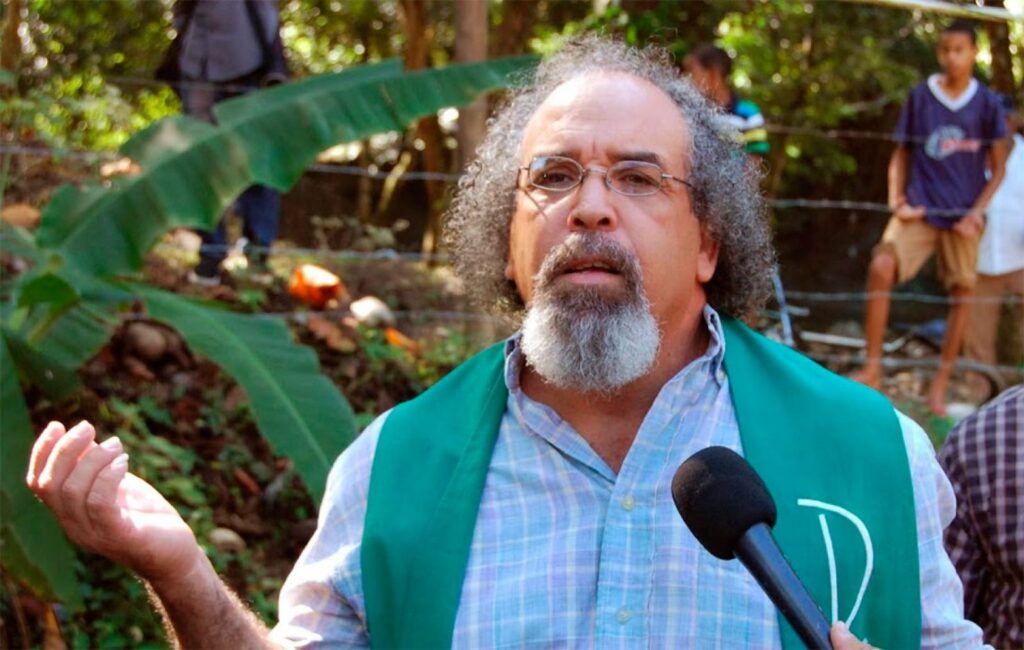
“What Jesus did was that,” he says with the lightness that characterizes him. “But the Church moved away from the original thought of Jesus and turned religion into a business.” He lost his
account of the accusations against him: heretic, Lutheran, Protestant…
“More than Lutheran, it is from Jesus,” he answers without hesitation. “Jesus did not do things for his own benefit, but for
benefit of those who needed it.”
He quotes the passage from the wedding at Cana to illustrate his vision: “Jesus transformed water into wine, but not for himself, but for others. This must be studied and understood.”
Between the town and the prison
There are plenty of moments of tension in his story. He has marched, occupied public institutions and been arrested more than once.
He cites a recent experience in Samaná, where three farmers were arrested. “I told them: give me those three people, I’ll take them and bring them back tomorrow. They didn’t want to. So I told them: no problem, here instead of three we are four. I am a voluntary prisoner.”
He has confronted the military, he has entered Congress violating security and he has slept in cells with peasants.
“Once they told me that I couldn’t put up a sign on Loma Miranda. They had an M-16 in their hand. I told them: if you’re going to kill me, shoot me there, and you’ll leave with the satisfaction that you killed a man.”
The guy took off. Rogelio stayed.
The confusion
According to what he says, on one occasion someone lost their life after being mistaken for him. “I’m not afraid,” he says with
a serene smile. “When they praise me too much, that doesn’t make me bigger, it makes me more humble. Whoever puts themselves under the light is more exposed.”
For him, being a public figure is not a source of pride, but rather a source of commitment. He doesn’t do things so that others can see them, but because they have to be done.
His fighting method combines faith and strategy. “I studied sociology to understand how society works and how I can act effectively.”
Remember one of his most daring actions: the occupation of National Assets.
“At ten in the morning we said: National Assets is occupied. We were more than 200 people. When they went to grab me, it was some old women who saved me.”
No privileges
After his departure from the traditional Catholic Church and his integration into the Brazilian Apostolic Catholic Church, he says he has gained something that is worth more to him than any investiture: freedom.
“I gained the possibility of being me, of continuing to be Rogelio. I gained absolute freedom.”
He says it with the aplomb of someone who has experienced persecution and accusations, but also with the peace of someone who no longer has to be held accountable.
“Why do you have to walk around with so many privileges?” he questions. “If I have to take a public car, I take it. If I don’t have to eat, I don’t eat.
“What’s the problem?” says the man who showed up to this newsroom hungry and wanting to eat.
rice with beans after driving from La Vega to Santo Domingo late in the afternoon and
without, precisely, having had lunch.
Communication
Its community model breaks with the verticality of the religious system. “It’s like returning religion to the people,” he says. “There everyone participates. Rogelio does not have the last word. It is a system of communication between everyone.” Currently, he coordinates 28 priests, but assures that he does not exercise authority over them: “I am not punishing or punishing. If you understand that that is what you have to do, do it, but do it well.” For Rogelio, power is not measured in positions or titles, but in having the truth.
From his sociology studies he extracted a vital lesson: never accept that things can only be
do in a way. “Don’t tell me how to do things,” he warns. “I have totally five ways
different.”
Profile
Name:
Rogelio Cruz
Position: Priest
Detail: He has combined his life between the priesthood and social struggles, which has led him to be
loved and hated with equal intensity.This article was originally published in The Day