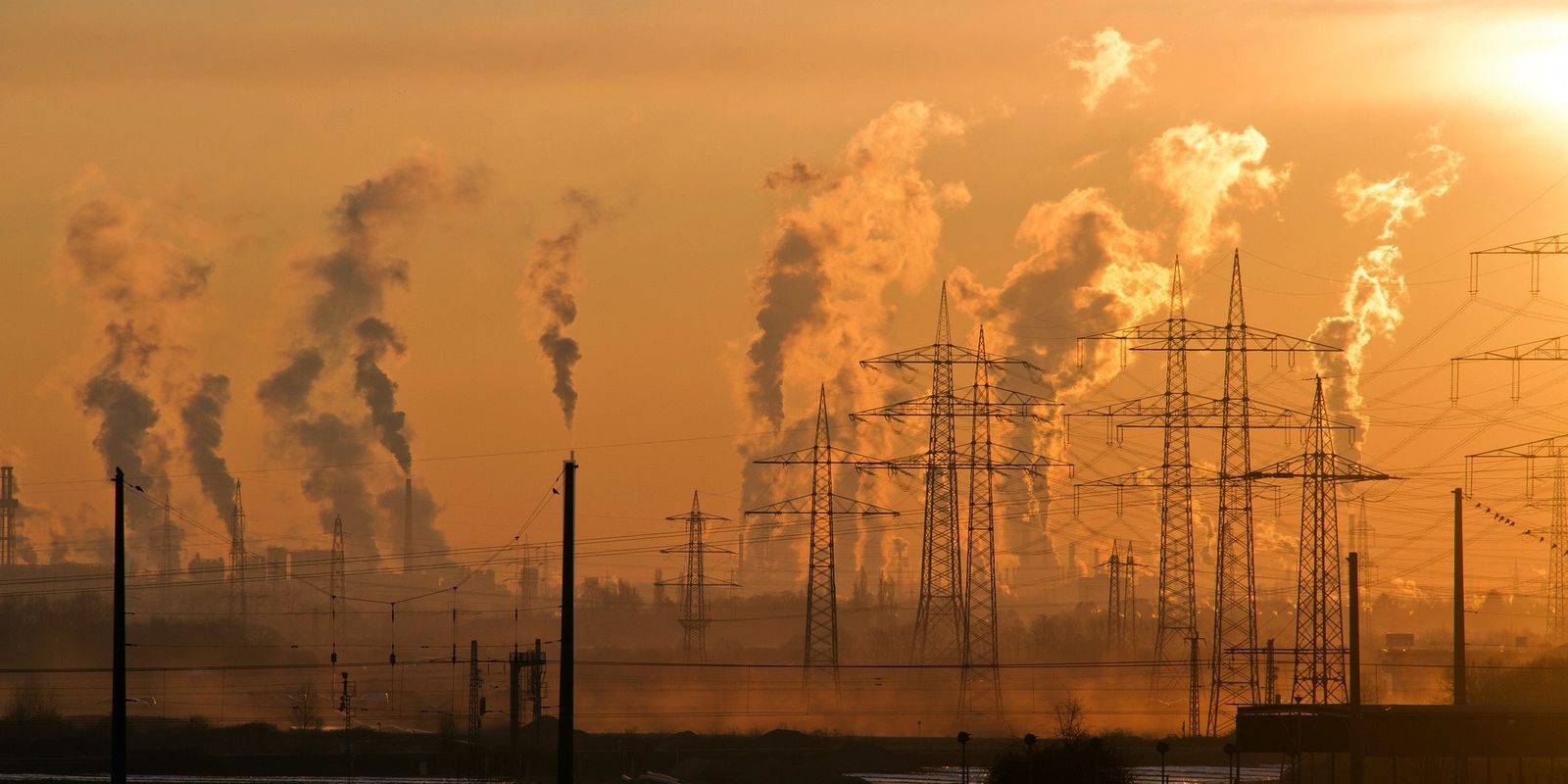
The richest 0.1% of the world’s population emits more greenhouse gases in just one day than half of the poorest people. Just one individual among the richest emits, on average, 800 kilos of carbon dioxide equivalent (CO₂e) per day, 400 times more than someone in the lowest purchasing power group, who has an average of two kilos of CO₂/day.
The data is part of the report Climate Loot: how a few powerful people are leading the planet to collapselaunched this Wednesday (29), by the global civil society organization, Oxfam.
The report analyzes how much the planet is still capable of emitting greenhouse gases to maintain the Paris Agreement target of containing global warming to 1.5 degrees Celsius (°C) compared to the pre-industrial period.
As a database, the researchers used calculations by the Intergovernmental Panel on Climate Change (IPCC), which estimated, in 1990, a margin of 1,149 Gigatonnes (Gt) of CO₂e to guarantee a 50% chance of success in containing global warming.
>> Follow the channel Brazil Agency on WhatsApp
However, the report warns that, since 1990, the richest 0.1% of the world’s population has increased its share of global CO₂ emissions by 32%while the poorest half saw their share fall by 3%.
“Over the past 24 years, emissions have continued to increase, and 89% of this remaining carbon budget has already been consumed,” says the report.
According to the executive director of Oxfam Brasil, Viviana Santiago, the data revealed by the study reinforce the idea that that those who most cause the effects of climate change must face the problem.
“When we say that the principle of common but differentiated responsibilities is what should illuminate the actions of countries in the climate crisis, this also has to do with our way of life as a whole of society”, he reinforces.
The responsibility of the richest for the impacts on the global climate becomes clearer with another piece of information brought by the researchers. According to them, If the entire world population had the same greenhouse gas emission behavior as the world’s richest, the emissions limit to avoid climate breakdown would be exhausted in less than three weeks.
“These people have their own lifestyle, and the way they generate their wealth and consume is completely related to carbon emissions. And it is a completely disproportionate emission, in relation to the rest of the planet”, explains Viviana.
Given this data, the researchers also calculated what reduction in emissions would be necessary for the 0.1% richest population to keep global warming below 1.5°C. According to the report, the richest need to reduce individual emissions by 99% by 2030.
Investments
With the greatest consumption power in the world, this small portion of the global population also emits greenhouse gases through their financial investments, as 60% of applications are made in high-emission economic activities, such as oil, gas and mining.
According to the study, the average billionaire produces 1.9 million tons of CO₂e per year through investments alone.
Influence
In addition to maintaining the consumption pattern capable of having a greater impact on the planet’s climate, investments by the world’s richest also finance greater influence in decisive environments such as the United Nations Conference on Climate Change (COP) itself.
The Oxfam report cites the example of COP29, which took place in 2024, in the city of Baku, Azerbaijan. At the conference, 1,773 people linked to the coal, oil and gas sectors were granted ─ a delegation capable of exceeding the participation average of all representatives of the 10 most climate-vulnerable countries.
“We realize how this power and wealth, of potential polluters and those who create the climate crisis, are also in these spaces where the world is trying to build agreements to pause global warming”, reinforces the Executive Director of the Institution.
Given the data presented, the report also makes recommendations for reducing the climate impacts caused by great wealth. Among the measures are the taxation and limitation of the action of the super-rich in environments with political influence on global decisions, better distribution of the climate budget and strengthening the participation of civil society and traditional groups.
“The climate crisis is a crisis of inequality. The richest individuals on the planet finance and profit from climate destruction, while the majority of the world’s population pays the price of the fatal consequences of their unchecked power”, concludes Amitabh Behar, executive director of Oxfam International.