Havana/This Wednesday, Santiago de Cuba became the gateway for Melissa, which some meteorologists have described as “the hurricane of the century,” and which still has the population in suspense. Five hours after the meteor entered Chivirico, a few kilometers from the main city, Civil Defense begins to quantify the damage, among which the 241 communities that are cut off and where more than 140,000 people reside stand out.
The area of greatest concern is Segundo Frente, Songo-La Maya and Tercer Frente where the flow of the rivers suddenly grew, obstructing communications. In addition, Contramaestre, where strong winds were reported, also has numerous roads blocked, as well as the communities of Guaninao and Ruta Martiana.
Some 284,000 people “were protected” throughout the province, especially in Aserradero and Guamá, where maximum winds have reached 205 kilometers per hour, with higher gusts. The waves, more than four meters high, scared the neighbors. Desperation is spreading among the relatives of the residents of Chivirico, who have not tired of calling phones that do not give any signal. “It is desperate what we are going through without knowing about our families,” said a user in a Facebook buying and selling group, the networks that were most used today to ask and exchange any news or even make their landlines available to each other while they were working.
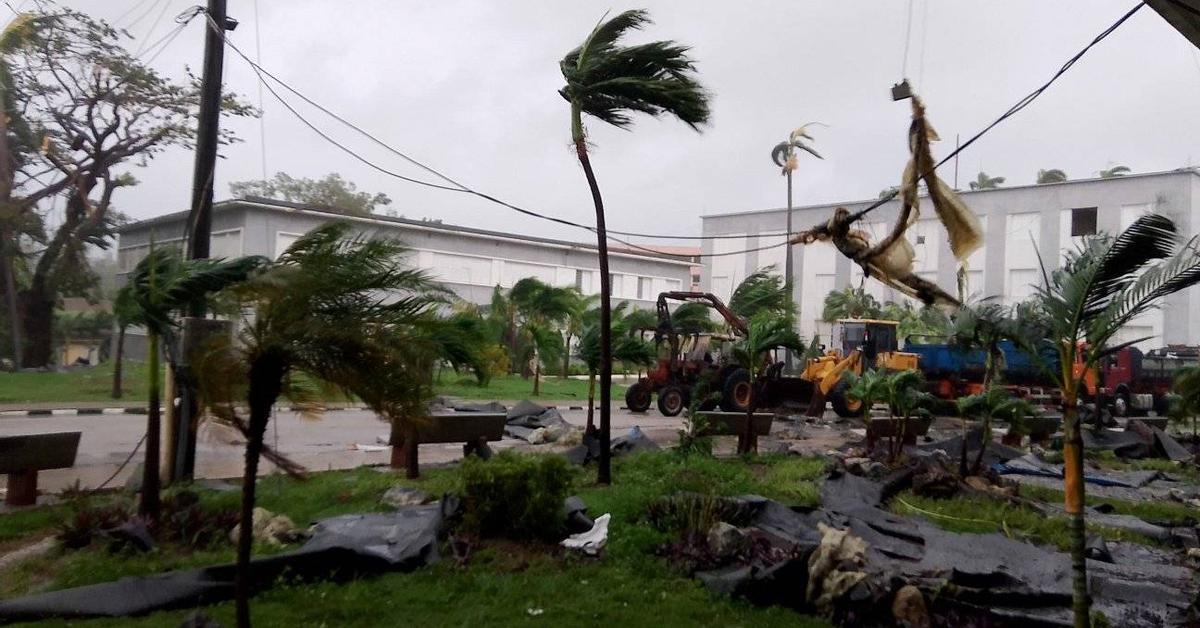
The winds and rains in Santiago “covered the entire territory,” said the head of Civil Defense. The eye crossed small towns in Palma Soriano heading towards Mangos de Baraguá, where it crossed into Holguín. The winds blew away covers and electrical and telephone lines, although the damage to infrastructure will take longer to be evaluated.
In Holguín it is still early to begin to count damages, since the hurricane has not left its territory –and the Island–, but the winds have hit Mayarí very strongly and the water continues to rise. After days of flooding of the Sagua River in Sagua de Tánamo – which left two dead – the channel was already on the verge of overflowing, which seems to have reached its tributaries. There is talk of accumulated rainfall “exceeding historical records” and it has not stopped raining yet.
Information has been missed in Guantanamo, where the winds have been around 110 kilometers per hour and neighbors spoke of disasters. “On my block even the tanks are rolling. I think Guantánamo is falling into pieces”, “A lot of sustained wind and huge gusts, many roofs flying everywhere”, “With very strong winds. It seems like we are on the beach and the waves are hitting. I have never felt that, the world is ending outside,” they report. Some have expressed their discomfort at the lack of prominence of the province in the first morning news.
Yudelkis Ortiz Barceló, president of the Provincial Defense Council of Granma, has reported the dumping of the reservoirs, which continued to accumulate water. Until 7 in the morning, no overflows were reported, but the situation was very tense due to the large accumulations of rain. “We ask the population once again not to despair, to remain safe. Only life will give us the possibility to move forward, to get up from this situation. Strength, Granma,” he said before dawn.
Meanwhile, in Camagüey, the day has been less alarming than expected, according to sources from 14ymedio. “It hasn’t rained here, nor is there wind or anything. Three drops of rain in the entire morning. Sometimes you hear a little breeze that doesn’t even amount to wind. They turned on the power for an hour at 12:30 at night since 10 a.m. when it had gone away. We loaded everything, filled the tank and made today’s rice. Then at 5 a.m. they turned it on again and at 7:30 a.m. there was no more. So far, we are better than we thought,” they told this diary.