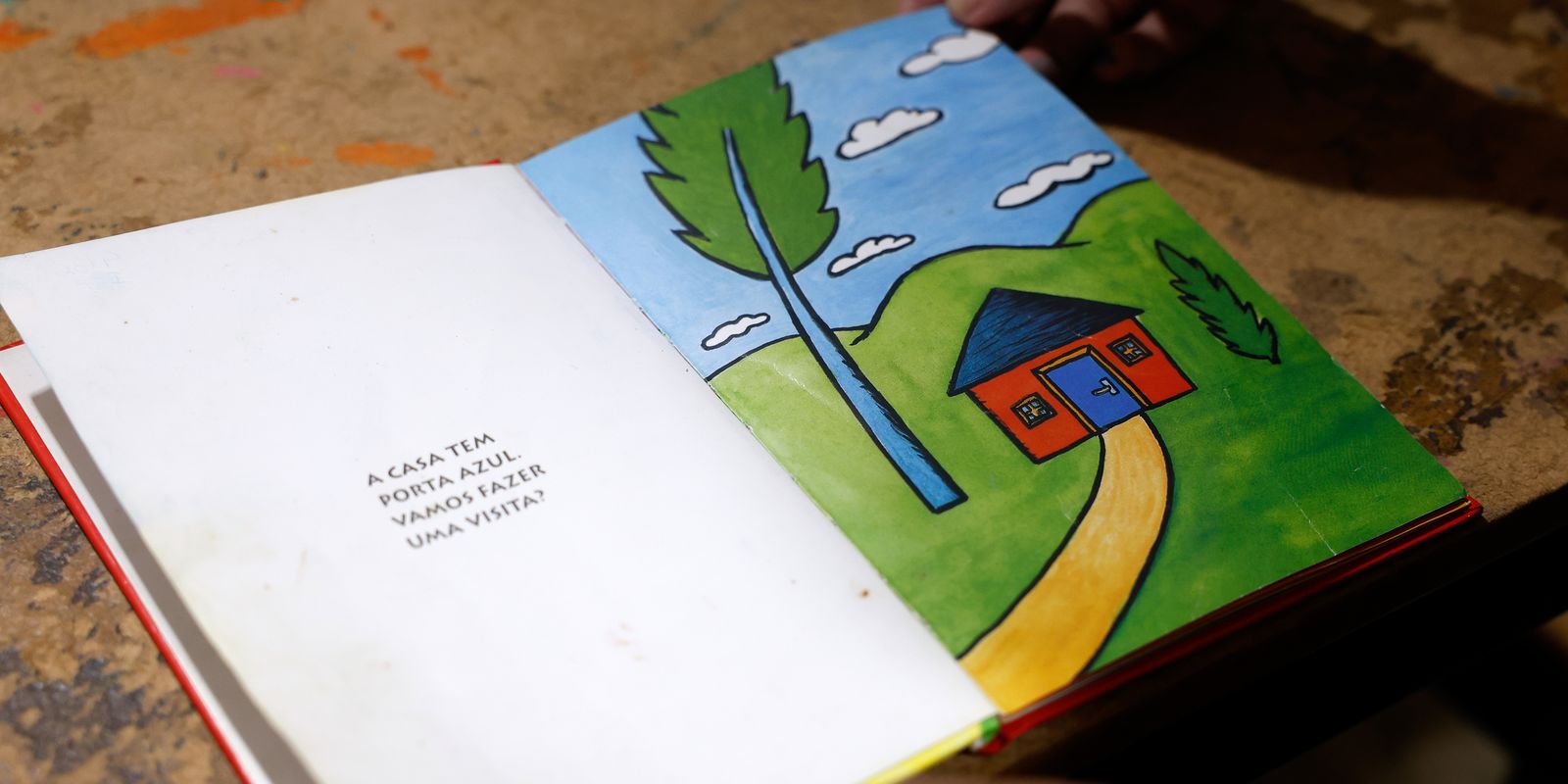
National Book Day, celebrated in Brazil next Wednesday (29), can be an opportunity to encourage reading from childhood onwards, contributing to a person’s development. This is what the president of the National Library (BN), Marco Lucchesi, says.
“Without a doubt, childhood that begins with this impact of reading ends up reading the world of books and reading the book of the world. These are two discoveries that complement each other. The child creates within them journeys to other worlds, possibilities for exercising freedom, imagination, creativity, and, particularly, empathy.”
“The child begins to understand that there are other forms of life, other organizations of the world, other different forms of affection or that recover as a mirror what that child experiences in their home. But, above all, it gives this empathy.”
In an interview with Brazil AgencyLucchesi recalls that Book Day in Brazil is celebrated on October 29th as it is the anniversary of the founding of the National Library.
“There are 215 years of great adventures, of great results for the country, of a policy of memory that spans countless generations. And each one sets a direction for that same policy”, he states. “The book means a degree of expansion of the child’s sensitivity, imagination, intellect and spirit. It is for a better adult that reading guides, for a more generous, more fraternal adult that reading opens doors and windows with great beauty”.
Encouraging reading
With this objective, the National Library Foundation reinforces the activities of the Casa da Leitura, opened in 1993, which aims to train readers and guarantee democratic access to literature, especially aimed at children and young people. The unit operates at Rua Pereira da Silva, 86, in Laranjeiras, south of Rio de Janeiro. Opening hours are from Monday to Friday, from 10am to 5pm.
“Casa da Leitura has a fundamental role in facing the challenges of creating new voices, expanding the place of these children and adolescents”, indicated Marco Lucchesi.
This strategic vision of BN was expanded last week with the inauguration of a library in a hospital setting, under the coordination of the institution. The pioneer was the Hospital Universitário Antonio Pedro (HUAP), at the Universidade Federal Fluminense (UFF). According to Lucchesi, the idea is to establish bibliotherapy, that is, working with books as great therapy, not only for neurodiverse children, but also for companions and medical teams.
“We will continue working with this goal of hospitals, because we want to shorten the wait for everyone. We want to humanize these spaces with the project of these libraries, always curated by BN.”
Another action in the socio-educational area should be launched by the National Library in February next year, with the aim of bringing books to teenagers deprived of their liberty. Lucchesi highlighted that children are everywhere and the exercise of reading is not just about bringing reading to people, but learning from people how they can read.

The Lê Pra Mim project, to encourage reading Brazilian children’s books, in Brasília. Photo: Fabio Rodrigues-Pozzebom/ Agência Brasil
Empowerment
For professor Godofredo de Oliveira Neto, immortal at the Brazilian Academy of Letters (ABL), the book enhances children’s cognition and leads them to a more humanistic world. Hence, the importance of this date to highlight the importance of the book for children to later have a more critical and competent view of things, including politics and science.
“Just because the book serves as teaching and para-teaching material in schools throughout Brazil, this already shows the importance of the book. It’s not a whim, it’s something fundamental”, says the immortal, who also recalled that the paper book is not dead. “On the contrary, he manages to survive alongside the e-bookof the digital book”.
Oliveira Neto cites the experience of Sweden, which had abolished printed books and reversed its decision. “So, general knowledge books, history, geography, mathematics, Portuguese, humanities and social sciences are fundamental to supporting children in the world”, he argued.
Regarding fiction literature, the teacher adds that the experience, in the classroom, of reading with children and realizing that the creation of another world by the author coincides with stories created by the children themselves is positive.
“It’s something fascinating. This way, they immerse themselves in the literary world and start to enjoy reading. Again, it’s not just a whim, but it’s something fundamental for their constitution in the world. I think this date and the appreciation of the book are fundamental”, concluded Oliveira Neto.
The president of ABL, Merval Pereira, added that National Book Day “is a day to celebrate the transformative power of reading in our lives, an opportunity to encourage the love of books and the appreciation of literature.
“With books, children explore imagination and skills. By reading, they learn to recognize the importance of dialogue and inclusion, crucial values for modern life. As opinion leaders, we must promote and facilitate access to books for everyone, from the first years of life. And encourage them to find the various worlds that exist within books.”

Public crowds to the 20th Rio de Janeiro Book Biennial, at Riocentro, in Barra da Tijuca, west of the capital of Rio de Janeiro, in 2023. Photo: Tomaz Silva/Agência Brasil
Special flavor
In the opinion of Professor Hubert Alqueres, vice-president of the Brazilian Association of Books and Educational Contents (Abrelivros) and vice-president of Operations at the Brazilian Chamber of Books (CBL), October 29th is a very important date for Brazilians to celebrate reading, authors, publishers, booksellers, teachers and, above all, readers.
This year, the date has an even more special flavor, because Rio de Janeiro was chosen by the United Nations Educational, Scientific and Cultural Organization (Unesco) as the World Book Capital. “It is the first Portuguese-speaking city to receive this distinction”, he highlighted.
“For children, reading helps to develop vocabulary, reasoning, sensitivity, creativity. I think that, for young people, it expands worlds, provides cultural references, develops critical sense. And, for those who are older or going through difficult health moments, books are often great company.”
Also curator of the Jabuti Prize, Alqueres commented that it is very important, on National Book Day, to discuss these increasingly better and more effective public policies to win over readers, encompassing children, young people and adults, from the point of view of education and culture.
Promoted by CBL, the Jabuti Prize is the most traditional literary award in Brazil. Created in 1959 by the then president of the CBL, Edgard Cavalheiro, the award was designed to reward the most prominent authors, editors, illustrators, printers and booksellers each year.