In Colombia, cash continues to be one of the most used means of payment, especially in informal commerce and in rural areas where access to digital financial services is limited. Despite the advance of electronic wallets, immediate transfers and QR code payments, cash continues to be an essential tool for millions of Colombians who prefer tangibility and direct control over their money.
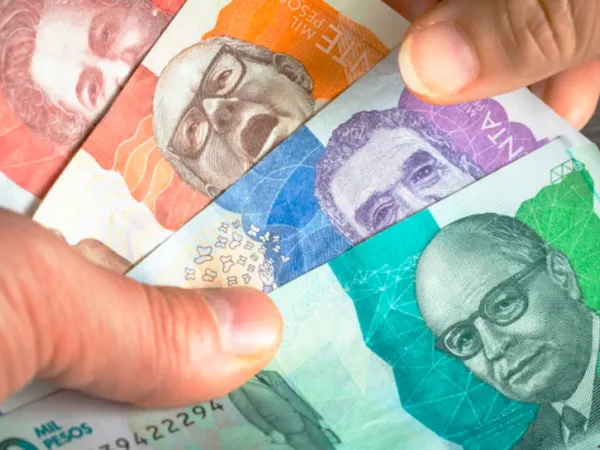
Colombian banknotes, in addition to being a means of exchange, also represent a symbol of national identity. The current family of banknotes of the Banco de la República—put into circulation between 2016 and 2017— pays tribute to historical figures and the natural and cultural wealth of the country, such as Gabriel García Márquez, Alfonso López Michelsen or the landscape of Caño Cristales.
See more: How to send money from WhatsApp with dale!? This is how it works
These designs combine art and technology, incorporating advanced security measures that seek to prevent counterfeiting. Although the country is moving towards financial digitalization, Cash continues to play a leading role in the everyday economy, functioning as a bridge between tradition and modernity in daily transactions.
Colombian peso
For this reason, Daniel Gómez, coordinator of the Criminal and Judicial Investigation Program of the Alberto Merani Higher Education Foundation, shared some practical keys to identify counterfeit bills taking into consideration the security elements of the Bank of the Republic:
See more: Dale wallet! won Platinum Award in Digital Transformation at Fintech Americas
1. Observe the details: Each bill has specific images, letters, and sizes that must match its denomination. Fake ones usually have pale colors or misaligned letters. Careful observation of typography and color is the first filter to detect irregularities.
2. Touch the texture: Paper money has a characteristic relief that differentiates it from a common sheet. On authentic banknotes you can feel raised textures on the faces, numbers or texts, especially in the areas where the main figures are printed.
3. Look against the light: When placing the bill in front of a light source, images or watermarks that are not visible to the naked eye should be observed. It is also possible to identify if the bill is altered or made up of different halves, a technique used by some counterfeiters.
See more: Looking for a job with basic studies? There is a job fair in Bogotá
4. Turn the bill: By tilting it slightly, color changes are perceived in certain figures. For example, the 100,000 peso bill shows a flower that changes from green to blue, while the 10,000 bill shows a frog that also changes its hue.
5. Check with ultraviolet light: Under UV or fluorescent light, microtexts, hidden images and initials such as “BRC”, the acronym for Banco de la República, should appear. In addition, all banknotes have a central security strip that, when viewed against the light, shows those same letters continuously.
Recognizing an authentic bill is a simple practice that can prevent losses and fraud. Knowing the security features not only protects the citizen, but also strengthens the culture of legality and trust in the national economy.
See more: Use of cash: its importance in times of crisis and digital contingencies
Thus, preventing the circulation of counterfeit bills in Colombia is a task that requires both institutional surveillance and citizen education. He Banco de la República recommends that users always verify three basic aspects: look, touch and tilt the bill..
In addition, the new families of banknotes incorporate advanced technologies such as optically variable inks, microtexts and fluorescent elements. Recognizing these characteristics helps avoid fraud and strengthens confidence in circulating money, protecting both consumers and merchants.
VALENTINA DELGADILLO ABELLO
Portfolio Journalist