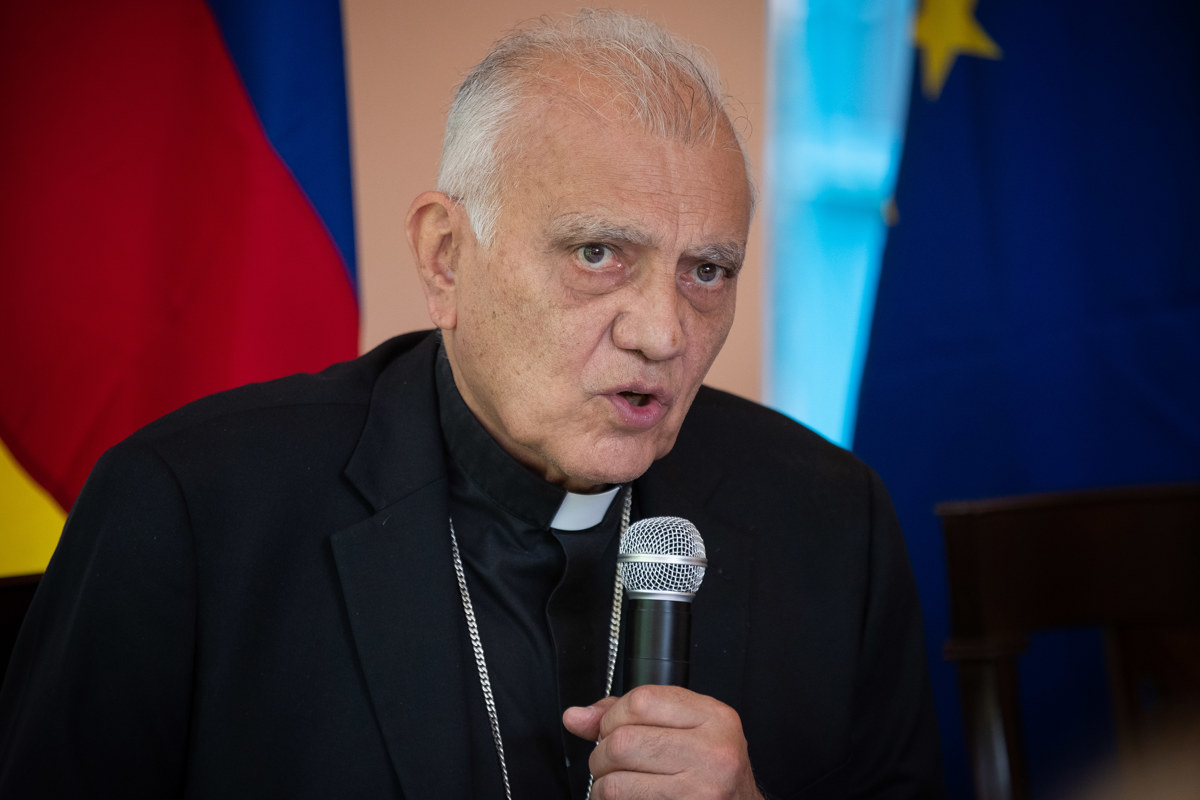
The Venezuelan NGO Committee for the Freedom of Political Prisoners (CLIPP) expressed solidarity this Tuesday with Cardinal Baltazar Porraswho reported that he could not reach the town of Isnotú (Trujillo state, west) due to impediments, where the canonization and the eve of the birth of the first saint of Venezuela, José Gregorio Hernández, were celebrated.
“We categorically reject any act, language or campaign that, through profane speeches or disqualifications, seeks to tarnish the spiritual and moral authority of Cardinal Baltazar Porras and the Venezuelan Church,” the organization said in a statement, shared on its X account.
On Saturday, Porras assured that he and the other people he was with were prevented from going to Isnotú, by land, from an airport in the state of Lara (west, near Trujillo), where, he said, they were “surrounded by a number of soldiers armed to the teeth.”
In a video, Porras, who was on a private flight, explained that they landed in Lara after the pilots received the instruction to “make a stopover” in that region because, supposedly, the airport in Trujillo was closed.
However, he continued, they later received “direct information that the airport” in Trujillo “was not closed and that different flights continued to arrive.”
In the opinion of CLIPP, “these attacks are not only unjustified, but also deeply disrespectful to an institution that has been a voice of consolation, accompaniment and truth in the midst of the suffering of the Venezuelan people.”
For the NGO, “the Church has been consistent”, since, it stressed, at the time it “protected the life” of the deceased president Hugo Chávez (1999-2013) “when it needed it” and “today it raises its voice for hundreds of Venezuelans unjustly detained, disappeared, isolated or tortured.”
On October 18, Porras stated from Rome, on the eve of Hernández’s canonization, that the situation in Venezuela is “morally unacceptable” and mentioned that “the decline in the exercise of citizen freedom, the growth of poverty” and “militarization as a form of government,” among others, “make up a panorama that does not help peaceful coexistence.”