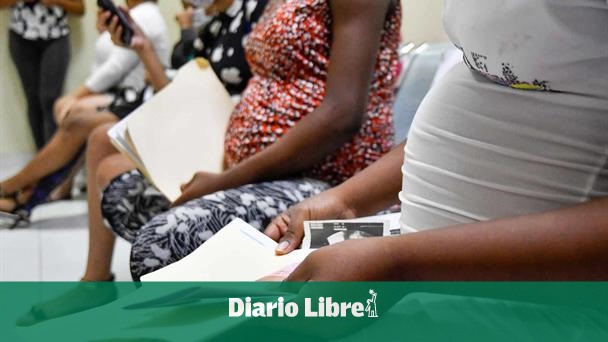
Although the country banned child marriage in 2021, the teenage motherhood remains anchored as one of the deepest debts, where, despite economic advances, it is evident that the majority of pregnant minors continue to have children with significantly older men.
The administrative records of the Civil Status Officialspublished by the National Statistics Office (ONE), reveal that during 2024 they were born 137,946 children and girls throughout the country.
Of that figure, more than 19,800 births (14.3%) corresponded to teenage mothers between 15 and 19 years old.
Regarding the ages of the parents, the majority were between 25 and 39 yearsthat is, young adults with a difference of at least 10 to 20 years compared to the young mothers.
The report’s figures revealed a pattern between mothers under 15 years old with 585 birthswhere 143 parents between the ages of 20-24 years, 40 between 25-29, 16 between 30-34, 6 between 35-39 and 91 between 15-19 years old predominated.
This same dynamic is repeated in another group of girls between 15 to 19 yearswhich concentrated more than 15 thousand birthswith 5,888 parents between 20 and 24 years old, 6,601 between 25 and 29, and 3,630 between 30 and 34 years old.
In contrast, the minor parents are practically non-existentwith just two records of men 15-19 years old.
However, the amount of unreported ages of parents amounts to 283 in relation to the mothers under 15 years old and 3,808 between 15 -19 years old.
Culture
These joints are crossed by power asymmetriesas detailed by the social anthropologist Tahira Vargaswho pointed out inequality, lack of sexual education and a culture that normalizes the links between adult men and minors as structural causes.
“They are not youthful courtships. They are adult men that establish unequal relationships with girls and adolescents. That is sexual abusealthough culturally it is disguised as love or responsibility,” he said.
“When an adult man gets involved with a girl or adolescent, it is not about love or an emotional relationship. It is sexual abuse,” Tahira Vargas emphasized, explaining that minors do not have the capacity to decide about their bodies or maintain an equal relationship with an adult.
The anthropologist assured that behind many teenage pregnancies there is a dynamic of manipulation and power disguised as love. He explained that adult men use “falling in love” as a strategy to seduce and emotionally subjugate girls and adolescents.
The mirage of educational improvement
Although he country shows progress in school coverage, Vargas rejects the idea that there is a true educational improvement.
“There is no comprehensive sexual education in schools, and we have been fighting for that for years. Girls and boys do not know their bodies or harassment strategies or deception used by aggressors. “They are defenseless in the face of an increasingly sophisticated environment,” he said.
He warned that the school systemdoes not address the limits of sexual relations, which could be reproducing patterns of violence. “You have to empower the child and adolescent population to face situations of abuse and prevent unwanted pregnancies, and also educate men so that they are not aggressors or harassers,” he explained.