The Colombian health system mobilized resources for more than $121 billion in 2024according to preliminary figures from the Health Satellite Account (CSS) published by Dane.
The data reveals the behavior of the three main financing schemes, contributory, subsidized and health insurance, and allow us to measure the magnitude of the flows that support the insurance, administration and provision of services in the country.
(See: Shock over mortality figures from orphan diseases)
According to the report, the Administrator of the Resources of the General Health Social Security System (Adres) concentrated the bulk of the income from the contributory scheme, which amounted to $51.5 billion in 2024. Contributions to social security represented 65.9% of these resources, while transfers from the National Government, intended to finance the contributory regime, contributed 33.8%.
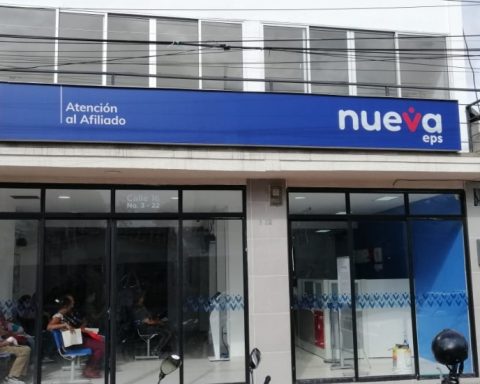
Of that total figure, Health Promotion Entities (EPS) received $47.8 billion in compensationthat is, the transfers that Adres makes to cover the health services of contributing members and beneficiaries.
The report states that The items between financing schemes and within each scheme concentrated 95.9% of the contributory incomewhile other income of national origin, which includes returns, fees and other concepts, represented 3.7%. This behavior confirms that the financing of this regime depends predominantly on mandatory contributions and transfers administered by Adres.
(See more: Government redefines the operation of the EPS under the preventive health model)
The EPS of the contributory regime executed $50.5 billion in health services contracting.
iStock
In terms of spending, The contributory scheme registered a total of $53.2 billion in 2024of which $50.5 billion corresponded to contracting health services with the providing institutions (IPS).
Health care, which includes hospitalization, consultation, diagnosis, procedures, medications and other healthcare services, represented 98.1% of health spending, while preventive care had a share of 1.9%. Administration expenses, for their part, amounted to $2.7 billion and represented 5% of the total scheme.
According to the Satellite Account, The contributory administration expenses were distributed by 46.9% as other intermediate consumption.such as fees, leases, public services, maintenance and repairs, 32.5% for remuneration of employees, and the rest among other expenses and minor items.
Regarding the overall execution of resources, the items between financing schemes concentrated 98.7% of the total expenditure, which reflects the weight of the transfers from the Adres to the EPS in the structure of the contributory regime.
(Read also: Colombia maintains high dengue cases: how many are reported in the country?)

The subsidized scheme recorded revenues of $42.9 billion and total expenses of $45.7 billion.
iStock
Behavior of the subsidized regime
The subsidized scheme, financed mainly with public resources administered by Adres, reported total income of $42.9 billion in 2024. Of that amount, 99.3% corresponded to items between financing schemes and within each schemethat is, transfers intended to insure the population affiliated with the subsidized regime. Other income of national origin, which includes moderation fees, co-payments, interests and other complementary resources, represented only 0.7%.
In the spending component, the EPS of the subsidized regime executed $45.7 billion during 2024. Administration expenses totaled $1.4 trillion, with a 51.2% share in employee compensation, 37.7% in other intermediate consumption and 11.1% in other expenses.
Meanwhile, health expenses, associated with contracting services with the IPS, amounted to $44.3 billion. Attention to health functions concentrated 94.9% of that valuewhile preventive care reached 5.1%. In aggregate terms, health spending represented 96.9% of the total subsidized scheme, compared to 3.1% for administrative spending.
The Dane report also indicates that the resources channeled through the two public insurance schemes, contributory and subsidizedtotaled close to $94.4 billion pesos in 2024. This means that the system administered by Adres concentrated 77.8% of the total income of the health sector, while private insurance represented the remaining 22.2%.
(Read: Resignation of Giovanni Rubiano shakes up the panorama in the Health Superintendence)

Health insurance mobilized $25.1 billion in income and $22.3 billion in expenses.
iStock
Health insurance
The health insurance component, which groups together policies, voluntary and prepaid plans, reached total income of $25.1 billion in 2024. Of this value, Income from voluntary prepayments had the highest participation, with 80.6%, followed by mandatory prepayments, with 15.6%, and other income of national origin, with 3.8%. The private segment of the system, which complements public coverage, continues to represent a significant flow of resources aimed at financing additional services and coverage.
In terms of spending, Health insurance companies allocated $22.3 billion in 2024, of which $14 billion corresponded to compensation for health services contracted with providing institutions. Care in health functions explained 99.8% of these compensations, while unspecified auxiliary services represented 0.2%.
The administration expenses of the insurers totaled $8.2 trillion, with an internal structure made up of 60.7% in other intermediate consumption, 33.9% in compensation of employees and 5.4% in other expenses. On the whole, Health expenses represented 63% of the total insurance scheme, while administrative expenses participated with 37%..
(See: Scientific Societies request technical debate in alternative health reform presentation)

In the subsidized regime, preventive care represented 5.1% of spending, compared to only 1.9% in the contributory regime.
iStock
Additionally, the sum of the three schemes, contributory, subsidized and insurance, shows that the country’s total health spending, including administration, compensation and payments for services, amounted to $121.2 billion in 2024.
Of that total, 43.9% was allocated to the contributory regime, 37.7% to the subsidized regime and 18.4% to private insurance. In terms of composition, expenses directly related to health care represented the majority of the resources mobilized, while administrative expenses ranged between 3% and 5% in public regimes and exceeded 35% in private ones.
In that sense, overall, Adres managed more than $94 billion in the two public insurance regimes, which is equivalent to more than three quarters of total spending. Meanwhile, the private insurance scheme mobilized a fifth of the total, evidencing its complementary role within the system.
(See: Investing in health, a strategic bet for development and equity in Latin America)
DIANA K. RODRÍGUEZ T.
Portfolio Journalist