The financial deterioration of the Colombian health system continues to deepen and maintains a worsening trend that compromises the sustainability of the sector and patient access to services and medications.
This is revealed by the update of the financial report presented by the Sectorial firm during the AFI Summit 2025, an event organized by the Association of Pharmaceutical Research and Development Laboratories (Afidro).
(See: Shock over mortality figures from orphan diseases)
The document, which covers consolidated information until the second quarter of 2025, shows that The total portfolio of Afidro affiliates reached $4.2 billion, of which 35.3% corresponds to past due loans. The figure confirms that, between the first and second quarters of the year, there were no signs of improvement, and the financial deterioration continues to directly affect patients, with increasing barriers in access to medications, services and procedures.
According to the analysis presentedthe total overdue portfolio amounts to $1.49 trillion, while the written-off portfolio, that is, that considered unrecoverable, went from 1.08% in the first quarter to 2.95% in the second quarter of 2025. Likewise, the debt with more than one year in arrears increased from 3.82% to 4.93% between the two periods analyzed.
One of the most significant data is that Pharmaceutical managers concentrate $2.73 trillion, equivalent to 64% of the total debtwith a maturity level of 25.05%, which shows the magnitude of the impact on the pharmaceutical component of the system.
“The figures confirm that the situation of the health system worsens with the passage of time. Today we face a structural financial deterioration, with debts that as of June 2025 amount to $24 billion with suppliers“said Alejandro Escobar, from the Sectorial firm.
The expert warned that the slowdown in GDP in the health sector since 2024, driven by uncertainty regarding the reform and the insurance crisis, “has slowed investment, increased delinquencies and eroded trust among actors.”
(Read more: Government redefines the operation of the EPS under the preventive health model)
Pharmaceutical managers concentrate $2.73 trillion, equivalent to 64% of the total debt, with a maturity of 25.05%.
iStock
According to the report, patients are the main affected, with greater delays in the delivery of medicines, delays in procedures and increasing restrictions on the continuity of treatments.
In the first half of 2025 alone, 6,084 health services were closed, and user dissatisfaction increased by 33% compared to the same period of the previous year. In that same period, more than one million complaints were received, of which 30.2% corresponded to the lack of opportunity in assigning medical appointments and 18.8% to the denial of delivery of technologies or medications.
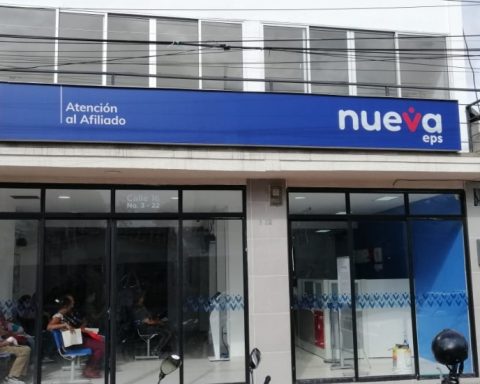
Another critical point identified in the analysis is the situation of Nueva EPS, which as of April 2025 accumulated debts of $9.3 trillion, equivalent to 28.5% of the total debt of the EPS with the system. Its limited capacity to make timely payments to providers and suppliers has generated concern, given that it is the EPS with the largest number of affiliates. “The instability of the intervention, the increase in overdue loans and high levels of delinquency have raised serious doubts about its sustainability“, Escobar warned.
Faced with this scenario, the union has insisted on the need for coordinated action between the Government, the industry and providers to ensure the continuity of services, address the financing crisis and avoid a greater collapse. “The magnitude of the debt and the persistence of payment delays make it evident that a comprehensive response is required and not isolated measures”, stated the expert.
(See also: Colombia maintains high dengue cases: how many are reported in the country?)

Nueva EPS accumulates debts of $9.3 billion, which represents 28.5% of the total debt of the EPS with the health system.
iStock
Macroeconomic effects
The report also highlights that the financial crisis has translated into macroeconomic effects, including the reduction of liquidity in the actors of the system, increasing operating costs and deteriorating drug supply chain.
The laboratories affiliated with Afidro face payment terms that, in some cases, exceed 180 days, which limits the ability to invest in innovation and availability of treatments.
In this context, Afidro has presented a series of proposals aimed at stabilizing the system and guaranteeing its sustainability. These include updating the calculation methodology of the Capitation Payment Unit (UPC), incorporating variables such as population aging, increased demand for services and epidemiological changes that affect spending.
It is also proposed to improve traceability and transparency in the use of resources, diversify financing sources and strengthen co-responsibility among actors to contain costs, optimize spending and regain trust.
The union considers that these measures should be complemented with spaces for dialogue and joint construction that allow generating solutions based on evidence and a technical analysis of the conditions of the system.
(Read: Resignation of Giovanni Rubiano shakes up the panorama in the Health Superintendency)

In the first half of 2025, 6,084 health services were closed, and user dissatisfaction increased 33% compared to the same period in 2024.
iStock
During the AFI Summit 2025, participants agreed that the recovery of the sector requires a shared commitment to guarantee sustainability and ensure that resources reach patients in a timely manner.
“Financing is today the main structural challenge of the health system, and only through dialogue and coordinated action will it be possible to build sustainable solutions“said Ignacio Gaitán, president of Afidro. The leader stressed the importance of keeping spaces for conversation and joint work open, and highlighted the role of the AFI Summit as a stage to promote ideas and consensus that contribute to the stability of the system.
“From our commitment to articulation and the search for consensus, we call to keep spaces for conversation and collective construction open, such as the AFI Summit, which was consolidated as a key stage to debate the present and future of the system, promote innovative ideas and reaffirm a vision focused on patients, sustainability and equity.”added Gaitán.
The union representative reiterated that Afidro will continue to actively participate in public-private dialogue spaces and promote actions that contribute to the continuity of treatments and dignified and timely care for all users.
(See: Scientific Societies request technical debate in alternative health reform presentation)
DIANA K. RODRÍGUEZ T.
Portfolio Journalist