Havana / Holguín /The imminent arrival of Hurricane Melissa, now a category 5 – with maximum sustained winds of 280 km/h – finds much of eastern Cuba in the dark, uninformed and without sufficient visible preparations. The blackouts, the lack of pruning of trees, the deterioration of homes and the shortage of food make up a scenario of vulnerability that worries residents, who claim to follow the progress of the cyclone more through social networks than through state media.
“We know more about Melissa from Facebook than from Cubavisión,” a young woman resident in the main municipality of Holguín tells this newspaper, who has taken refuge with her family “in the house with a plaque” of relatives. “To top it all off, a drag took away the power line pole and now it is most likely that they will not fix it until the cyclone passes. Although, in any case, the blackouts have not stopped,” adds the Holguin native.
Despite official announcements that the Police travel through the neighborhoods alerting the population with loudspeakers, several residents of the city report to 14ymedio who have not heard any announcement of that type. On the way to Gibara, residents claim that the necessary tree pruning has not been carried out to prevent falls on the roads or power lines. “San Germán should have power at noon, but we are still in blackout,” a community resident wrote on Facebook. Most of the comments in response to the text mix complaints and prayers about the approach of the hurricane.
“They said they were going to reduce the blackouts, but that’s when we are at our worst”
From Guantánamo, Niober García denounces that the preparations are minimal. “I don’t see much that has been done. I heard a car with a loudspeaker pass by on an avenue, but I didn’t see it. On one of those occasions when they turned on the power, I saw that they had taken a bus to evacuate the personnel from the lower area of San Antonio, anticipating that what happened the other time would not happen,” he explains to this newspaper. García refers to the floods caused by Hurricane Oscar in 2024, where eight people lost their lives, mainly in San Antonio del Sur and Imías.
The man from Guantanamo also assures that the blackouts have worsened just when it is most necessary to be informed. “Here people don’t have much of a chance to know what’s happening. They said they were going to reduce the blackouts, but that’s when we’re at our worst. In my area the rotation was lost and we spent more than 12 hours without power.”
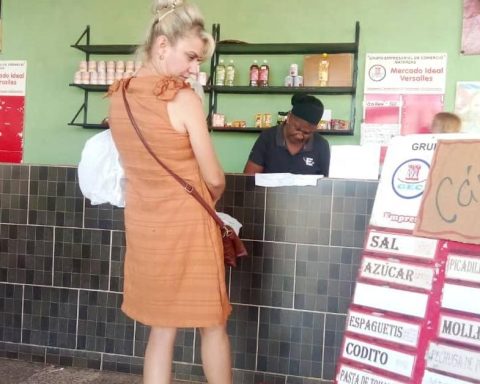
Another resident of that province, 52 years old, denounces that the authorities “promised to advance the basic basket orders, but nothing at all.” Then remember that they have not even delivered the regulated products that are owed since August. Regarding the electricity, he comments: “They put it on at 12:24 and took it off just 40 minutes later. They put it on and take it off. It’s crazy, this country has collapsed.”
The extensive blackouts in that area of the Island contrast with what was announced this Monday morning by the Electrical Union. “Due to the proximity of the powerful Hurricane Melissa, it was decided to prioritize the availability of existing energy in the country to the eastern region of Cuba in order to ensure better preparation of the population to face the meteorological event, so the rest of the provinces will be more affected.”
In Contramaestre the writer Arnoldo Fernández took advantage of the moments with electricity and an internet connection to keep a report about the preparations in your municipality. The historian also fears that Melissa “when she arrives in Cuba it will be a flood, accompanied by winds, everything that was our material past may erase it forever.”
The fear of a worsening of the epidemiological situation, marked in recent months by the spread of arboviruses, is also at the center of attention of residents in the areas that will be most affected by the cyclone. From the city of Camagüey, Nora, 79 years old, has still not recovered from the effects that chikungunya has left on her body. A retired doctor, she calls for extreme precautions after Melissa’s passage because “a situation may be created even more conducive to the proliferation of vectors.”
/ Social networks
Eduardo, from El Cobre, in Santiago de Cuba, also reports that “they have no power” and that “the warehouse has only given one pound of sugar, corresponding to the July errands, the cigarettes and a package of spaghetti.” He adds that the only action that has occurred has been “an initiative by the priest of the church, who has housed people in the motel they have there.” He also reports that there have been gusts of wind that “have knocked down banana trees” and that in El Cobre “there are no police or ambulances.”
In Baracoa, this Monday morning passed without any major signs of Melissa’s proximity. “There is a worrying calm,” Dosiel, a 31-year-old man from Guantanamo who lives a few meters from the sea, tells this newspaper by telephone. “My brother called early from Miami and told us about everything because here the information has arrived in pieces, we even thought that Melissa had lost strength and it turns out that she is already category 5.”
To prepare for the hurricane, the family has placed some sandbags on the roof of their home. “They are fiber cement tiles and we cannot allow them to fly away and lose them because here the whole issue of construction materials is very complicated.” When Hurricane Sandy hit the city 13 years ago, Dosiel’s family suffered the collapse of “a room and a bathroom.”
Since then, they have only been able to clean the ruins and build a wooden toilet because “we have not been able to obtain all the materials for the repair.” Now, they try to reinforce the windows with some “recycled nails” that a neighbor gave them and if the cyclone forces them not to leave the house for several days, they have a diminished reserve of food: “My brother tried to send us a package with cans and cookies but on the store’s website they told him that they could no longer guarantee deliveries in Baracoa, so what we have is a little sugar, hot dogs and a can of sardine”.

In the city of Holguín, Heberto fears both the winds and rising prices. With barely a week of difference, the Holguín resident saw this Saturday how at the Los Chinos Fair the pound of black beans went from 380 to 410 pesos, rice increased from 250 to 280, and imported sugar, the only one that is for sale due to the debacle of the Cuban harvest, jumped from 300 to 320. The main agricultural market in the city is turning out to be a thermometer precisely how things are going Cheers.
“People try to buy food that does not spoil because it is likely that they will wait several days without electricity,” Heberto explains to this newspaper. “The blackouts continue the same, with more than 12 hours a day without electricity,” complains the man who believes that this could compromise people being informed and being able to “charge the equipment’s batteries.” In his home, with a solid roof, “some relatives who came from Rafael Freyre are already housed because they live there in a very bad little house.”
The organization People for the Ethical Treatment of Animals (Peta) has called on the countries most affected by Melissa to also reinforce animal care. Among the recommendations he lists that of not leaving them “tied or locked in cages, kennels or sheds” since “in the event of landslides, floods or landslides, they would not be able to escape to safety.”
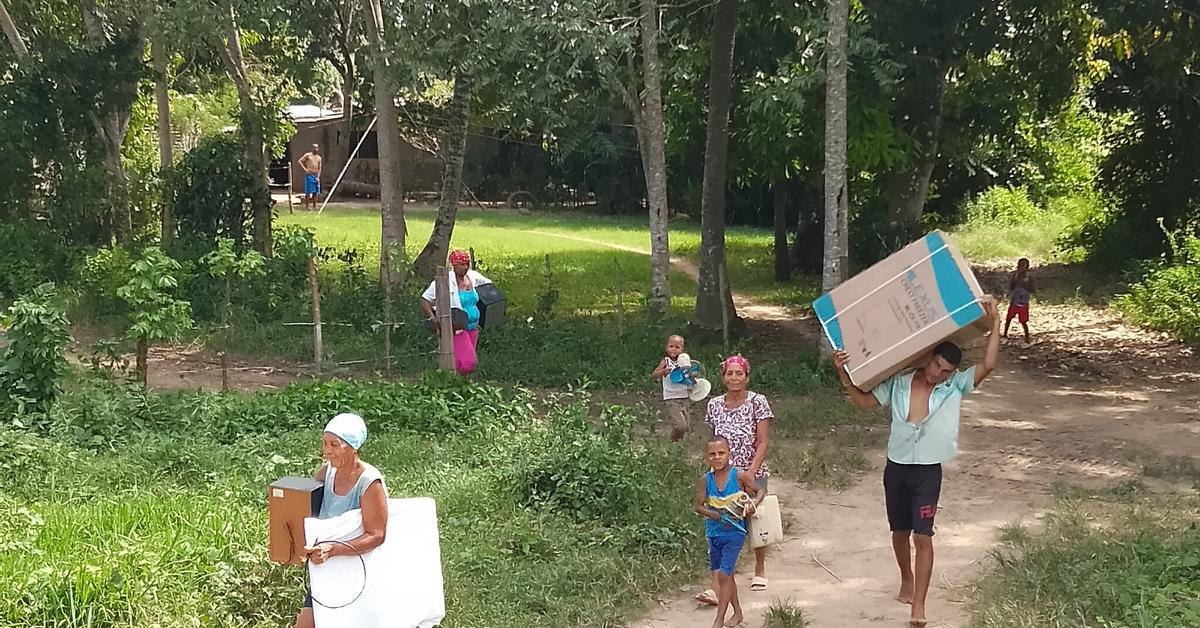
The entitybased in the United States, recommends having “an emergency plan” that includes pets and asks that in the event of evacuation, not abandon dogs and cats, among other pets that are highly dependent on human care. The area where Melissa is expected to touch Cuban territory is mostly rural and also has abundant mountains, which makes the transfer of people, animals and belongings even more difficult.