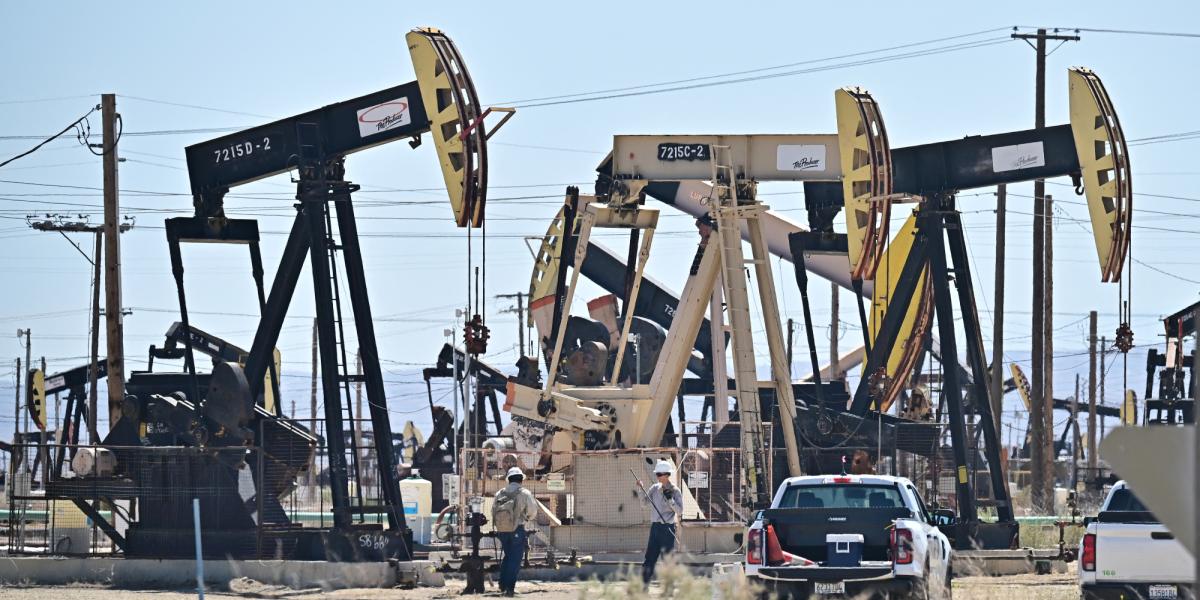
The oil prices They fell more than 1% on Monday, after economic authorities from the United States and China outlined a framework for a trade agreement, easing fears that tariffs and export restrictions between the world’s two largest oil consumers will affect global economic growth.
The US Secretary of the Treasury, Scott Bessentsaid Sunday that officials from both countries have drawn up a “substantial framework” for a trade deal that will avoid 100% tariffs on Chinese products and achieve a postponement of China’s rare earth export controls in this week’s looming trade discussions.
At 1:58 am CDMX time, the futures of the Brent fell 75 cents, or 1.1%, to $6,519 a barrel, and those of the West Texas Intermediate in the United States (WTI) were down 71 cents, or 1.2%, to $60.79.
The trade deal framework helps allay concerns that Russia could counter new U.S. sanctions, directed against Rosneft and Lukoiloffering deeper discounts and using shadow fleets to attract buyers, said IG’s Tony Sycamore.
“However, if sanctions on Russian energy are less effective than expected, oversupply pressures could return to the market,” said Yang An of Haitong Securities.
Meanwhile, Iraq, the Organization of the Petroleum Exporting Countries’ largest oversupply country, is negotiating the size of its quota within its available capacity of 5.5 million barrels per day, Oil Minister Hayan Abdel-Ghani said at a sector conference on Monday.
The group, which pumps about half of the world’s oil, has backed down this year to regain market share and has partly helped keep prices in check.
Last week, Brent and WTI rose 8.9% and 7.7%, respectively, due to US and European Union sanctions on Russia.