One of the most important events in the history of astronomy already has a scheduled date. Get to know some recommendations!
Science and its magic never cease to surprise us with astronomical phenomena that leave everyone amazed. Among these events, Solar eclipses occupy a special place.
Although they do not occur frequently, they represent a significant advance in our knowledge of the cosmos and, at the same time, they are a celestial spectacle worth admiring.
Recently, NASA announced the date of one of the longest solar eclipses in history,that can be observed worldwide. According to the information published on its page, this phenomenon will take place at 11 in the morning of July 16, 2186.
This unique event will show how the sunlight will completely go out in a strip of sky that will cross northern Colombia. In addition, the space agency announced that this eclipse will be the longest, lasting seven minutes and twenty-nine seconds, and could be the most important in at least 12 millennia.
Also read: How does WhatsApp’s new feature work to summarize messages with AI?
What is a solar eclipse?
To better understand this phenomenon, it is important to clarify that, although the Sun is a star, the Moon is not; The Moon is the natural satellite of the Earth.
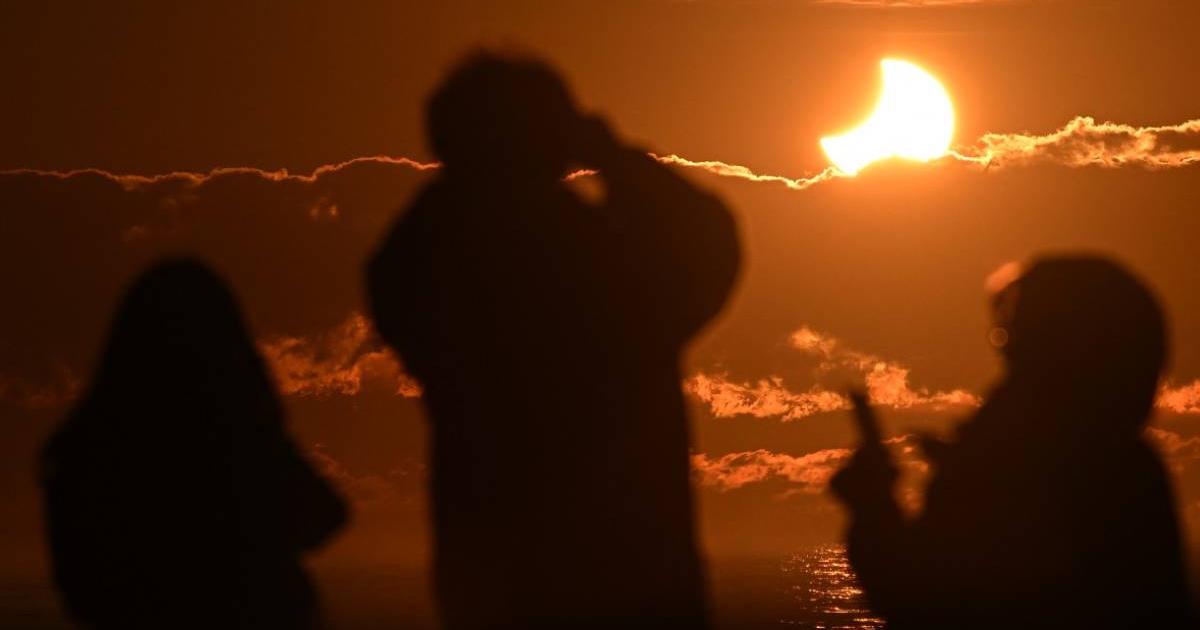
A solar eclipse occurs when the Moon comes between the Sun and Earth, aligning perfectly to completely or partially block sunlight. At that moment, the three bodies—Sun, Moon, and Earth—are placed in line, and The shadow of the Moon projected on the Earth generates the eclipse.
Recommendations for viewing future solar eclipses
The agency offers some recommendations so that no one suffers harm, whether large or small, while observing the event. One of these is that you should not look directly at the sun without specialized eye protection for this type of phenomenon. The only exception is when the eclipse is in its total phasethat is, when the Moon completely covers the Sun.
You may be interested in: Global fall of Amazon Web Services leaves Davivienda without service: what to do?
In short, they emphasize that the lenses must be special, ordinary sunglasses cannot be used. “Safe solar visors are thousands of times darker and must comply with the international standard ISO 12312-2”they explain on their page.
Finally, they also warned against looking at the sun through cameras, telescopes, binoculars or other optical devices while using eclipse glasses or handheld solar viewers.
“Do NOT look at the Sun through a camera lens, telescope, binoculars or any other optical device.” while using your eclipse glasses or a handheld solar viewer: the concentrated solar rays will pass through and burn the filter, and enter your eyes, causing serious injuries,” the US agency explained.