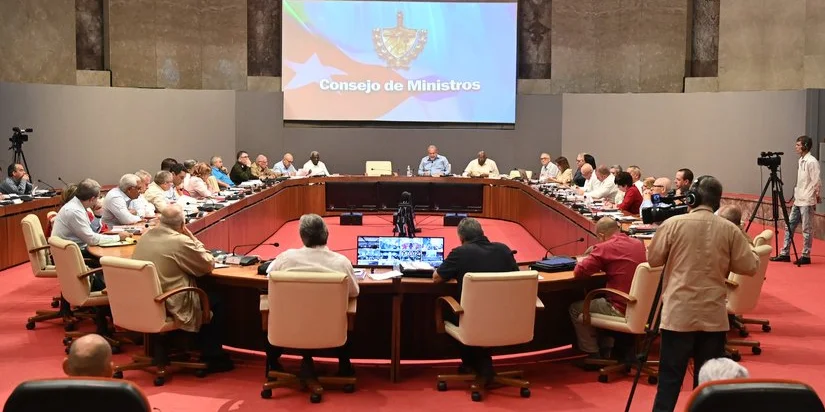
The measures are published at a time of distraction and misinformation among Cubans, marked by the next passage of Hurricane Melissa.
LIMA, Peru – The Cuban regime released this Sunday its “Government Program to correct distortions and re-boost the national economy,” a road map of Castro’s policy that already announces several changes with short-term impacts on the daily life of the people on the Island.
Just as it happened with the failed “Ordering Task”, The new Program devised by the leadership of the Communist Party promises to “advance in the gradual recovery of the economy and overcome the complex situation” that Cubans face.
In its preparation, the official document states, universities, academic centers, as well as the country’s political and government organizations participated.
The Program, which has been implemented to a lesser extent since January 2025, includes 10 general objectives, 106 specific objectives, 342 actions and 264 indicators and goals that, from the theory, aims to once and for all “materialize the vision of the nation”, postponed since 1959.
The measures are published at a time of distraction and misinformation among Cubans, marked by the imminent impact from Hurricane Melissa and prolonged blackouts of more than 20 hours in many territories.
“Many people have not found out, but the Cuban regime has snuck in another package of anti-popular measures, in the midst of the confusion caused by the approach of Hurricane Melissa. Who in the middle of a category 4 hurricane would think of launching a package of economic measures that will affect the population even more?” wrote professor and journalist José Raúl Gallego on Facebook.
Among the main points of the official document that covers 92 pages, it is praised to advance in the “implementation of the Macroeconomic Stabilization Program” with actions that seek to: reduce the granting of subsidies, including the ration book; adjust prices (potential increase) of electricity, water, transportation and fuel rates; reduce transfers from the State to companies and budgeted entities; strengthen tax collection and promote a tax payment culture.
“In monetary policy, it is necessary to move forward in correcting the high increase in the amount of money circulating in the non-state sector and among the population, which puts pressure on the increase in prices,” says the Program.
Although payments on the Island continue to be in Cuban pesos or CUP, the document highlights the Government’s approach towards partial dollarization of the economya measure accompanied by banking.
In that sense, it is planned to increase the cost of services and products sold in Freely Convertible Currency, as the regime calls them, including the prices of the more than 209 stores in dollars that have emerged during the last year in Cuba.
In theory, other general objectives of the program include: increasing and diversifying the country’s external income; increase national production, with emphasis on food; resize and develop the socialist state enterprise and other economic actors in a “complementary” role; improve the strategic management of territorial development; improve the management of the Government, Defense and National Security; consolidate social policies, focusing on attention to vulnerable people and communities; implement measures to prevent and reduce crime, corruption and illegalities; recover the impoverished National Electroenergy System, protagonist of the national energy crisis.