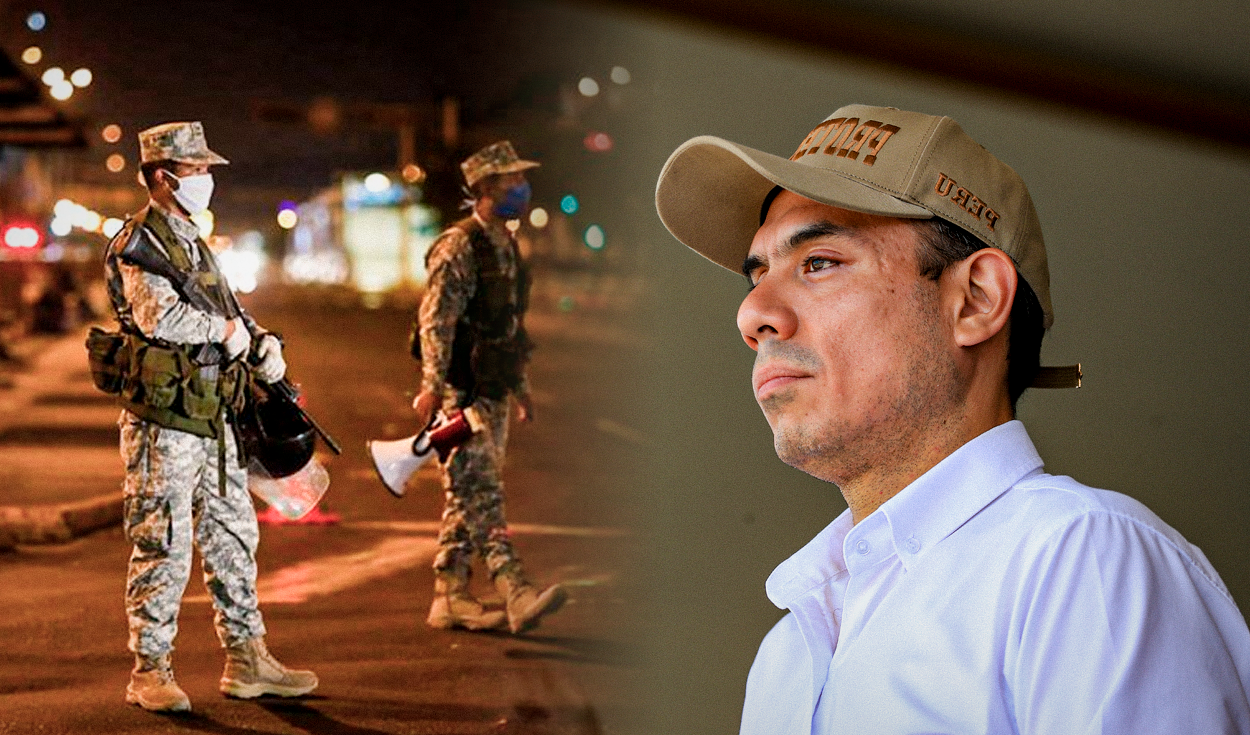
The government of José Jerí has opted for an old recipe: declare a state of emergency in Lima and Callao for 30 days. The argument this time: the increase in extortion, murders and crime in general. The measure has already been a constant in recent years. Former president Dina Boluarte ordered a state of emergency nine times, but they were not effective in stopping crime in the capital. On the contrary, it increased.
This is confirmed by the figures from the Police Complaints System (Sidpol) of the National Police, processed by data analyst Juan Carbajal, which reveal that between January and September 2025, 20,705 complaints of extortion were registered in the country, the majority in Lima.
YOU CAN SEE: Authoritarianism: the budget to repress protests rose 115%
According to the specialist, this crime has increased drastically in the country: from an average of 300 reports per month between 2018 and 2021, the numbers skyrocketed to more than 2,000 complaints monthly until September 2025which represents an increase of more than 600%.
“This lack of control is even more worrying because, despite measures such as the state of emergency, violence continues to increase. Between 2018 and 2021, 10 daily reports of extortion were registered, but in 2025 that figure exceeded 70 daily reports,” he explains.
This increase shows that, far from being reduced, extortion has overflowed to levels never seen before, adds Carbajal.
Increase in homicides.
Regarding homicides, the data are also worrying. According to the registry of the National Computer System of Deaths (SINADEF), murders have increased since mid-2024.
Carbajal explains that the third quarter of that year marked a critical point with more than 500 homicidesa figure never before recorded in a single quarter. And the most worrying thing is that, despite the fact that the state of emergency was in force during that period, the violence not only did not decrease, but continued to increase.
“In the first quarter of 2025, homicides continued with the same trend, and the third quarter of 2025 even exceeded 500 homicides, marking the historical record for fatalities in the country.”
This shows that, despite the exceptional measures implemented by previous governments, the country continues to face high levels of violence and insecurity.
YOU CAN SEE: IEP Survey: 53% disapprove that Congress appointed José Jerí as president of Peru
improvised measure
On this topic, the former director of the National Police, Eduardo Pérez Rocha, pointed out that between the governments of Pedro Castillo and Dina Boluarte 16 states of emergency have been declared; However, they were not effective in stopping crime.
He explained that, as established, the National Police must determine the areas of intervention based on intelligence information, crime maps and other indicators. However, he specified that several days have passed since the declaration of this new measure and these areas of action have not yet been defined.
Pérez Rocha also commented that he spoke with the mayor of San Martín de Porres, who informed him that You have just been asked for information on the indicators and crime maps of your district. “Jerí has launched the state of emergency without having previously analyzed or studied it. It was all improvised.”
Likewise, he maintained that in Las Malvinas the police intervened in stalls where stolen cell phones were sold, but he highlighted that these types of operations are carried out on a regular basis and do not require a state of emergency to be carried out. “To confront criminal gangs, other types of strategies are needed.”
More than 60 homicides during José Jerí’s government
Between October 10 and 23, already during the government of José Jerí, the National Computer System of Deaths (Sinadef) recorded 64 homicides nationwide. Among the victims is PNP Ensign Jhordy Stainer Escobedo Mori, murdered in Carabayllo when the state of emergency was already in force in Lima.
According to data analyst Juan Carbajal, there are still figures to update, so the number of murders could increase. The departments most affected by homicides are Lima, with 30 cases; La Libertad, with 10; Tumbes, with 5; and Ica, with 3.
Currently, a homicide is recorded in the country every 3 hours and 52 minutes. “From January 1 to October 19, 1,798 murders have been recorded,” says Carbajal.