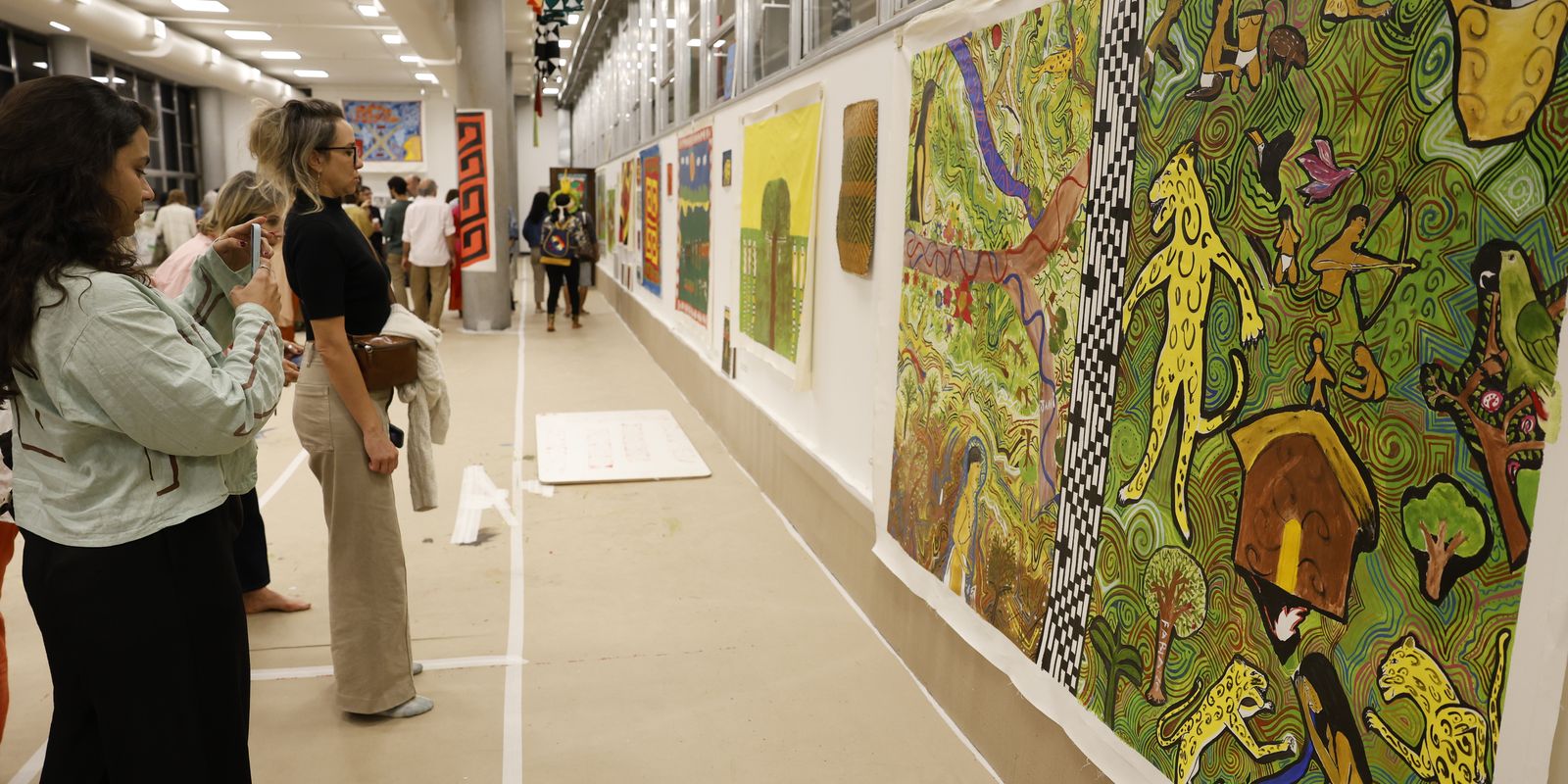
At 1:30 pm the vessel Águamãe prepares to leave the port of Praça XV, in the center of Rio de Janeiro. The journey through Guanabara Bay is in the present, but it is also about the past and future. 
Led by thinker and environmentalist Ailton Krenak and singer, composer and researcher Mateus Aleluia, the crew experiences an unprecedented journey about the history and importance of the waters that were once inhabited by more than 80 indigenous villages and where Europeans and the largest number of enslaved people from Africa arrived in all of America. A place that houses oil platforms and suffers from oil spills and pollution, but where people still fish and swim in the sea.
The crossing, which took place this Saturday (25), was promoted by the Associação Selvagem Ciclo de Estudos, a non-governmental organization founded by Krenak, Anna Dantes and Madeleine Deschamps. Open to the public, upon prior registration, the navigation carried out in partnership with the Museum of Tomorrow and Barcas Rio, was part of the France-Brazil 2025 Season schedule.
During the trip, songs, conversations and presentations guided the exploration of the waters, telling stories that are often forgotten. Before crossing, the Brazil Agency talked to the participants.
“Guanabara is the mother of many people, there are many beings, many worlds that are still there connected to people who have always been there from various other places. The place that welcomes and welcomed. It is this embrace between these waters, this river, this place that looks like a womb”, says journalist, screenwriter, curator and multi-artist Renata Tupinambá.
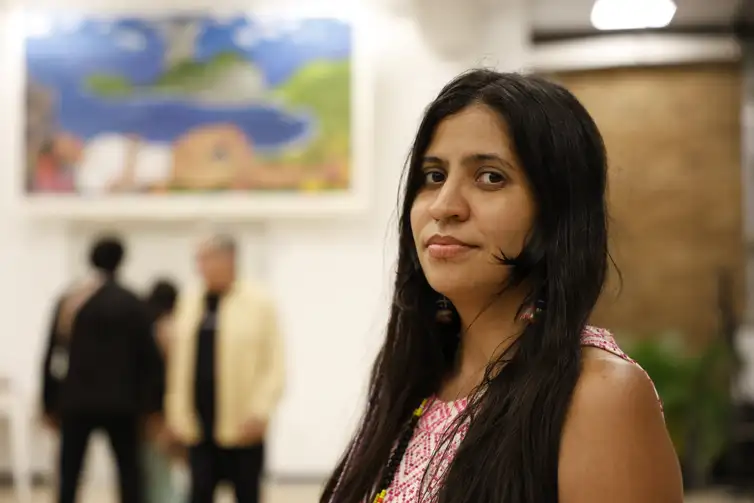
Renata Tupinambá participates in the Águamãe project – Fernando Frazão/Agência Brasil
Renata would present poetry and singing in the Tupi language, so familiar to those who lived there centuries ago. She recalls that the Tupinambá ethnic group itself inhabited the region, was considered extinct, until it was recognized again in the 2000s. The Tupinambá mantle that, last year, returned to Rio de Janeiro after being taken to Denmarkis proof, according to Renata, that the people resisted and are resisting.
“The Tupinambá mantle is older than Brazil. The arrival of this elder strengthens the narratives of a Rio that was not yet Rio, but that is surrounded by memories in those waters that are Guanabara”, he says.
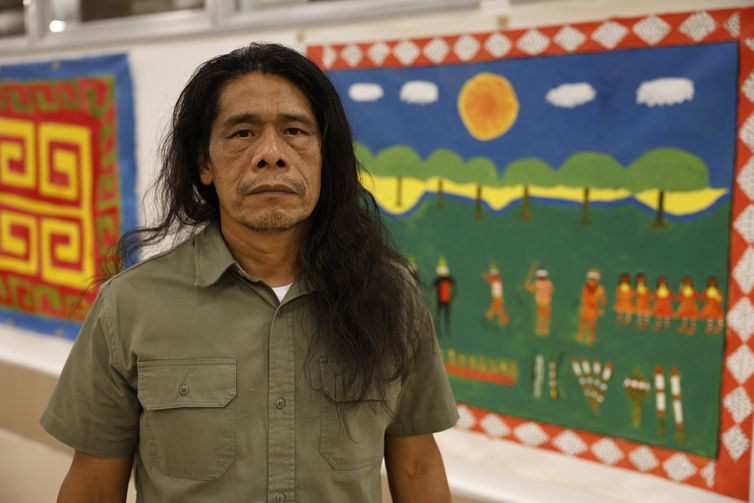
Carlos Papá Mirim Poty participates in the Águamãe project – Fernando Frazão/Agência Brasil
The artist, filmmaker and spiritual leader Carlos Papá was responsible for showing the public that many of the words that are part of everyday life in Rio are of indigenous origin: the names of the Ipanema and Jacarepaguá neighborhoods and even Carioca are legacies of the people who lived and live here.
“Cariocas still don’t know the meaning of what they say. They often say Ipanema, Jacarepaguá, certain names that society in Rio de Janeiro doesn’t know. For me, it’s a great honor to reveal the names, the meanings and the reasons why”, he says.
Living beings
Papá also draws attention to the non-human beings that live in Guanabara. Recently, the depollution of part of Guanabara Bay, which resulted in the reopening of beaches such as Flamengo for swimming, led the city to also occupy these places and value life there.
“As human beings begin to have this greater awareness, responsibility and realize that it is not just humans who live, that they depend on that place, that there are crustaceans, that there are animals, there are small molluscs that need this environment. From the moment that human beings realize this, there will certainly be more care when enjoying the environment”, he argues.
Thinker, midwife apprentice and educator Cristine Takuá adds that other living beings have a lot to teach human beings.
“If we think about the collective of agoutis or the collective of ants, of bees, they can ethically interact much better than us humans. So this war today between humanity against humanity itself is something that needs to be rethought. There were many centuries of a humanity that didn’t know how to walk, that walked very hard on the Earth and today the Earth is hurt”, he emphasizes.
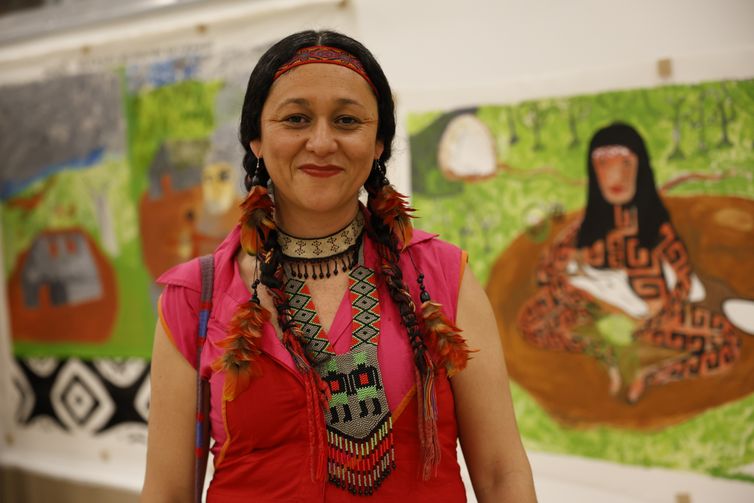
Cristine Takuá, from the Maxakali people – Fernando Frazão/Agência Brasil
Guanabara Bay
Guanabara Bay has 337 square kilometers of water surface, with 40 islands. In total, 143 rivers and streams flow into the bay, where 8.4 million people live.
It is between two geological fault blocks: the Serra dos Órgãos and several smaller coastal massifs. It is a repository of life, it was once a whale nursery, it became a hub for whaling businesses, it became the main port for precious metals, and to this day it is a port where tens of millions of tons of products circulate.
According to the indigenous peoples Tukano, Dessano and other peoples of the Rio Negro, in the Amazon, Guanabara Bay is the Leite Lake where the snake canoe arrived from its cosmic crossing of the Milky Way.
Thinking about the future
For the director and co-founder of Selvagem and Dantes Editora, Anna Dantes, Guanabara Bay also provides lessons for the future, especially when discussing oil exploration in the sedimentary basin of Foz do Amazonas, a region located in Equatorial Marginin the north of the country, identified as a new pre-salt layer due to its oil potential.
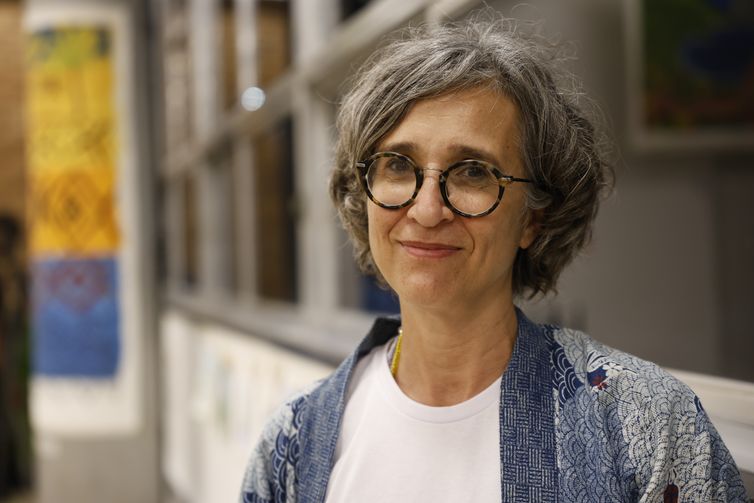
Anna Dantes, director and co-founder of Selvagem – Fernando Frazão/Agência Brasil
There have already been oil leaks in the Bay, such as the one that occurred on January 18, 2000, when a Petrobras pipeline that connected the Duque de Caxias Refinery (Reduc) to the Ilha d’Água terminal, on Ilha do Governador, ruptured before dawn, causing a leak of 1.3 million liters of fuel oil into the waters of the Bay. The stain spread over 40km². The episode went down in history as one of the biggest environmental accidents to occur in Brazil.
“This territory has been so attacked, so transformed and is experiencing very central issues, including what is happening now at the mouth of the Amazon River. If we experience complexity in Guanabara Bay, it is the result of a system, an extractive system, a colonial system”, he says, adding that it is possible to observe the damage caused on site.
On the eve of the 30th United Nations Conference on Climate Change (COP30), which takes place in November, in Belém, anthropologist, writer and filmmaker Nastassja Martin highlights that to think about the future and the environment it is necessary to listen to traditional peoples.
“The issue is not only to integrate, but also to listen to what the people who continue to live in connection with these places, with this water, with these animals have to say, and who know what is happening because they experience it every day. The issue of climate change is not a theoretical issue, but a very sensitive one and is also a matter of survival”, he emphasizes.
Living is wonderful
Ailton Krenak shows that if society changes the way it thinks, it can also change the direction of all humanity, taking better care of each other, all other living beings and the environment.
“Western philosophy preaches that ‘we exist to accomplish something’, and then they order their sculptures to be produced, to leave their record of achievements. Probably, for Westerners, it is honorable to make a scandalous noise in death. Just look at the number of monuments built honoring their heroes. However, I think that we can exist without having to leave behind anything. This is because receiving life and living, in itself, is too wonderful”, he says in an excerpt from the book One I laugh a bird.
And he adds: “When we arrived on Earth, we descended like birds that land silently, and one day we set off on a journey to the sky without leaving a mark.