The still tropical storm Melissa, which is expected to become a hurricane and threatens eastern Cuba, also represents a potential danger for the region’s solar parks, according to the country’s energy and meteorological authorities.
Since this Friday, the General Staff of the Civil Defense of Cuba decreed the Information Phase for the provinces of Guantánamo, Santiago de Cuba, Granma, Holguín, Las Tunas and Camagüey.
The government has reacted to the evidence that Melissa could hit that part of the national territory as a hurricane of great intensity next week.
Díaz-Canel reported on his X account that “the chances are very high that #Melissa will affect our country in the coming days and the Cuban provinces that could suffer its impacts are taking measures.”
Presumably, with maximum winds of about 240 kilometers, the phenomenon could damage panels, support structures and electrical systems at key facilities for generating energy from renewable sources on the island.
Risks to solar infrastructure
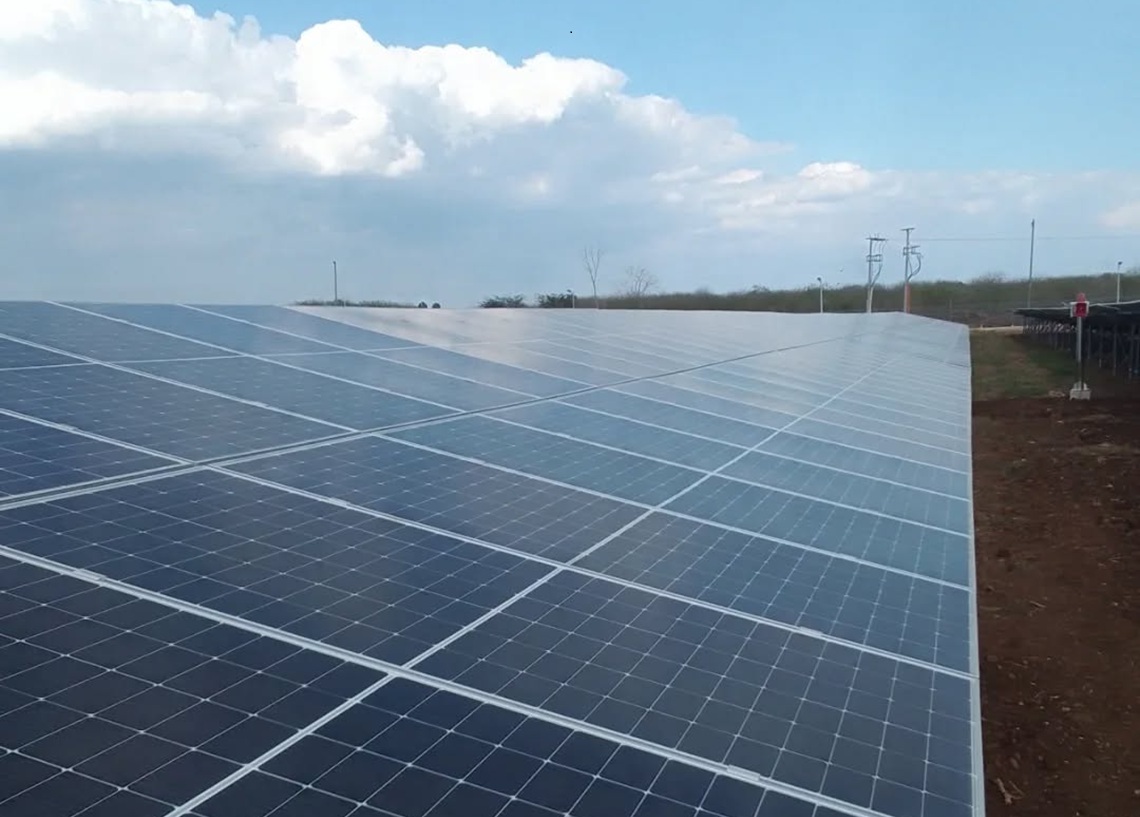
Cuba has 32 photovoltaic solar parks of 21.8 MW already installed and operational since this year, and they are concentrated mainly in the eastern provinces, a region that has close to twenty in operation (18), which would be in the collision path of the eventual hurricane.
These parks, which are part of the government strategy to increase the participation of renewable energies in the energy matrix, are vulnerable to extreme weather events.
Experts agree that strong winds and torrential rains can cause mechanical damage to panels, flooding in substations and disconnections in transmission systems, which is why Cuban authorities are monitoring the situation hour by hour and coordinating with Civil Defense to minimize impacts.
Engineer Félix Estrada Rodríguez, director of the National Load Dispatch, said on national television that the Electrical Union “always, when meteorological events occur, activates its security protocol to establish a security system towards the plants, the sites, the generation.”
The manager highlighted that, having many solar parks in the east of the country, “the protocol for the networks is also being activated”, reviewing the equipment that will go out on the post-cyclonic event tours to evaluate the damage and logistical needs.
While thermoelectric plants collapse, photovoltaic energy already covers 9% of Cuba’s energy mix
Technical standards and protection measures
The solar panels are designed to withstand winds of up to 228 km/h, equivalent to a category 4 cyclone (210-250 km/h). This resistance has been tested by the manufacturers through rigorous pressure and hail tests, guaranteeing that, in extreme conditions, the panels maintain their integrity, according to a report published on the Cuban portal Economic Agenda.
The review noted that solar parks have an average useful life of 25 years and that Cuba’s oblong geography favors damage mitigation.
Cuban solar parks are distributed throughout the country, meaning that not all of them are affected simultaneously by a hurricane, allowing solar energy to remain a reliable source in critical times.
According to the publication, several technical aspects contribute to the robustness of the solar parks against hurricanes, among which the low and inclined modules stand out, installed at 15° towards the south, which reduces wind resistance; mounting in rows that helps stop wind gusts; the natural obstacles and the local topography itself that can break the gusts of wind.
Actions in the east
The Cuban government activated emergency protocols in the eastern provinces, including the preventive disconnection of solar parks if winds exceed 100 km/h.
At the end of September, tropical storm Imelda hit the eastern region of the island with heavy rains, leaving two dead, several thousand displaced, floods, landslides, overflowing rivers and collapsed homes, among other damages.
In the province of Granma, the trajectory of Tropical Storm Melissa is closely monitored, implementing actions to safeguard its photovoltaic solar parks.
In statements to the National Television News, Geider Mompié, director of the Granma Electric Company, explained that the 21 and 5 megawatt parks — with more than 42,500 panels — face their first relevant meteorological event.
According to the manager, the anticyclonic anchors in the structures and the fixing of panels with slings and reinforced screws have been reviewed.
Likewise, technical training has been given to personnel, most of whom are new, to act in emergencies.
In the television report, Yosvani Osorio, operator of the La Sabana Solar Park, detailed how the panels are protected from intense winds, prioritizing the northern area, the most vulnerable.
The company works with Municipal Defense Councils and other organizations to guarantee the safety of facilities under adverse conditions.
The Information Phase decreed by the Civil Defense in eastern Cuba reinforces these actions, mobilizing resources and updating risk plans.
New solar parks
The assembly of seven parks donated by China, each with 5 MW of capacity, is expected to be completed in October.
Experts estimate that, by the end of 2025, solar generation will represent about 10% of the national matrix.
Currently, this source already provides between 500 and 600 MW during the day, being key to mitigating daytime blackouts, according to sector authorities.
Destroying panels or inverters would delay the country’s plans to reach 24% clean energy by 2030.