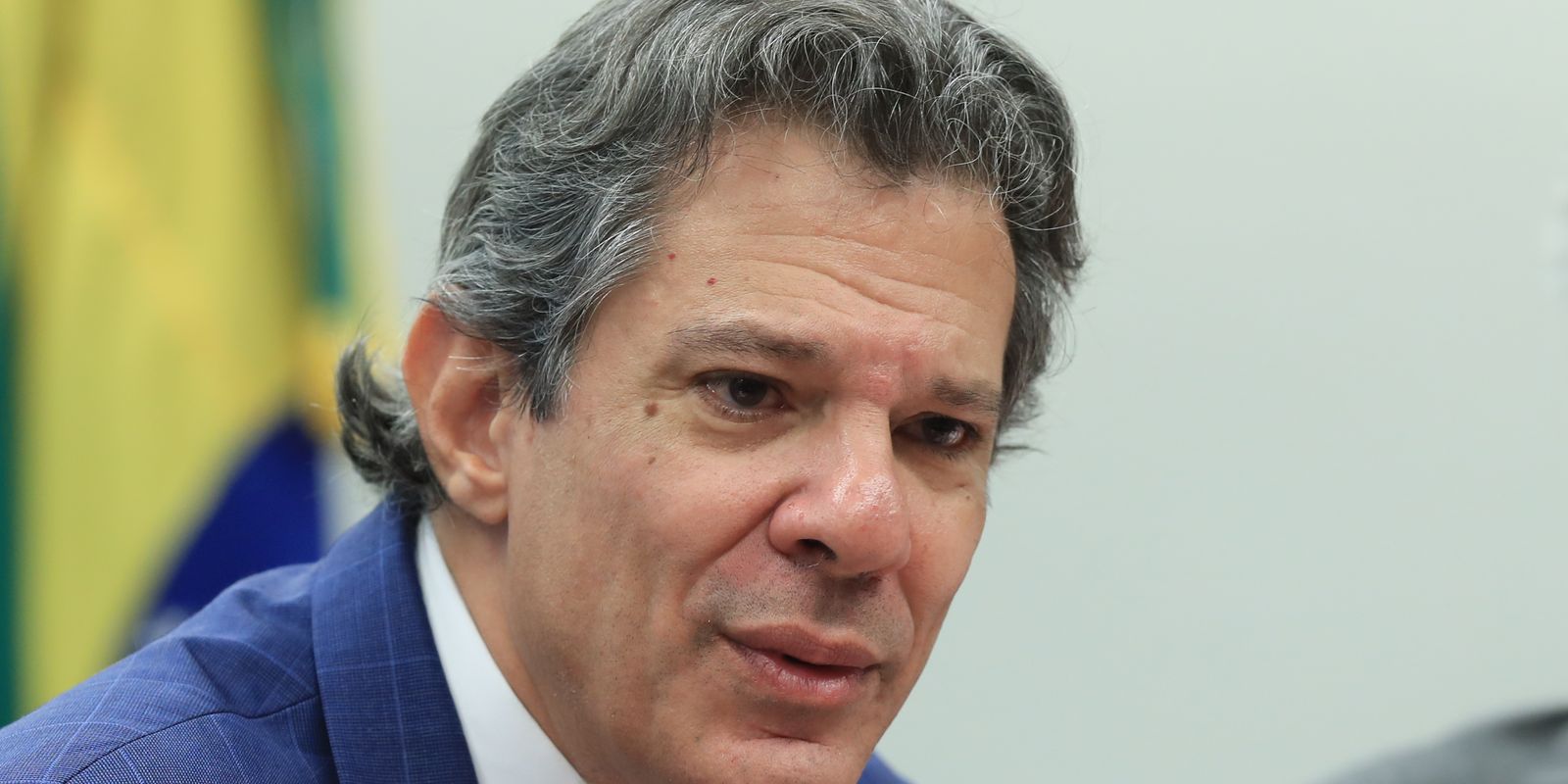
When participating in an event on court orders in the capital of São Paulo, this Friday morning (24), the Minister of Finance, Fernando Haddad, stated that he considers “illegal, unconstitutional and irrational” the postponement of the payment of court orders, which are the judicial debts of the public authorities that no longer have room for resources. For this reason, according to the minister, the Union decided to stay out of the constitutional amendment that change the rules for the payment of court orders.
According to Haddad, the mayor – who sometimes does not have the resources to honor his current health, education and civil service obligations – finds himself in the position of seeking remedies that are not always suitable for his programs, “but the Union is left out and does not want to participate.”
The Union has a financing capacity that federated entities do not have, highlighted the minister.
“In addition to being illegal and unconstitutional, the decision not to pay federal debts is irrational. I prefer to be left with the shame of having spent too much, but not with the shame of being a defaulter.”
Failure to pay court orders is not only unconstitutional, but can also bring losses to the country. “We repudiate the default given by the previous government and we do not want this path which, in our opinion, only demeans the country and puts the country’s condition at risk.”
The minister of the Federal Court of Auditors (TCU), Bruno Dantas, who participated, alongside Haddad, in the Precatório Seminar, promoted by the São Paulo Lawyers Institute (IASP), highlighted that non-payment of precatório also brings harm to the citizen. “Obviously we have to consider the dimension of fiscal predictability, but we cannot forget that, in addition to the credit term, there is also a right that was not respected for years and that received protection from the Judiciary so that that right could be exercised”, he said.
>> Follow the channel Brazil Agency nWhatsApp
During the event, Haddad was honored by the entity for his contribution to complying with payment of court orders. Upon receiving this award, he remembered his time as mayor of São Paulo.
“The city of São Paulo is the one that owes the most precatório in the country. And at the time I was mayor, I was the first – and I think the only – mayor who not only paid the flow, but reserved the city’s stock of precatório. And this fills me with pride because it is not a decision that traditional politicians usually make, but it is a decision that only those who have a public spirit and understand that there is a future beyond their mandate are able to decide in this way”, he highlighted.
The amendment
The constitutional amendment, which was enacted in September by Congress, removed federal court orders from the Executive’s primary expenditure limit from 2026 onwards. The text also limits the payment of these debts by states and municipalities and refinances social security debts of these entities with the Union.
In practice, the measure alleviates the situation of states and municipalities, by allowing them to pay judicial debts in smaller installments and over a longer term. The PEC also helps the federal government to meet the fiscal target, by removing part of this spending from the expenditure ceiling.
This amendment has been the target of criticism from several entities, such as the Brazilian Bar Association (OAB), which filed an unconstitutionality action with the Federal Supreme Court (STF). “The Federal Council of the OAB filed a direct action of unconstitutionality with the Federal Supreme Court. The action questions provisions that allow indefinite postponement, the loss of the real value of the credit and the lack of predictability”, confirmed Felipe Sarmento, vice-president of the Federal Council of the OAB, who participated in the opening panel of the seminar, alongside the Minister of Finance.
“The payment of court orders is not an accounting spreadsheet. It is respect for the authority of the Judiciary and the dignity of the citizen who waited, trusted and won. The constitutional amendment, promulgated in September, profoundly changed this scenario. It set an annual payment ceiling of 1 to 5% of net current revenue, brought forward the cut-off date to February 1st, reduced interest to 2% per year and limited the correction to the rate of service. It also removed the time horizon for discharge and authorized direct agreements without exact limits. These changes together turned the sessions into a rule and paved the way for a permanent moratorium,” said Sarmento.
Fiscal balance
During the event, Haddad defended fiscal balance, saying that it needs to be done in a sustainable way and respecting court decisions.
“Solving the fiscal problem in this way can be done by anyone. You have to solve the fiscal problem in a sustainable way, and that’s what we’re trying to do,” he stated.
He also complained about the unethical behavior of some lawyers, saying he was receiving reports of bad faith litigation from professionals who seek to provide access to social programs and benefits to clients who would not otherwise be entitled to them. “We need to take care of public affairs on both sides, there’s no point in just blaming the State.”