Brazil’s external accounts had a negative balance of US$9.774 billion in September, the Central Bank (BC) reported this Friday (24). In the same month of 2024, the deficit was US$7.383 billion in current transactions, which are purchases and sales of goods and services and income transfers with other countries.
The worsening in the interannual comparison is the result of the US$ 2.2 billion decline in the trade surplus and the US$ 946 million increase in the deficit in primary income, which accounts for the payment of interest and profits, in addition to dividends from companies. On the other hand, there was a reduction of US$640 million in the deficit in services and an increase of US$115 million in the surplus in secondary income.
In the 12 months ended in September, the current account deficit totaled US$78.947 billion, which corresponds to 3.61% of the Gross Domestic Product, an indicator of the sum of goods and services produced in the country. In relation to the equivalent period ending in September 2024, there was a significant increase in the deficit; that month, the 12-month result was negative at US$49.769 billion, or 2.23% of GDP.
According to the BC, current transactions have a very robust scenario and were showing a tendency to reduce deficits in 12 months, which was reversed as of March 2024. Even so, the external deficit is financed by long-term capital, mainly by direct investments in the country, which have good quality flows and stocks.
>> Follow the channel Brazil Agency on WhatsApp
Trade balance and services
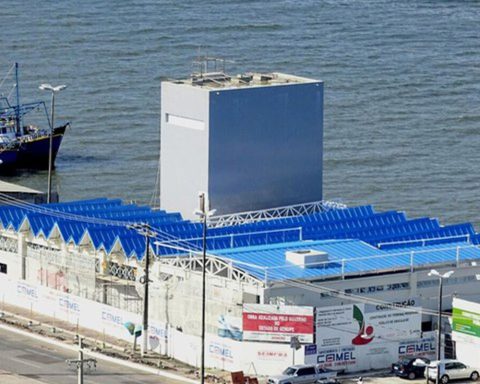
Exports of goods totaled US$30.686 billion in September, an increase of 7% compared to the same month in 2024. Meanwhile, imports reached US$28.362 billion, an increase of 17.4% compared to September last year. It is the country’s import record, with emphasis on the purchase of an oil platform worth US$2.4 billion.
With the results of exports and imports, the trade balance closed with a surplus of US$ 2.324 billion last monthcompared to the positive balance of US$4.524 billion in September 2024.
The deficit in the services account – international travel, transportation, equipment rental and insurance, among others – reached US$4.904 billion last month, compared to US$5.544 billion in the same period of 2024.
There was a 12.2% reduction in net expenses with telecommunications, computing and information services, totaling US$735 million; and 7% in transport, which totaled US$ 1.352 billion. Net expenses for intellectual property services, linked to streamingincreased 64.9%, to US$ 1.214 billion.
In the case of international travel, the deficit in the account closed at the same level as in September 2024, reaching US$ 1.304 billion, the result of US$ 596 million in revenues – which are the expenses of foreigners traveling to Brazil – and US$ 1.899 billion in expenses of Brazilians abroad.
Lace
In September 2025, the deficit in primary income – profits and dividends, interest payments and salaries – reached US$7.635 billion, 14.1% above the figure recorded in September last year, of US$6.690 billion. Normally, this account is in deficit, since there are more investments from foreigners in Brazil – and they remit profits outside the country – than from Brazilians abroad.
The secondary income account – generated in one economy and distributed to another, as donations and dollar remittances, without counterpart services or goods – had a positive result of US$441 million last month, against a surplus of US$327 million in September 2024.
Financing
Direct investments in the country (IDP) totaled US$ 10.671 billion in September this year, compared to US$ 3.861 billion in the same month of 2024. When the country records a negative balance in current transactions, it needs to cover the deficit with investments or loans abroad. The best form of financing the negative balance is the IDP, because the resources are invested in the productive sector and are usually long-term investments.
The IDP accumulated in 12 months totaled US$ 75.843 billion (3.47% of GDP) in September, compared to US$ 69.033 billion (3.18% of GDP) in the previous month and US$ 69.315 billion (3.11% of GDP) in the period ending in September 2024.
In the case of portfolio investments in the domestic market, there was a net inflow of US$4.429 billion in September, made up of net inflows of US$5.001 billion in debt securities and net outflows of US$572 million in shares and investment funds. In the 12 months ended in September, portfolio investments in the domestic market totaled net inflows of US$4.9 billion.
The stock of international reserves reached US$356.582 billion in September, an increase of US$5.815 billion compared to the previous month.