Brazil still has 5.42% of indigenous children up to five years of age without birth registration. This percentage is 10.6 times higher than that of the Brazilian population in general – 0.51% of children up to five years of age do not have this registration.
The data was released this Friday (24), in Rio de Janeiro, by the Brazilian Institute of Geography and Statistics (IBGE), as part of the 2022 Demographic Census ─ Ethnicities and indigenous languages.
The birth certificate is a person’s first legally valid document. With it, the child now has a name, surname, nationality, affiliation and rights to health and education.
In Brazil, the issuance of the first copy of the Birth Certificate is completely free for everyone born on Brazilian soil, guaranteed by federal law (Law nº 9,534/97). The certificate is proof of the citizen’s existence. Without this document, the person is prevented from exercising their civil and social rights, that is, in practice they become invisible.
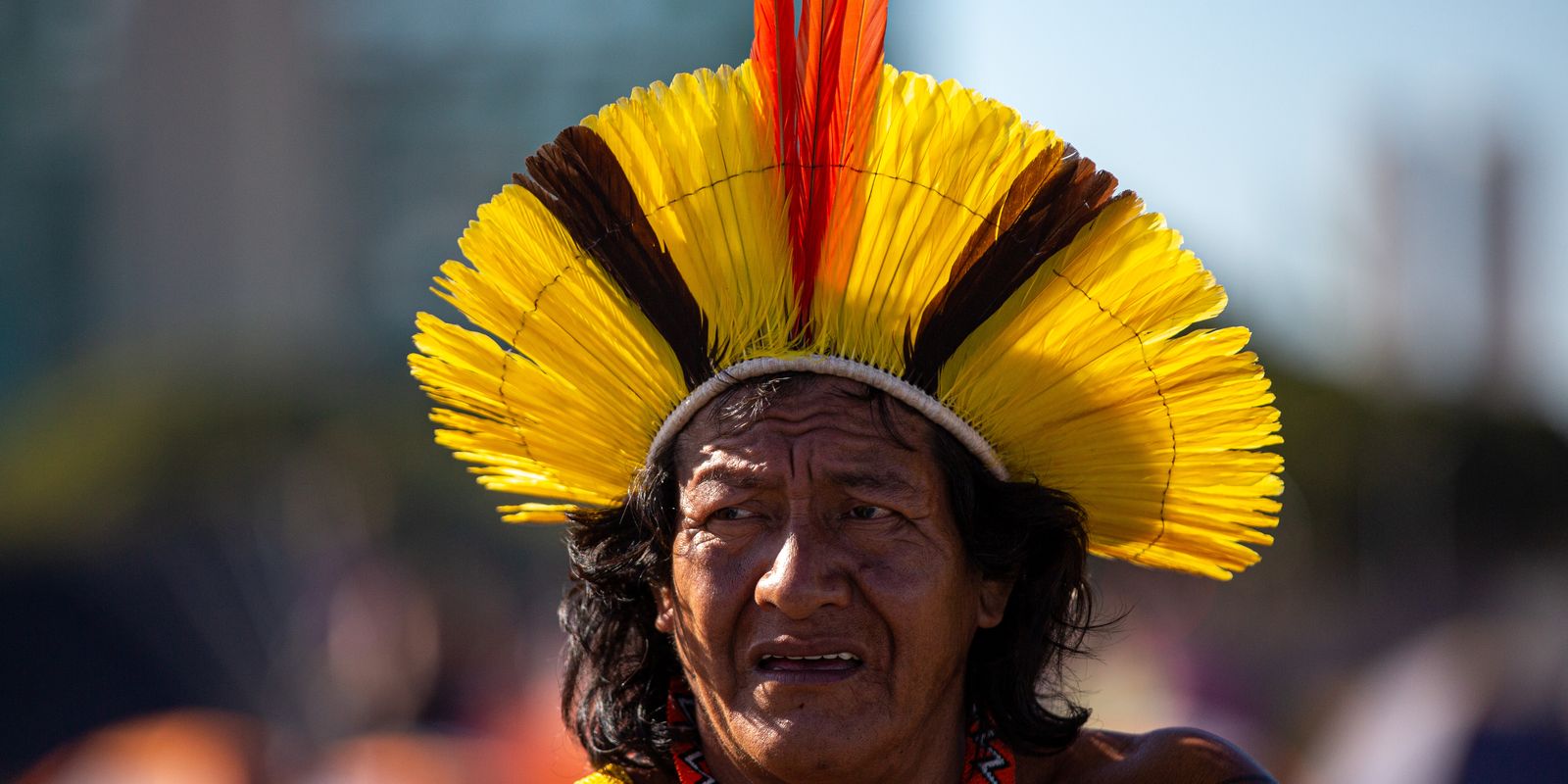
According to the Census, 1,694,836 indigenous people live in 4,833 municipalities in the country. Indigenous people represent 0.83% of the total 203 million inhabitants in Brazil. Since the last Census, in 2010, there has been an increase of 896,917 indigenous people, equivalent to an expansion of 88.82%.
In 2010, according to the last Census, the majority of the indigenous population lived in rural areas ─ 63.78%. In 2022, the scenario was the opposite, with the majority (53.97%) in urban areas. Across the country, there are 391 ethnicities and 295 indigenous languages spoken.
>> Follow the channel Brazil Agency on WhatsApp
Housing conditions
The data released this Friday also shows that many indigenous households do not have access to basic sanitation. The IBGE did not consider indigenous dwellings without walls and malocas.
The research shows that the Tikúna lead as the ethnic group with the least access to piped water even within the home from a general distribution network, well, fountain, spring or mine, with 54,897 residents in this situation, corresponding to 74.21% of the residents of this ethnic group. Tikúna is the most populous indigenous ethnic group in Brazil. They are followed by the Guarani -Kaiowá with 35,011 (70.77%) without access to running water and the Kokama with 29,641 (46.26%).
The Tikúna are also those with the least sanitation, with 68,670 residents in this situation, corresponding to 92.82% of the residents of this ethnic group, followed by the Kokama with 53,197 (83.02%) and the Guarani Kaiowá with 40,590 (82.05%). These people either have no exhaustion or use rudimentary pits, holes, ditches or even rivers, streams or the sea.
Among the ethnic groups with the largest number of residents in permanent private homes without access to direct or indirect garbage collection services, the Tikúna also stand out, with 56,660 residents in this situation, corresponding to 76.59% of the residents of this ethnic group, followed by the Guarani-Kaiowá with 39,837 (80.53%) and the Makuxí with 36,329 (70.35%).
Illiteracy
According to IBGE, of the 308 thousand indigenous people aged 15 or over who speak an indigenous language78.55% (242 thousand) are literate, a literacy rate lower than that of indigenous people as a whole, which is 84.95%.
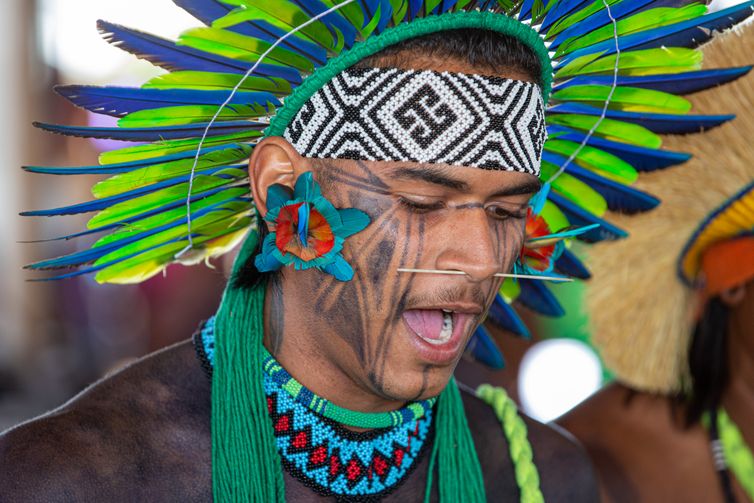
Census reveals that 1,694,836 indigenous people live in 4,833 municipalities in the country – Photo – Fabio Rodrigues-Pozzebom/ Agência Brasil
In turn, the literacy rates of the indigenous population are lower than that of the Brazilian population in general. According to the 2022 Census, the Brazilian literacy rate is 93% and the illiteracy rate is 7%.
According to the manager of Traditional Territories and Protected Areas at IBGE, Fernando Damasco, education and literacy can contribute to the exercise of citizenship and to the strengthening of indigenous languages, but they should not be done only in Portuguese, with the risk of these languages no longer being spoken in homes.
“Literacy, if done in a way that simply encourages the replacement of the indigenous language with Portuguese, can be absolutely harmful. Now, when it is bilingual education or education in the indigenous language, it contributes greatly to linguistic strengthening”, he argues.
According to IBGE, the mapping released helps to identify where this population is, where the greatest needs are and where it is necessary to intensify the reach of public policies in Brazilian territory.