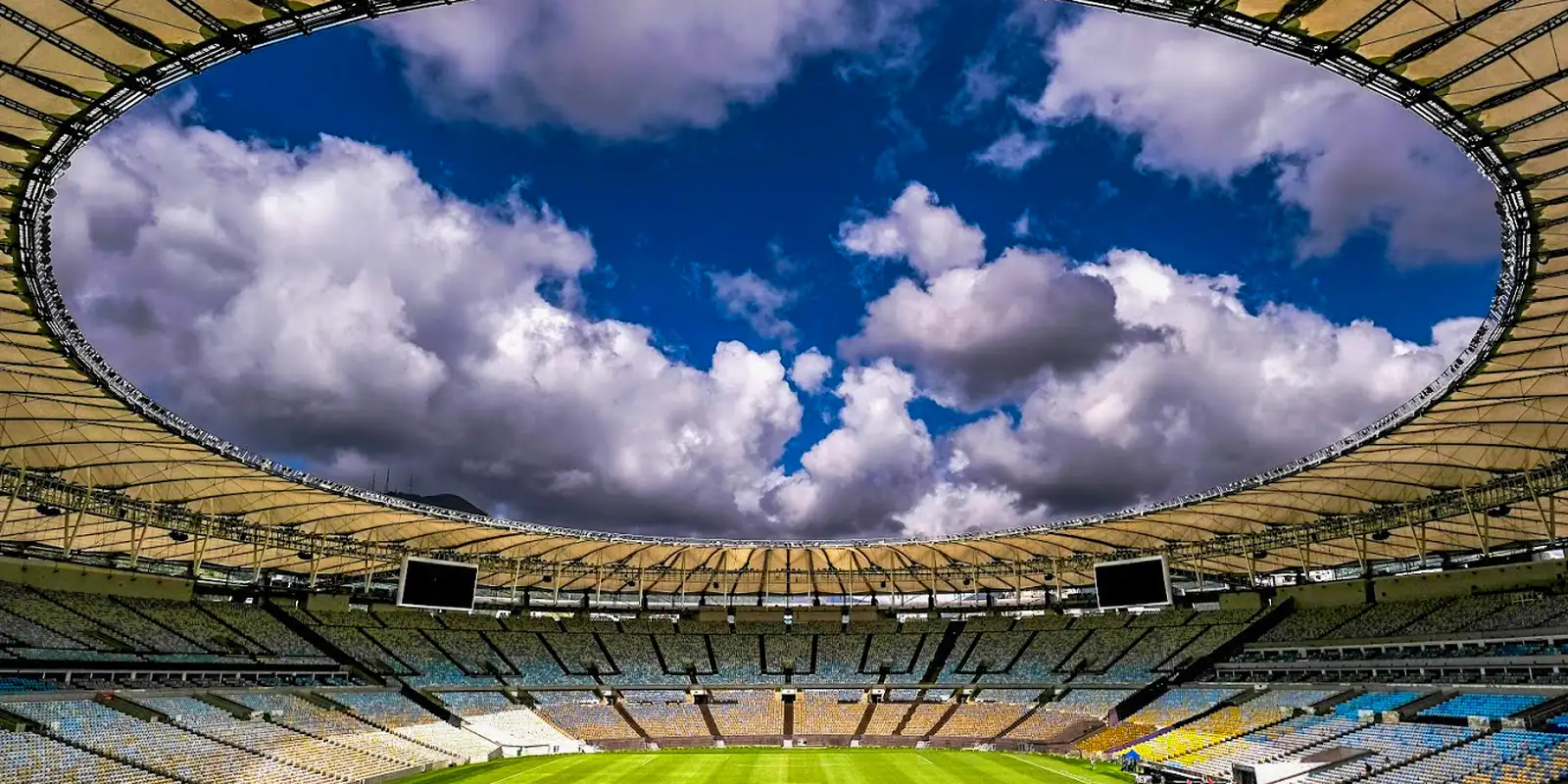
THE Constitution and Justice Commission (CCJ) of the Legislative Assembly of the State of Rio de Janeiro (Alerj) approved last Wednesday (22) the inclusion of the Maracanã Complex in a list of properties that belong to the state government and can be sold.
In addition to the stadium – which has already hosted two World Cup finals (1950 and 2014) –, the complex includes the so-called Aldeia Maracanãa historic building in ruins where the Indian Museum used to be and currently occupied by some indigenous families.
Complementary Bill 40/2025, authored by the Executive Branch, listed 48 properties that should be sold, with a double effect: cutting maintenance costs and raising revenue for public coffers. In the original list, Maracanã was not includedlocated in the north of the capital of Rio de Janeiro.
The project states that a “substantial portion” of the properties is unoccupied. In justifying the project, Governor Cláudio Castro says that the measure is motivated by “the need to adopt measures to rationalize real estate assets and improve the management of state real estate assets”.
>> Follow the channel Brazil Agency on WhatsApp
Public accounts
Castro adds that the government faces “enormous challenges” in maintaining properties, “disbursing expensive resources to guarantee the custody and conservation of assets”.
The governor cites the Fiscal Recovery Regime – an agreement between the Union and states in serious financial imbalance – as another motivator.
“It is imperative to reduce expenditure on maintaining the public machinery, so the sale of properties not used for public use will greatly contribute in this regard, in addition to boosting the inflow of revenue into the state coffers.”
The project determines that the minimum sale price of properties will be the market value, based on an “evaluation report prepared by qualified professionals”.
Change at Alerj
When the proposal reached the CCJ, deputies made changes to the addresses and included, among others, the Maracanã Complex. The commission’s final list reaches 62 properties.
The president of the CCJ and government leader in Alerj, state deputy Rodrigo Amorim (União Brasil), is one of the defenders of the inclusion of Maracanã in the list of assets for sale.
THE Brazil Agency asked the parliamentarian for comments, but did not receive a response until the report was completed. by social mediaAmorim commented on the CCJ amendment:
“Our objective is simple: to reduce spending on underutilized public properties, generate revenue and fulfill the social purpose of the property provided for in the Federal Constitution,” he wrote.
Amorim also indicated a link for a report, in which he classifies Maracanã as a “white elephant” and states that Aldeia Maracanã is in a “precarious situation and has no defined social use”.
State deputy Flavio Serafini (PSOL) is opposed to the project. Wanted by Brazil Agencythe parliamentarian’s office confirmed that he will act to try to overturn the sale of the Maracanã Complex. For the opposition deputy, the stadium is the main sports equipment in the country and has a strong identification with the identity of the Rio resident.
Regarding Aldeia Maracanã, Serafini understands that the place must be preserved and receive more investment, to transform it into an international reference center for original peoples.
To be valid, the The proposal will still need to be approved by the Alerj plenary and sanctioned by the governor.
THE Brazil Agency asked for a position from the state government on the change made by the CCJ and awaits feedback.
Stadium
Maracanã currently operates under private concession regimeled by a company that represents a consortium formed by the clubs Flamengo and Fluminense. The contract was signed in 2024, is valid for 20 years and includes the Maracanãzinho gym.
The clubs paid R$20 million to win a public dispute and committed to investing R$186 million until the end of the concession.
Flamengo and Fluminense hold games in the sports arena and raise funds through the sale of tickets and advertising space and bar revenue.
Wanted by Brazil AgencyFla-Flu Serviços SA, which manages the stadium, informed that “Fla-Flu Management has a 20-year concession contract for the stadium and will fulfill it”.
Maracanã Village
The government of Rio de Janeiro maintains that Aldeia Maracanã is illegally occupied by indigenous families. The dispute over ownership is marked by court decisions.
In 2013, indigenous people and activists who supported them were removed from the land after a Military Police operation. The area was reoccupied by families after the end of the 2016 Olympic and Paralympic Games.
THE Brazil Agency asked the lawyer for the indigenous families for comments and is awaiting feedback.