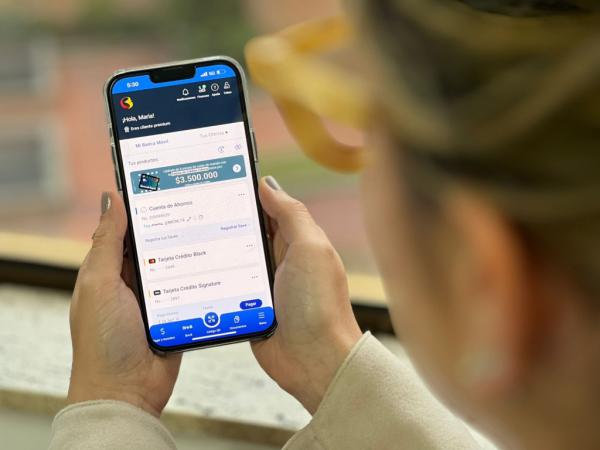
He Ministry of Finance and Public Credit published for comments a draft decree with which it seeks to apply a withholding at source of 1.5% to payments made to companies through Bre-Bthe country’s new immediate payment system; as well as with Nequi and other digital wallets
In practice, this means that payments would no longer really be “free“, and that each transaction would cost almost four times more than the 4×1000 when using Bre-B to pay companies.
What does the regulatory proposal say?
The proposal modifies several articles of Decree 1625 of 2016 in order to seek a balance between the card payments (which today have retention) and the digital paymentswhich until now did not have it. Specifically, the withholding would apply to Bre-B payments “for sales of goods or provision of services, which may constitute tax income in favor of natural or legal persons”.
(Besides: Wallet come on! won Platinum Award in Digital Transformation at Fintech Americas).
According to the Ministry, The objective is to avoid unequal treatment between payment methods. However, for the experts consulted, there is also a fiscal purpose. “This is part of the moves to increase the Government’s cash flow”explains Francisco Gnecco, consultant on financial technology issuesin statements for ‘La Silla Vacía’.
Bre-B, immediate payment system, promoted by the Banco de la República.
The problem, he adds, would be that Withholdings are tax advances and, in many cases, they are applied to small merchants who are not even required to declare income or ICA.
Possible impacts
Even if the rate is 1.5%, its effect would be considerable, since In a country where the profit margins of stores, hairdressers or bakeries are between 3% and 7%, this retention could reduce their daily profit by half..
(You can read: What is known about Satoshi Nakamoto, the mysterious creator of bitcoin).
Rodrigo León, CEO of Kaminpointed out for the same medium that “This initiative goes against the adoption of digital media. It charges businesses an additional cost that they cannot bear. If we want tools like QR or immediate payments to work, we cannot continue putting tolls on them”.
“That figure was born in 1999, when the government sought to collect from large taxpayers. Today it no longer serves that purpose, and ends up affecting the hairdresser, the taxi driver or the person who sells avocados.“Gnecco added.
The decree would force platforms to adjust their systems to calculate, discount and report each withholding.
For now, the Ministry of Finance is receiving comments, but the measure could be approved without changes.
PORTFOLIO