Madrid/The entire cover of the Spanish edition of the prestigious American music magazine Rolling Stone is the face of Silvio Rodriguezwho at almost 79 years old has just published Álbum Blanco para Silvio Rodríguez, an album made up of eleven unreleased songs by the Cuban singer-songwriter, created between the late 60s and the first half of the 70s, and which was presented this Monday in Havana.
The interview, published this Tuesday by the media and reproduced this Wednesday by Cubadebateis made by the medium’s own director, Diego Ortiz, in the house that the troubadour owns in Havana and is a very extensive dialogue that revolves around Rodríguez’s culture, his influences in music and poetry or the history of the so-called Nueva Trova Cubana of which he is already almost one of the few living and active representatives.
Inevitably, politics prevails in the case of Rodríguez, and it does so to such an extent that an interview so clearly focused on music is titled with the quote “Revolutions are not perfect, they are necessary.” In the dialogue, the troubadour – who was also a deputy in the Cuban Parliament – makes it clear that his admiration for Fidel Castro remains intact.
“I have never felt disillusioned with the Revolution, ever. Disillusioned with some people, yes, of course”
“Fidel was a great guy, there is no doubt about that, he was a very cultured man. Fidel was an intellectual, an intellectual lawyer, he read like crazy, he knew everything, he was very informed. And he had a charisma, a history, an unquestionable career. Continuing this without Fidel is not easy, it is not easy. But it has to be like that, it has to be like that,” he says. The artist responds to the interviewer’s interrupted question, in which a comparison of the Cuban and Venezuelan regime with the right-wing dictatorships of the last century in Latin America is glimpsed.
“Revolutions are not perfect, they are necessary. Those who make them are human beings like you and me, who are not perfect, so, in one area of the revolution, you see wonders happening and in another they are doing nonsense,” apologizes Rodríguez, for whom there is no perfect system, neither capitalism nor socialism, which he considers still undeveloped and whose deployment should be adapted to the conditions of each country.
The troubadour considers, at this point, that Cuba has not been able to do what it would have liked due to the US measures. “Cuba is a country that has been, more than blocked, I would say tortured. It has been subjected to a very conscious, intentionally perverse torture, by an empire in decline, but extraordinarily powerful, which has control of practically everything in the Western world and we are, geographically, part of the world. western and we are 90 miles from those people,” he specifies.
The troubadour, on the other hand, very clearly rejects that the blockade has affected his career as an artist when the interviewer asks him if he thinks he has not been to the Latin Grammys for that reason. “They invited me, I don’t remember if it was in 2015 or 2016, or 2014. They invited me to give me a Grammy for Musical Excellence,” he reasons. According to his testimony, the organization wanted him to travel to Las Vegas to collect the award, something that seemed “tempting” to him because he had never been there, but which he had to reject due to his commitments. “I asked them if they could give me the Grammy at a neighborhood concert, that I invited them to come to Cuba for that, and they told me no, that it was a hassle for them, because if they did it for one person to go to another country, they had to do it for another,” he explains.
/ Rolling Stone
Although Ortiz insists that it is striking that someone of his career does not have several awards from the Latin Academy of Recording Arts and Sciences, based in Miami, Rodríguez insists on avoiding confrontation on this point. “They took me into account that time, and it is good that it is known that we simply could not meet,” he argues, and points out that he does not have a profile that corresponds to that of these awards either. “I have nothing against that world, it is very good that it exists, that is part of people’s entertainment, there are also very good, extraordinary artists in that world, without a doubt. But it is not my thing.”
Rodríguez reviews some other issues, including his time in the Army – he did active military service and was in Angola as a volunteer, but considers the Cuban Armed Forces defensive and not offensive –, his friendship with Gabriel García Márquez, the ideological roots of Nueva Trova – which he places in Bob Dylan and Atahualpa Yupanqui – and various political issues ranging from his opinion for the President of the Government of Spain to the war in Gaza.
He also says that when he was very young he had a run-in with the ruling party – much less than the ones he claims some suffer – which he quickly overcame. The artist was 21 years old when, having just finished the SMA, he was signed for a musical television program. “Suddenly, one day, due to an argument, they took me off television, the radio, they erased me from national radio. It was forbidden to play my songs,” he reveals. However, his conclusion was that these attitudes were not representative of the system, but of malicious people: “This man is not the Revolution, and there is no one who can take me away from the Revolution,” he said. And he remained faithful to Castroism.
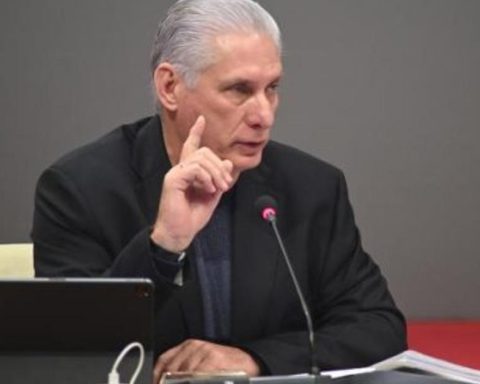
In recent years Silvio Rodríguez has been moderately critical of the Government of Miguel Díaz-Canel and some of its decisions, and in this interview he has been no less. When asked if he has ever felt disappointed with the system he supported, he responds: “I have never felt disappointed in the Revolution, ever. Disillusioned with some people, yes, of course. And not even disappointed, but simply: “What’s wrong with this one?” [risas]. “What’s wrong with this guy?” he says, knowingly.