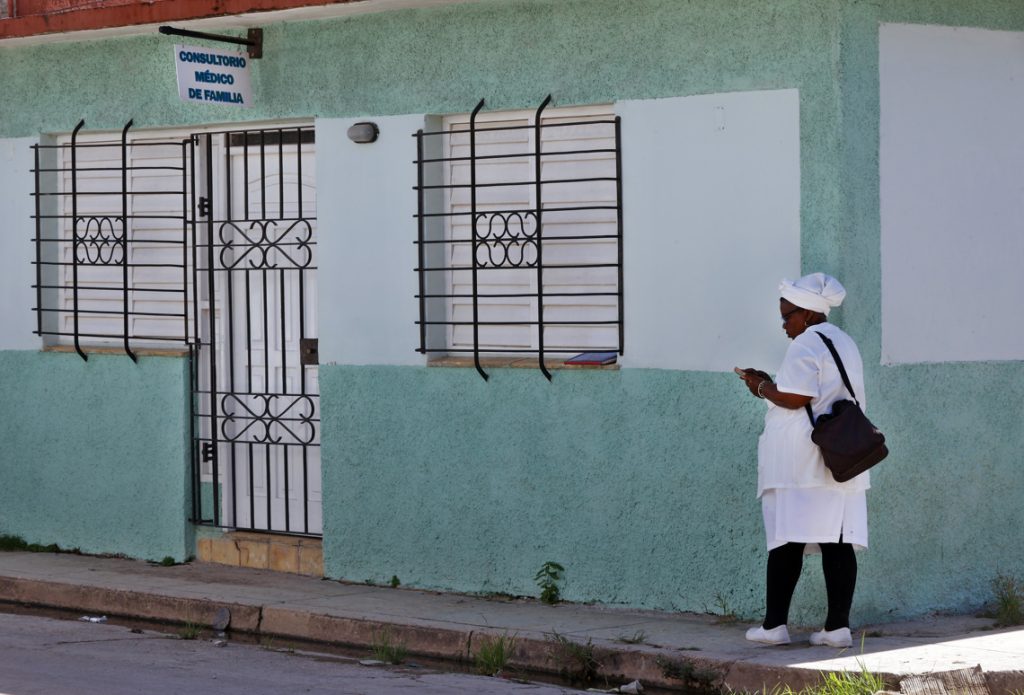
Havana/The Cuban Observatory for Human Rights (Ocdh) this Wednesday demanded that the Cuban Government declare a “health emergency” due to the national outbreak of three diseases caused by mosquito bites: dengue, chikungunya and oropouche.
The NGO, based in Madrid, warned in a press release that “there are entire neighborhoods” on the Island infected with these arboviruses.
Likewise, he said that he has received testimonies that expose an “alarming health crisis”, as well as the systemic inability of health services to provide accurate diagnoses and effective treatments.
He highlighted that affected people report symptoms such as high fever, myalgia, joint pain, jaundice (yellowing of the skin), profuse diarrhea, vomiting and skin rashes.
Affected people report symptoms such as high fever, myalgia, joint pain, jaundice…
“The severity of these manifestations, particularly in the pediatric and elderly population, highlights the urgency of a timely health response,” he added. He also drew attention to infected prisoners.
The observatory considered that there is “a lot of uncertainty” about the government’s response to this situation, especially because “many people give up going to health centers due to the lack of resources for diagnosis.”
This situation, he argued, reveals “a profound dysfunction in the health infrastructure that compromises public health.”
Before him silence for weeks Regarding the magnitude of the current health crisis, the Cuban Government reported until this Wednesday that last week alone it identified 13,071 “specific febrile cases”, possibly related to the current outbreaks.
The Vice Minister of Public Health, Carilda Peña, assured in statements to state television that there is evidence of an “increase in all territories of the country” of dengue, chikungunya and oropouche.
The Vice Minister of Public Health, Carilda Peña, assured in statements to state television that there is evidence of an “increase in all territories of the country.”
In addition, he added that seven people were in critical condition.
Peña did not provide total numbers of patients despite the fact that the outbreak has been going on for weeks. However, this is the first time that health authorities have released numbers of infected people in the current outbreak, coinciding with a greater social debate on the topic.
In the case of dengue, the official stated that on the Island there is an incidence of positive cases of 24.3 per 100,000 inhabitants, and that it is present in 12 of the 15 provinces. This means that in the country, of just over 8,025,624 inhabitants, there are about 2,360 affected by this disease.
He also warned that there is a predominance of dengue serotype 4, which is more likely to become hemorrhagic (and also fatal) if the infected person has already had the disease with another strain. “We are prepared to attend,” he assured.
According to authorities, in 2025 three people diagnosed with dengue died.
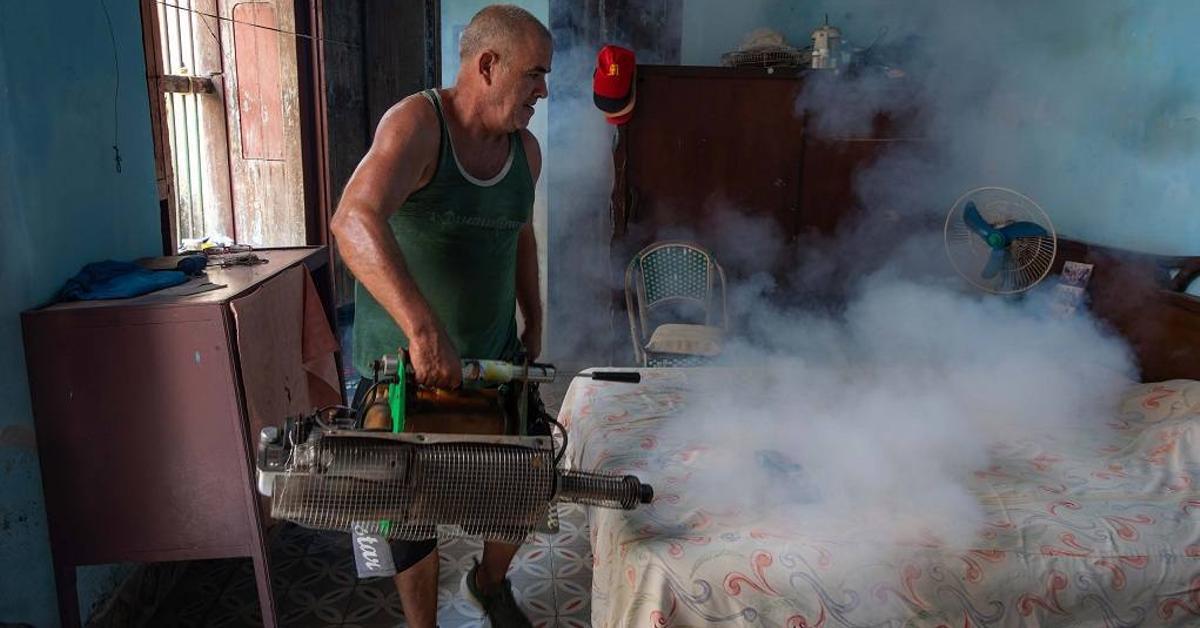
Last week, the vice minister had already pointed out that the outbreaks represented a “national” problem because the mosquito infestation rates are “very high” and the situation due to the lack of fuel in the country is “very complex” to be able to carry out the necessary fumigations.
The situation, covered up by the ruling party for weeks, had already caused the US Embassy in Havana to issue an alert.
The situation, covered up by the ruling party for weeks, had already caused, at the end of September, the United States Embassy in Havana to issue a alert health for anyone who wants to travel to Cuba due to the chikungunya outbreak. The risk was determined at Level 2, which requires taking “additional precautions.”
“Most people recover within a week; however, some may suffer severe joint pain for months or years after an acute illness,” the diplomatic headquarters warned, adding that symptoms, mainly fever and joint pain, appear three to seven days after the bite.
Already 14ymedio had reported since the first week of October that cases like that of Annia Zamoramother of political prisoner Sissi Abascal and resident in the small town of Carlos Rojas, in Matanzas. “The truth is that I can’t describe what we have been through here at home. We couldn’t even get up to give a glass of water to the other person in the other bed. This has been very painful, very sad, it has affected us physically and psychologically, I myself can’t even walk because of the pain and inflammation I have in my legs,” she said.
“I can’t describe what we’ve been through here at home. We couldn’t even get up to get a glass of water.”
“Yes, people are dying because of this virus,” said the woman, who, like many other Cubans, has been carrying a disease for two weeks that they cannot name because they do not know what it is.
According to statistics from the Pan American Health Organization (PAHO), in the last decade, Cuba has reported more than 3,000 cases of dengue in two different years.