Sancti Spíritus/When in 2023 it was announced that the sugar colossus Uruguayin Jatibonico, would be managed by a Russian company, many in Sancti Spíritus breathed a sigh of relief. The alliance with Moscow promised to rescue one of the most emblematic mills in the country, modernize its equipment and return it to the vitality of the times when it set national production records. However, more than two years laterthe promise has been diluted between the lack of parts, blackouts and bureaucratic silence.
“People here were happy when they found out, because we are very close to the central, but time has passed and the Russians don’t arrive and we don’t even know what to think,” he tells 14ymedio Gerardo, a 61-year-old former sugar worker who has been out of the sector for more than a decade. “That place became like my home and that’s why I was very excited that they would repair it.”
The plan to revive the sugar colossus, the most important in the province and one of the essentials for the national harvestwas born with enthusiasm. In May 2023, during the Cuba-Russia Economic Forum held in Havana, a director of the Progress Agro company confirmed that the firm was preparing a joint venture with Azcuba to recondition Uruguayformer Jatibonico power plant and which was owned by the North American company Cuban Sugar Company.
The official Cuban media then presented it as the first step of a “sugar renaissance” with the support of the Eurasian power, while the Russian press cited it as a symbol of strategic cooperation. In Jatibonico there was talk of new jobs, of technicians trained in Russia and the arrival of machinery that would replace old implements. It was even mentioned that the specialists would be housed at the Zaza hotel, close to the mill.
“We didn’t care if they were Russian, Vietnamese or aliens”
“The municipality is very depressed because Uruguay was our locomotive, when it is in the doldrums we all feel in the same hole,” summarizes Gerardo. “We didn’t care if they were Russians, Vietnamese or extraterrestrials, what people wanted was for someone to arrive to stop the situation of deterioration that the plant has and that drags everyone here, even raising animals becomes a problem when the plant is grinding little because from there many people get food for their livestock.”
But on the ground, expectations with the arrival of foreign businessmen collided with reality. At the beginning of 2024, the provincial weekly Escambray reported that the mill was “on pause” and that a good part of its staff had been displaced to support milling in the Tuinucú sugar industry. The note made no reference to Russian partners or any ongoing investments.
“Last year we went to support another mill, but although this year Uruguay is expected to grind, I have already withdrawn from the harvest,” warns an employee who worked on transporting cane from the fields to the industry. “Every time they told us that even if we were not satisfied with what we were earning, due to the low profits that Jatibonico was giving, we should not leave the sector because the best was about to begin when the Russians arrived.” However, “they stopped talking about them and no one puts a date on that project anymore, so I quit and now I’m working on a farm near my house that produces vegetables.”
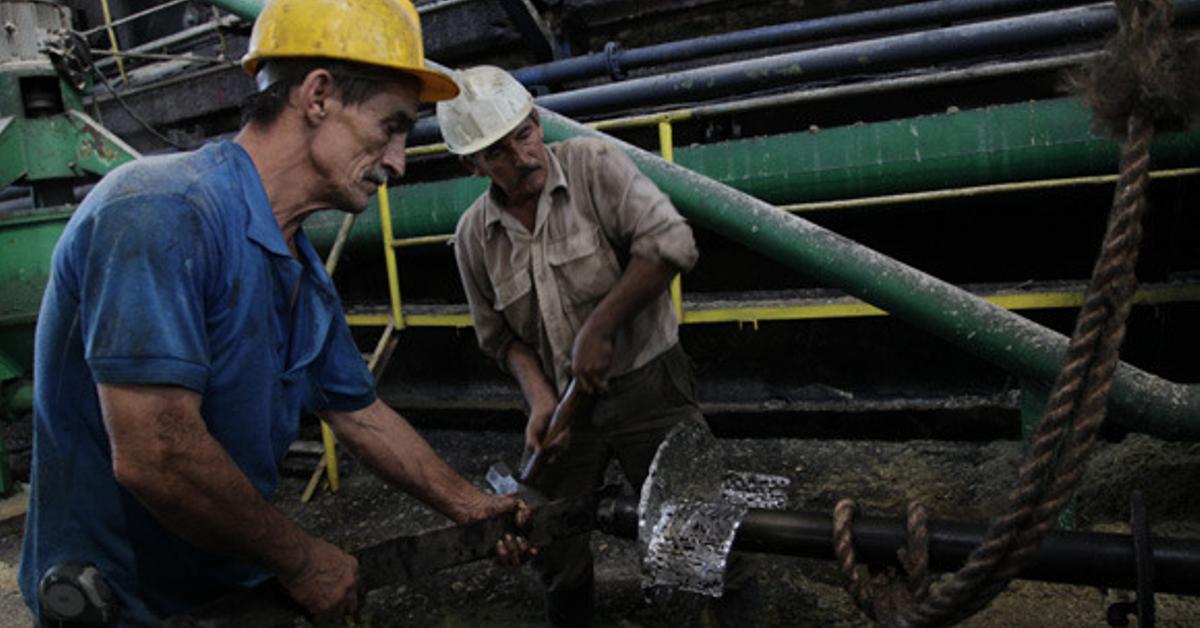
The provincial reports only insist on the same evils that plague Uruguay and the rest of the Sancti Spiritus mills: lack of cane, fuel and parts, in addition to the blackouts that prevented the repairs from being completed. In the local railway workshops they have barely prepared a few cage cars for the transfer of grass, while local technicians admit that “without electricity no miracle is possible.”
No one is surprised by this timid step by what was a productive giant. In 2022, the Sancti Spiritus mill stopped and Eddy Gil Pérez, director of the Uruguay Agroindustrial Sugar Company, showed his enthusiasm with the possible Russian management: “We are among the nine mills in the country chosen for these businesses,” he revealed then. Some of the industry’s employees were relocated and the workers were told that the old Jatibonico would be paralyzed until the Russians undertook a “capital repair”, which has not been done so far.
The issue of Russia’s collaboration in the island’s harvest has even stopped being mentioned in the official Cuban press.
At the nearby Zaza hotel a Russian delegation stayed at the timeaccording to testimonies collected by this newspaper. “But it didn’t happen from there, they came in an exploration delegation,” underlines a source from that establishment. On Progress Agro’s digital site there is no public mention or visible communications that the company has advanced to operational technical deployment in Cuban territory. The issue of Russia’s collaboration in the island’s harvest has even ceased to be mentioned in the official Cuban press, which on the other hand has given publicity to the recent conversations with China. to revitalize the sugar sector.
This 2025, the Reuters agency returned to Sancti Spíritus and confirmed what was already vox populi: the Russian project had not gone beyond paper. “The plan to revitalize Uruguay did not materialize,” summarized his chronicle from Jatibonico, which cited workers and officials frustrated by the lack of results. Meanwhile, the Chinese were gaining presence with solar parks in the region, a contrast that did not go unnoticed by sugar workers. “And the Russians? Everyone asks about them, but not a single screw has arrived here,” said one of the workers interviewed.
Neither the Ministry of Agriculture nor the Azcuba group have issued a note confirming the official cancellation or postponement of the agreement. There are also no traces of tenders, environmental studies or imports associated with the supposed modernization. Russian government sites, for their part, mention cooperation with Cuba in general terms – food, energy, transportation – but without directly referring to the Sancti Spiritus ingenuity. The diplomatic sources consulted maintain the usual vagueness: “we are working on evaluating opportunities.”
The contrast with the initial effervescence is evident. Uruguay, which was once national pride and symbol of Cuban sugar power, is today going through one of the darkest stages in its history. Its production, which exceeded 200,000 tons in the golden years, barely reached about a thousand tons in the final stretch of the 2024 harvest. The plant continues to depend on improvised repairs and the will of a few workers who refuse to see the mill die.
The official silence on the Russian project leaves a familiar flavor: promises that evaporate, agreements that never come to fruition and an industry that, between blackouts and debts, continues to melt like sugar in the sun.