The theft occurred a few steps from masterpieces of painting such as the ‘Mona Lisa’.
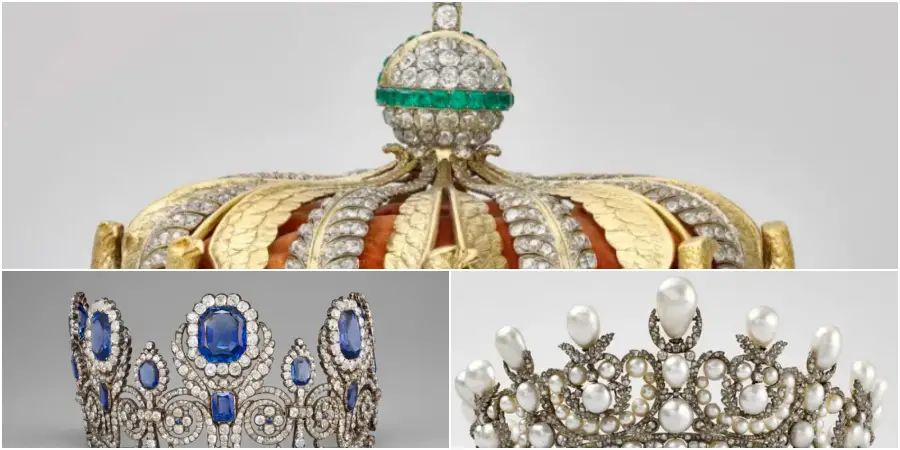
MIAMI, United States. – The Louvre Museum Paris suffered this Sunday its most notorious robbery since the disappearance of the Mona Lisa in 1911: a “clearly professional” gang broke into the Apollo Gallery and, in less than seven minutes, stole eight pieces from the historic French jeweler, including a tiara of Empress Eugenie and the crown of Queen Marie Amelia.
The French Ministry of Culture reported that the alarms worked and the staff applied the protocol, but the event revived doubts about the security of the national collections. “We are very aware that French museums are vulnerable,” said Interior Minister Laurent Nuñez.
According to the official story, the thieves parked a truck with an extendable ladder on the street, ascended to the second floor and forced access to the gallery; Inside they went directly to two display cases with what remains of the French Crown jewels. After breaking the displays, they fled with the loot. Eight objects – headbands, necklaces, earrings and brooches – were stolen during the operation, carried out a few steps from masterpieces such as the Mona Lisa.
Among the stolen pieces are the necklace of Marie Louise (wife of Napoleon I) and a pair of earrings, as well as a tiara that belonged to Empress Eugenie, consort of Napoleon III. They also took objects used by María Amelia, wife of King Louis Philippe I, and by Queen Hortensia of Holland. María Amelia’s crown was stolen, while a crown belonging to Eugenia herself later appeared near the museum, damaged, apparently because the thieves dropped it during their escape.
The Ministry of Culture noted in its statement that “the alarms sounded correctly” and that five Louvre employees present in the area “followed protocol: they contacted the security forces and protected the visitors.” According to the same note, the assailants tried to set fire to the vehicle outside, but a museum worker prevented it.
According to the same entity, the Police are investigating the case, while the authorities emphasize that criminal groups avoid famous paintings—impossible to exhibit or sell—and prefer jewelry that can be disassembled and placed in parts on the informal market.
The heist fits with a worrying sequence of recent hits in France. In September, thieves stole gold in mineral form from the Museum of Natural History in Paris – valued at around 600,000 euros – and, that same month, porcelain worth 6 million euros from a museum in Limoges. For investigators, it is not ruled out that the loot was commissioned by a foreign buyer.
The Louvre, with 230 years of history and strict security measures, has recorded relatively few thefts. The most recent precedent was in 1998, when the landscape Le Chemin de Sevresby Camille Corot, was removed from a wall “when no one was looking” and was never recovered.
On the other hand, the most famous episode remains the one from 1911: the thief spent the night hiding in a closet, in the morning he took out the Gioconda of the frame, wrapped her in her robe and left with the painting under her arm. He turned out to be an Italian nationalist who wanted to “return” her to his country. The painting appeared in Italy in 1914 and returned to the Louvre.
Specialists fear that, if there are no imminent arrests, the property damage will be irreparable: crowns and diadems can be disassembled and sold in fragments; Even large, well-known diamonds can be recut to make them unrecognizable. Although the final price for individual parts does not reach the value of the set, it will still be “considerable”, sources consulted by the BBC warn.
Sunday’s robbery left one last unusual note: it took place in the Apolo Gallery, a richly decorated room conceived as a showcase of the French monarchy and located a few steps from the most guarded work on the planet. The simplicity of the method—a truck with a ladder, direct access to a balcony, rapid breaking of display cases—contrasts with the magnitude of the cultural loss. The authorities implement a national plan to strengthen security in museums, but admit that the threat has become more sophisticated.