Foreign sales accelerated the most, with an increase of 75%, while purchases grew 26%, according to Banxico figures.
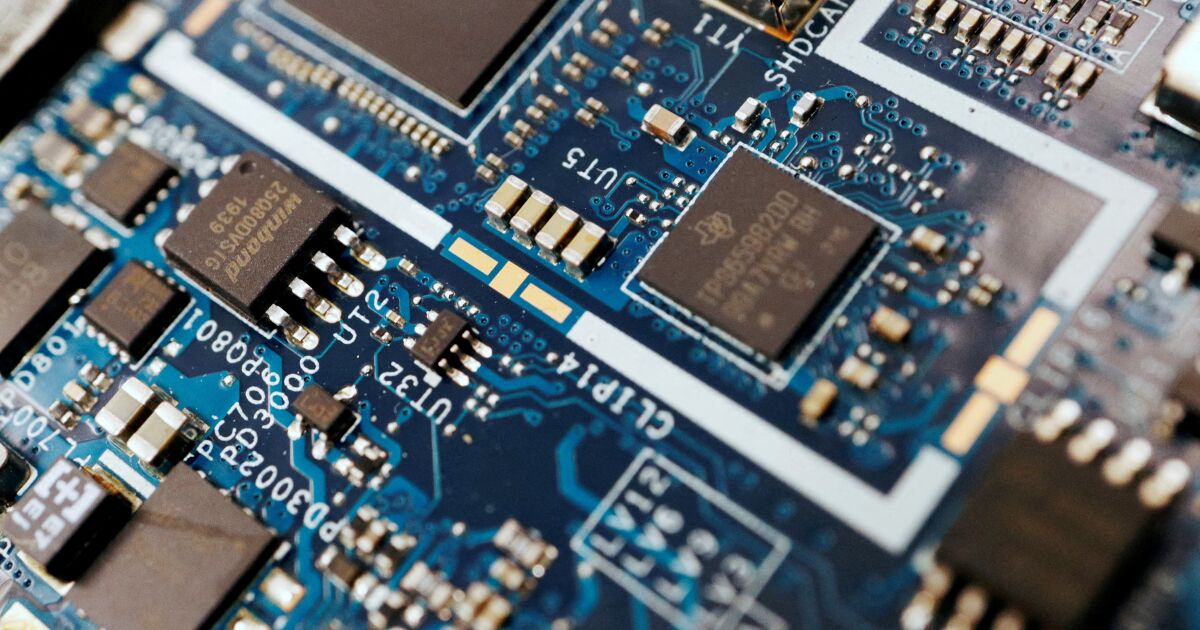
The impulse star is located in the automatic machines for data treatment or processing and its units. They include desktop computers, laptops and their essential components. The value multiplied 2.1 times to reach 45,197 million dollars, which represents almost 76% of the total assets related to AI.
They are followed by integrated electrical circuits, with an increase of 17%, and telecommunications equipment, with 12%. On the other hand, the semiconductor manufacturing machinery segment fell 3%, reflecting the terrain that Mexico is still seeking to conquer.
The country does not want to limit itself to exporting pieces, but rather to create the heart that makes them work. Semiconductors are the physical brain of AI. Under this vision, Mexico proposed establishing a specific chapter on semiconductors within the T-MEC with the aim of attracting investments from large production centers.
Companies such as Cisco, Foxconn, Skyworks, Qualcomm and IBM, together with the National Chamber of the Electronic, Telecommunications and Information Technology Industry (CANIETI) and the Business Coordinating Council, promote this initiative. The project seeks to strengthen local supply and the high-value semiconductor chain.
The Ministry of Economy is promoting a master plan to consolidate Mexico as a regional center for chip design and manufacturing. The strategy includes collaborating with the United States on research projects and doubling the size of the national industry by the end of the six-year term.
Trade changes route
The Mexican jump is part of a global trend. The World Trade Organization (WTO) places the country among the 10 with the highest exchange of goods linked to AI. In the global ranking it occupies eighth place in both exports and imports. Above are China, the United States, the European Union and Japan.
Mexico already shares space with economies such as Malaysia, Vietnam and Thailand—the new manufacturing poles of the digital era.
According to the WTO, North America accounts for one-fifth of global AI-related trade growth during the first half of 2025. The United States and Mexico are leading that push, while Canada maintains a more moderate role. Although traditional powers continue to dominate the market, their pace has become slower. On the other hand, emerging economies appear as the most active drivers.
Global trade in goods related to AI reached 1.92 trillion dollars in the first half of 2025, compared to 1.61 trillion in the same period of 2024, a growth of more than 20%. In contrast, goods not linked to AI barely increased 4%. Although AI products account for less than a tenth of total trade, they contributed almost half of global growth.
This transformation is not theoretical. It translates into the movement of containers, assembly lines, and cables that cross borders. In the industrial parks of Querétaro, Chihuahua and Jalisco, AI stopped being a promise and became an economic route.
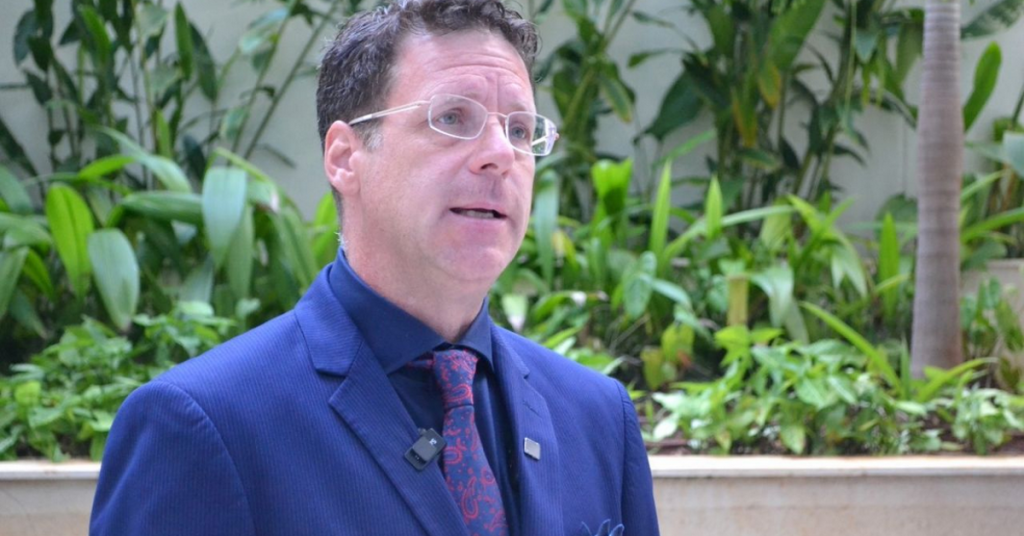
For Mexico, this dynamism opens a new economic stage. Marcelo Ebrard, Secretary of Economy, summarizes it like this:
The impact of artificial intelligence combined with other technologies, supercomputing and quantum computing is already being felt. The economy will be different. What took a century in the industrial revolution could now take less than three years.
In this accelerated change, the country seeks to position itself among the winners. “We want to be among those who obtain advantages, not be passive spectators in any way,” says Ebrard.
The bet already has concrete faces. CLOUDHQ, an American digital infrastructure company, announced an investment of almost $5 billion to build a data center in Querétaro. The complex, made up of six facilities, will generate 7,200 jobs, of which 600 will be highly specialized. “It will be the road that will allow the traffic of the new digital economy,” explained the official.
Each server that works there will sustain a good part of the national technological activity. From mobile applications to algorithms that manage flights or control smart appliances. Mexico will thus have its own node within the AI nervous system.
Salesforce also joins the movement. The American company confirmed an investment of 1 billion dollars aimed at strengthening the adoption of AI and accelerating the digital transformation of Mexican companies. For the federal government, these investments are the clearest sign of confidence in the new economy.