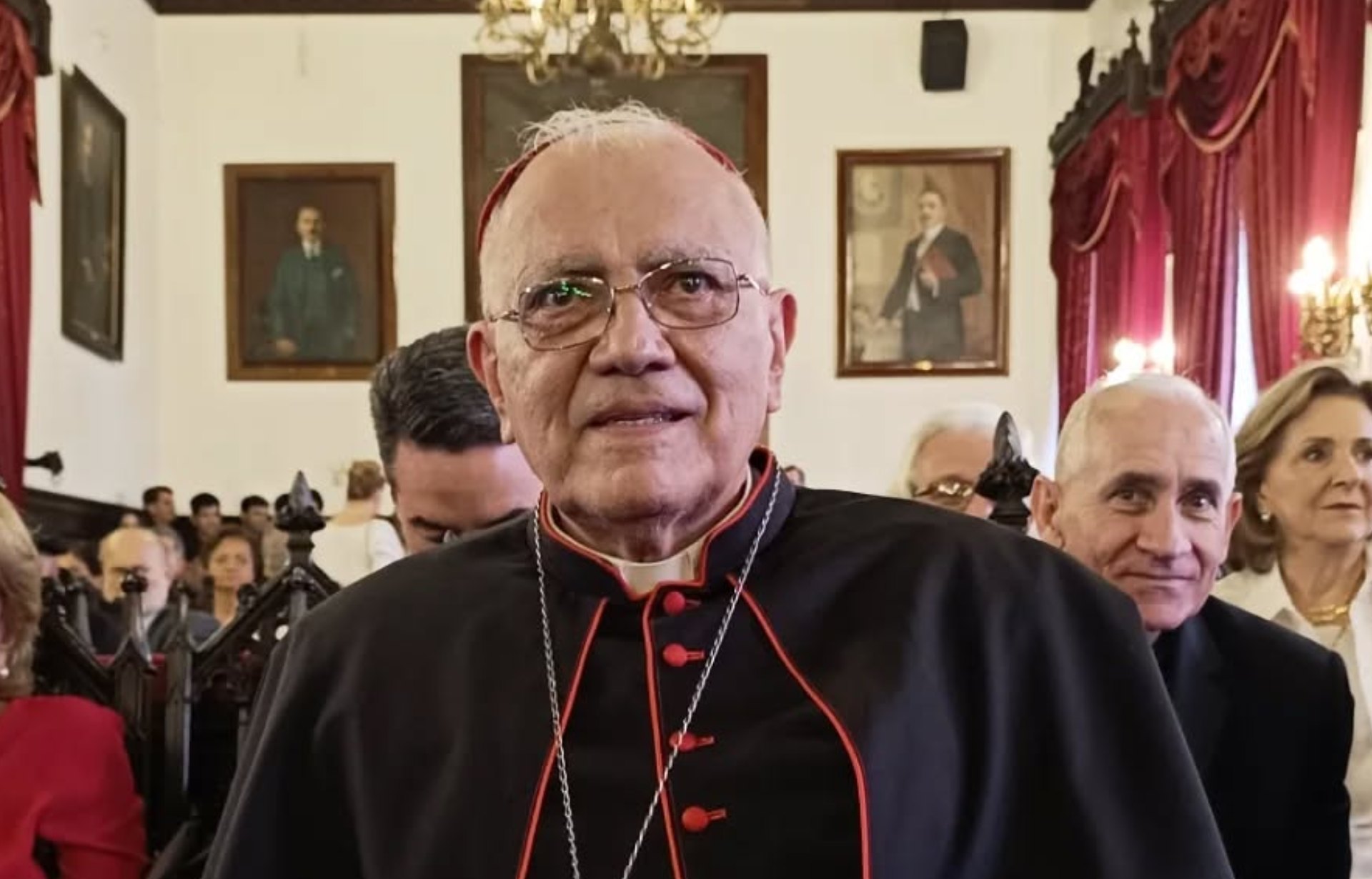
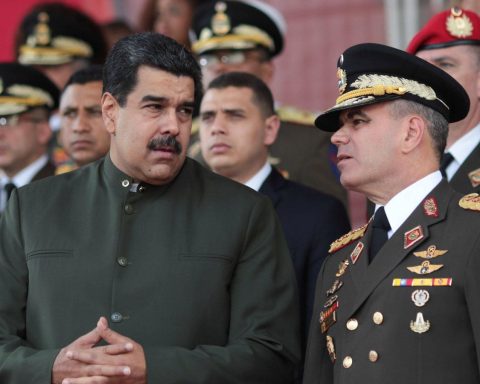
President Nicolás Maduro attacked this Monday, October 20, against Cardinal Baltazar Porras, whom he accused of having conspired “together with his brotherhood” to prevent the canonization of Dr. José Gregorio Hernándezin the midst of the climate of religious fervor due to the recent proclamation of the “doctor of the poor” as a saint.
During an event in the so-called self-government room of the Las 8 Raíces Commune, in Los Mecedores, Caracas, the ruler stated that “There was a lot of conspiring against the sanctification of José Gregorio Hernández”.
“Some priests, like Baltazar Porras, dedicated their lives to prevent their canonization, but they have been defeated by God. We have San José Gregorio Hernández, much to the spite of Baltazar Porras and his brotherhood,” declared Maduro, according to the broadcast of Venezuelan Television (VTV).
Maduro also assured that he “knows much more about the case” and reiterated that the canonization process was “sabotaged for many years by these groups.” As he said, “the curia conspired to stop him” from the first attemptss, dating back to 1949.
The ruler, who has tried to politicize the canonization of the first Venezuelan saints and attribute this religious fact to his government, recalled his meeting with Pope Francis in 2013, in which – as he stated – he told him “the faith of the Venezuelan people in José Gregorio Hernández” and gave him an image of the blessed made by Trujillo artists.
“They said that there was no miracle that certified the sanctity of José Gregorio. Well, go to Candelaria and ask the devotees there, thousands of experiences you will find, true acts of faith,” he added.
🔴 #NOW | Nicolás Maduro: “Some priests, like Baltazar Porras, dedicated their lives to conspiring against José Gregorio Hernández (…) But they have been defeated by God, by the people, and today José Gregorio is a saint despite you and yours” pic.twitter.com/sf9bhXiutb
Maduro’s statements come just one day after the canonization of Dr. José Gregorio Hernández and Mother Carmen Rendiles, celebrated in Rome by Pope Leo XIV.
Cardinal Baltazar Porras, who has been an important driving force in the canonization of the “doctor of the poor,” denounced from Rome the “militarization” of Venezuela, the persecution of dissidents and the violation of the human rights of political prisonerscalling the country’s situation “morally unacceptable.”
During his speech at the Pontifical Lateran University, Porras took the opportunity to raise his voice for Venezuelaremembering the serious social situation that the country faces, with growing poverty, limitation of freedoms, corruption and lack of autonomy of public powers, affecting the peaceful coexistence of Venezuelans.
“We live in a morally unacceptable situation; The reduction in the exercise of citizen freedom, militarization as a form of government, corruption and the lack of autonomy of public powers configure a panorama that does not help peaceful coexistence,” said the cardinal.
Role of Baltazar Porras
Despite Maduro’s statements, ecclesiastical sources and the media have left evidence of the leading role that Cardinal Baltazar Porras had in the canonization of José Gregorio Hernández.
His management was decisive in successfully completing a process that took more than seven decades. Porras not only reactivated the cause, but also energized it by establishing permanent contacts with the Vatican and the Congregation for the Causes of Saints.
It was who coordinated the search, verification and documentation of the miracle attributed to the Venezuelan doctorpersonally delivered the files in Rome, and maintained direct contact with the Holy See, which has seen his pastoral leadership as a guarantee of transparency and spiritual commitment, being the representative of the Venezuelan church in everything related to José Gregorio Hernández.
In addition, his closeness to Pope Francis has also been pointed out as a determining factor for the final approval of the process.
Although his work was key for the cause, which had been stagnant for more than seven decades, to advance rapidly during the last decade, the ceremony and official acts in Venezuela did not include Cardinal Porras in the main delegations.
This fact did not go unnoticed by several observers, who interpreted the snub as an attempt by the government to marginalize the most influential ecclesiastical figure in the country.
Chavismo, for its part, has tried to monopolize the canonization of the first Venezuelan saints, to the point of turning the day in Caracas into an act with strong propaganda content.
In the church and plaza of La Candelaria, the epicenter of devotion to the saint, the government installed giant screens that exclusively transmitted the signal of VTVinterspersing the religious ceremony with specials about Ripe and the late Pope Francis.
In several parts of the capital, including the José Gregorio Hernández House Museum, the presence of officials and alleged armed groups stood out, generating tension among the parishioners, transforming what should have been a leap of faith into a political platform.
Although the canonization was a moment of unity for the Church, the biased selection of the official sign and the political protagonism was clear evidence that the government sought to appropriate a religious event that, according to ecclesiastical leaders, belongs to the Venezuelan people and not to any administration on duty.
On behalf of President Nicolás Maduro, the authorities, led by Executive Vice President Delcy Rodríguez, were in La Candelaria Square at the vigil prior to the Canonization of José Gregorio Hernández and Mother Carmen Rendiles
The Dominican Government is holding talks with investment banks to acquire financial insurance that will mitigate the impact on the public finances of possible increases in crude oil, given the recent increase
Caixa Econômica Federal announced this Tuesday (3) the resumption of financing for the purchase of residential properties above R$2.25 million with resources from the savings account. The modality, framed in the Real
On February 11, a federal jury convicted Earl Richard Clouser, 55, of Burnham, Pennsylvania, for attempting to produce child sexual abuse material with a 15-year-old teenager in Cuba. According to the United
Havana/On the corner of 23rd and L, where for decades Havana waited in line to enjoy a five-scoop salad, this Tuesday the only possible taste was the bitter aftertaste of frustration. The
“PDVSA has signed supply contracts with companies marketing oil and derivatives destined for the United States market,” the state-run company reported without identifying the companies or offering more details of the contracts.