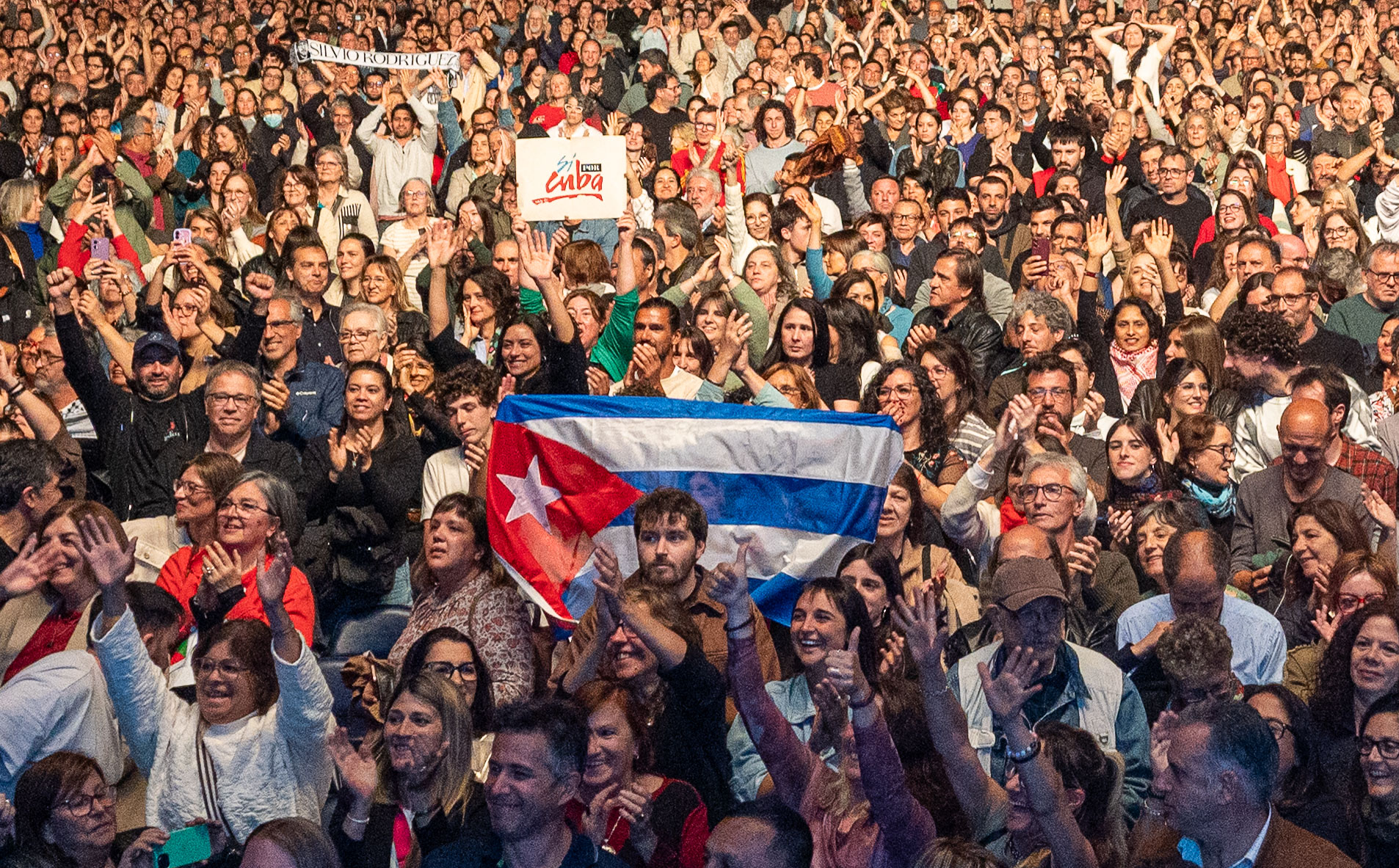
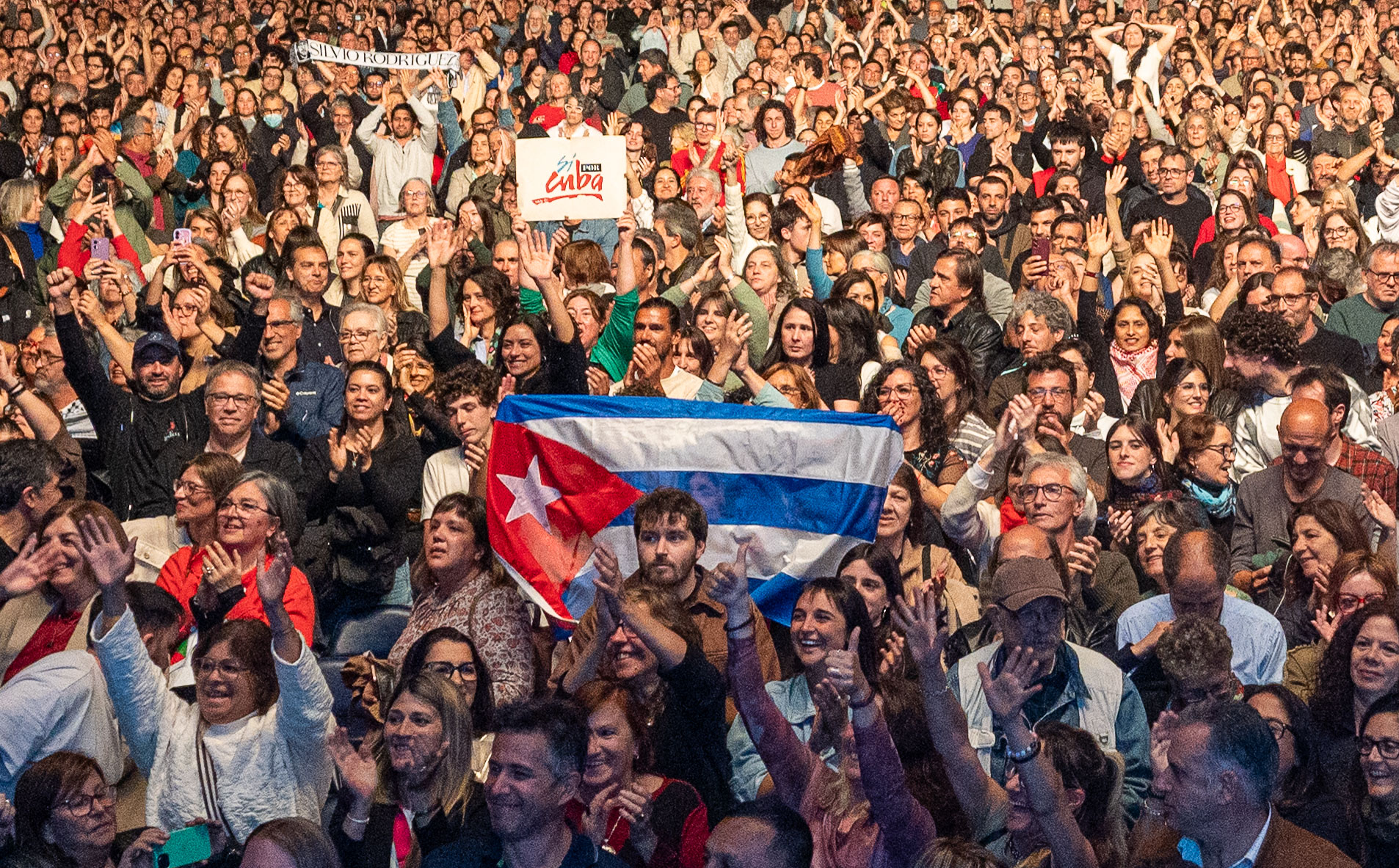
During Silvio Rodríguez’s two concerts in Uruguay there were more Cuban flags than on any other stop on the tour. It is not a romantic impression or a patriotic exaggeration: it has its explanation. Walking through Montevideo is to discover, little by little, that hotbed of compatriots that has taken root on the banks of the Río de la Plata.
The Uruguayan is serene, with a slow walk and a low voice. The Cuban, on the other hand, has effusiveness in his blood. Therefore, although here no one shouts like in Centro Habana or in the Chicharrones neighborhood of Santiago, it is enough to hear an “asere” as you pass by, a laugh that bounces off the sidewalk or an accent that does not hide its origin to recognize yours.
I get into a taxi: the driver is Cuban. I go into a greengrocer to buy fruit: a Cuban serves me. In the hotel where we were staying, one of the maintenance workers and a service girl were also Cuban. In recent years, this scene has been repeated over and over again. Thousands of my compatriots have found a possible refuge in Uruguay, a place to rebuild their lives without completely giving up memory.
11,862 Cubans officially reside in Uruguay, according to the 2023 census, although migrant organizations estimate close to 30,000 because many were not counted due to their irregular situation; In 2023 alone, 7,293 Cubans requested refuge after crossing from Brazil. In May 2024, the government approved a residency law by roots to regularize more than 20,000 foreigners—with a special impact on Cubans and Venezuelans—who had requested refuge without meeting the requirements for residency.
At the Antel Arena, during Silvio’s two concerts, the Cuban presence was perceived in the hallways, in the flags hanging around their necks, in the murmurs before the start. There was something of Cuba flying over the premises.
A whirlwind of questions assaulted me. What would those Cubans feel when they heard, in Silvio’s voice, that fragment of Martí’s essay traveling teachers? Especially when he did not stop at the oft-repeated quote—“being cultured is the only way to be free”—but continued with that less cited, but equally luminous, part: “being prosperous is the only way to be good.”

What echoes would that phrase awaken in those who are burdened by the fracture between education and poverty, between training and the impossibility of prospering? What fiber would the song “Our After” strike, with its portrait of uprooting and flight? “When the children/grandchildren leave, the future…” How many would recognize themselves in those verses? How many would see in “The thing is coming” the allusion to everyday silences, to that habit of avoiding “the thing” that everyone knows but no one names on our island? And what tremor would it cause for “History of the Chair” to return with that shocking validity: “The agony of haste is always worth it / even if the truth is filled with chairs”?
What’s going on with all that? What mix of emotions, guilt, pride and belonging was displayed in that Cuban audience that sang from afar? Perhaps in those songs—more than nostalgia—a form of reconciliation was found: with the island, with history and with themselves.
Leyda Machado She is a Cuban who has lived in Montevideo for some years with her husband Pocholo, also Cuban. She attended Silvio’s concert with her son Aleph, just over a year old, in her arms. He says that, before entering the Antel Arena, he did not have high expectations.
“If I’m honest with you, I didn’t go to the concert with the same excitement that I had before seeing Serrat, Sabina, Fito Páez or Jorge Drexler here in Uruguay. I suppose because I have already seen Silvio several times, because he has always been within reach, at concerts in the neighborhoods,” she remembers. I didn’t feel that previous tingling. “And my husband told me it was the same.”
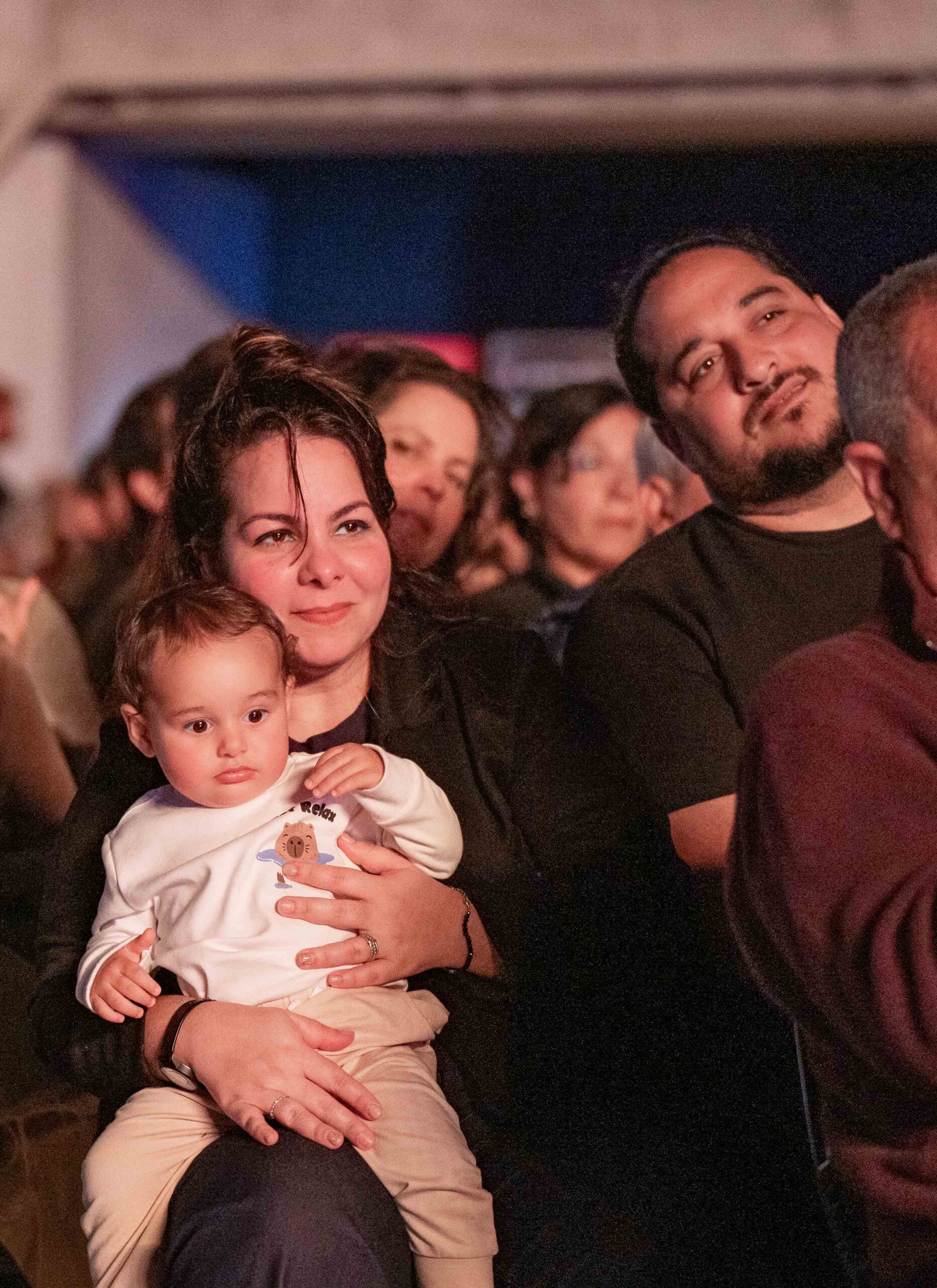
However, as soon as the first chords sounded, something changed. “As soon as Silvio started singing, I started crying. It’s not that tears came out: I burst into tears,” he confesses. In the midst of emotion, she managed to tell her husband: “It’s not for nothing, but being here, ten thousand kilometers away, far from all our affections, and suddenly seeing Silvio and hearing that voice so close, those songs that are part of you, is something very strong. It connects you with a number of things; it puts your country, your friends, your longings before you.”
He says that he did not feel a teleportation to Cuba, but rather the opposite: a full awareness of his place in the world. “I had my feet in Montevideo, with my Uruguayan son in my arms, and I watched how the people of this country were moved by a Cuban troubadour, with a Marti text. That also fills you with self-love and a beautiful patriotism, often vilified for everything that is happening to us as a country.”
In the midst of emotion, he thought about mothers. “We think about our mothers. My husband’s mother is no longer alive, but she was the one who taught him Silvio’s songs. And mine, who has never been to one of his concerts, wrote to me on WhatsApp: ‘I want to be there.'”
From his seat, he heard a Uruguayan woman shout: “Silvio, my mother loves you!” and smiled through tears. The most intense moment came with “Blue Unicorn.” “My child was with his father at his feet, and he was also singing to him crying: ‘My unicorn and I became friends…’. What can I tell you? It is a very powerful scene: seeing ourselves as emigrant parents holding and wrapping our son in what was a part of our childhood and adolescence.”
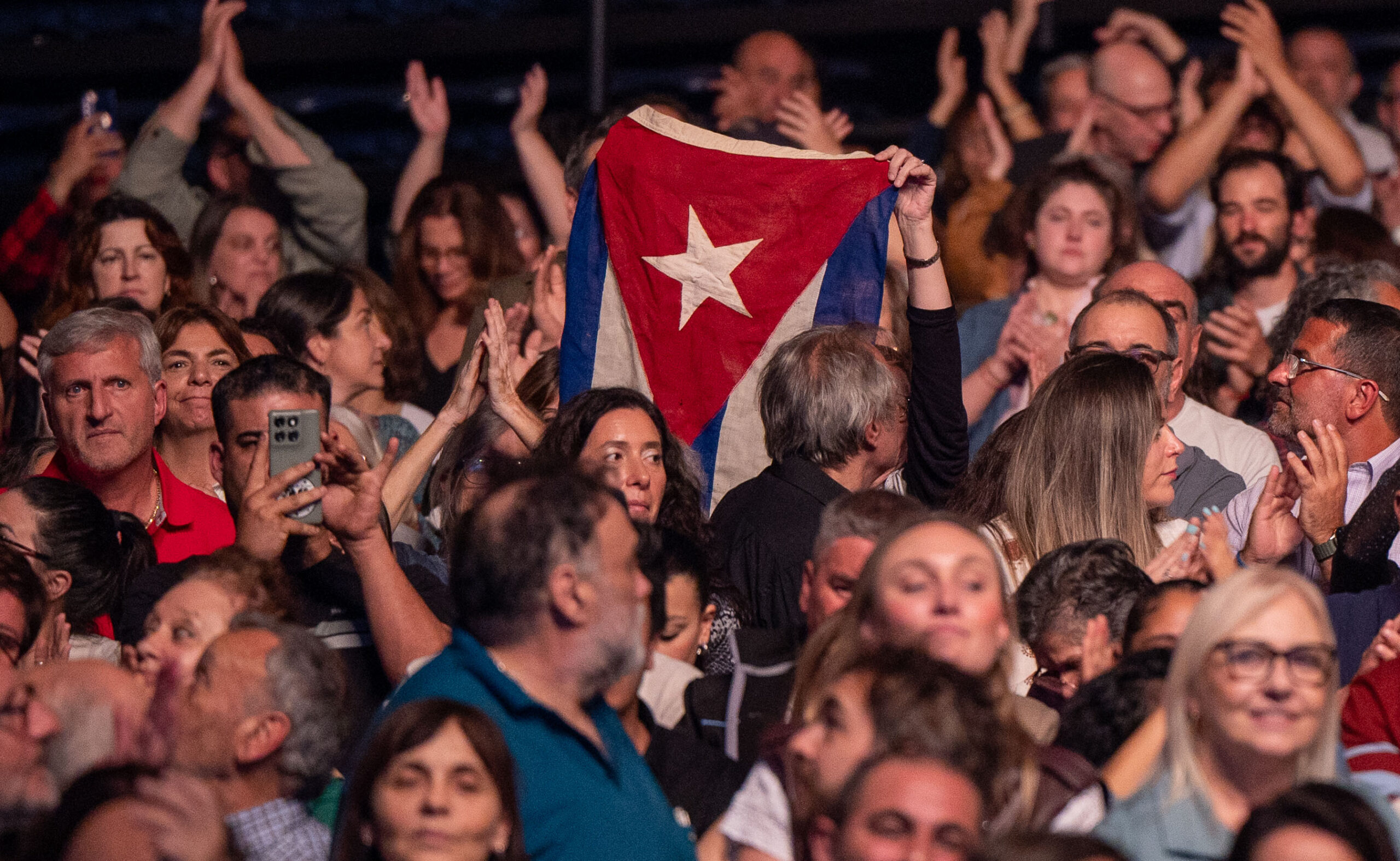
Leyda also observed other Cubans scattered around the stadium. “There was a geek of more than forty years in front of me, on the other side of the hallway. At one point, when someone shouted ‘Long live Cuba!’, he raised a Cuban flag. That gives you an idea of his political stance. But when Silvio sang ‘El necio’, I saw him singing too. It is more complex than people believe, because even if it is a politically trite hymn, with which that man probably does not agree at this point, it is something that one cannot tear away, no matter how much one wants to.”
That night, he says, the presence of many Cubans was felt. “Not all of the audience that Silvio summons is the Latin American left that has the idea of the socialist and victorious island of the Caribbean. That is not his only audience. There is everything. And it seems interesting and hopeful to me that there are many people within the emigration, with their pains and clear positions against Cuban totalitarianism, but who do not want to cause escrache – especially to those who do not deserve it -, and that this emigration does not renounce the band sound of his life.”
For Leyda, that is the true meaning of a concert: “It is not just about songs. It is the amalgamation of feelings produced by poetry, music, emotions, the person you have next to you, the scream you feel from the bottom, the unexpected applause. Everything that happens in that small large space where so many souls coincide is unique, unrepeatable and almost always inexplicable.”
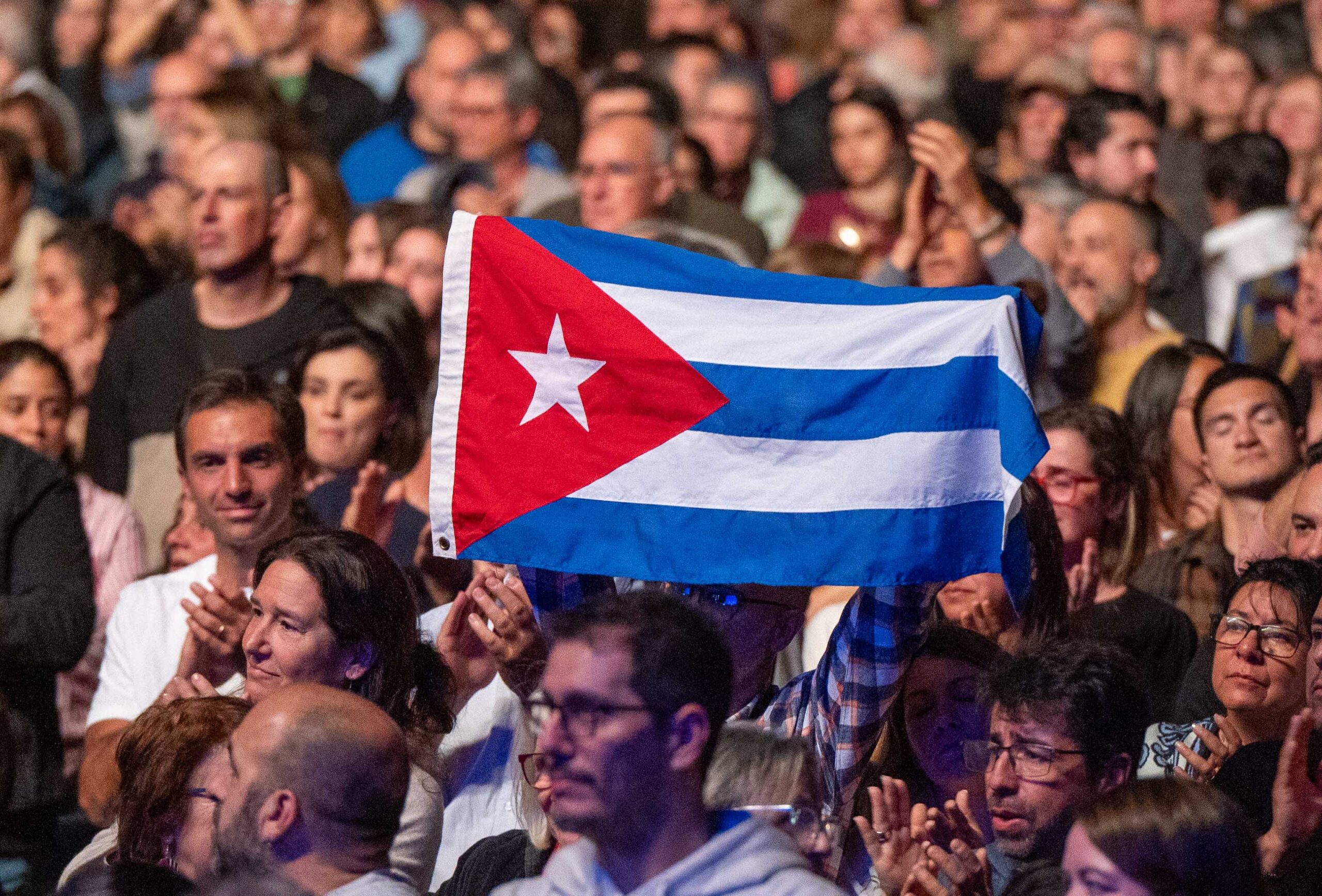
For her—and for many of those Cubans—the concert was not only a reunion with an artist, but with a part of themselves. In a country that has received them with respect and opportunities, but where uprooting still hurts, listening to Silvio was like opening a window to memory.
That night, between the chords and the flags, the Cubans who live south of the soul returned, for a moment, to the Island that continues to sound within them. Because there are music—and homelands—that are never abandoned, not even when crossing the sea.
I had to leave Cuba to understand something essential: that you can think differently, even be at the ideological opposite of someone, and still let yourself be saved by the same love songs. I also learned that thinking differently does not mean canceling or despising others, but rather listening to them.
Silvio—in the Havana staircasein it first concert of this tour— sang a song that until now he has never done again. It said:
Anyone born in Cuba
can be called cuban
although he likes grapes
more than the apple banana.
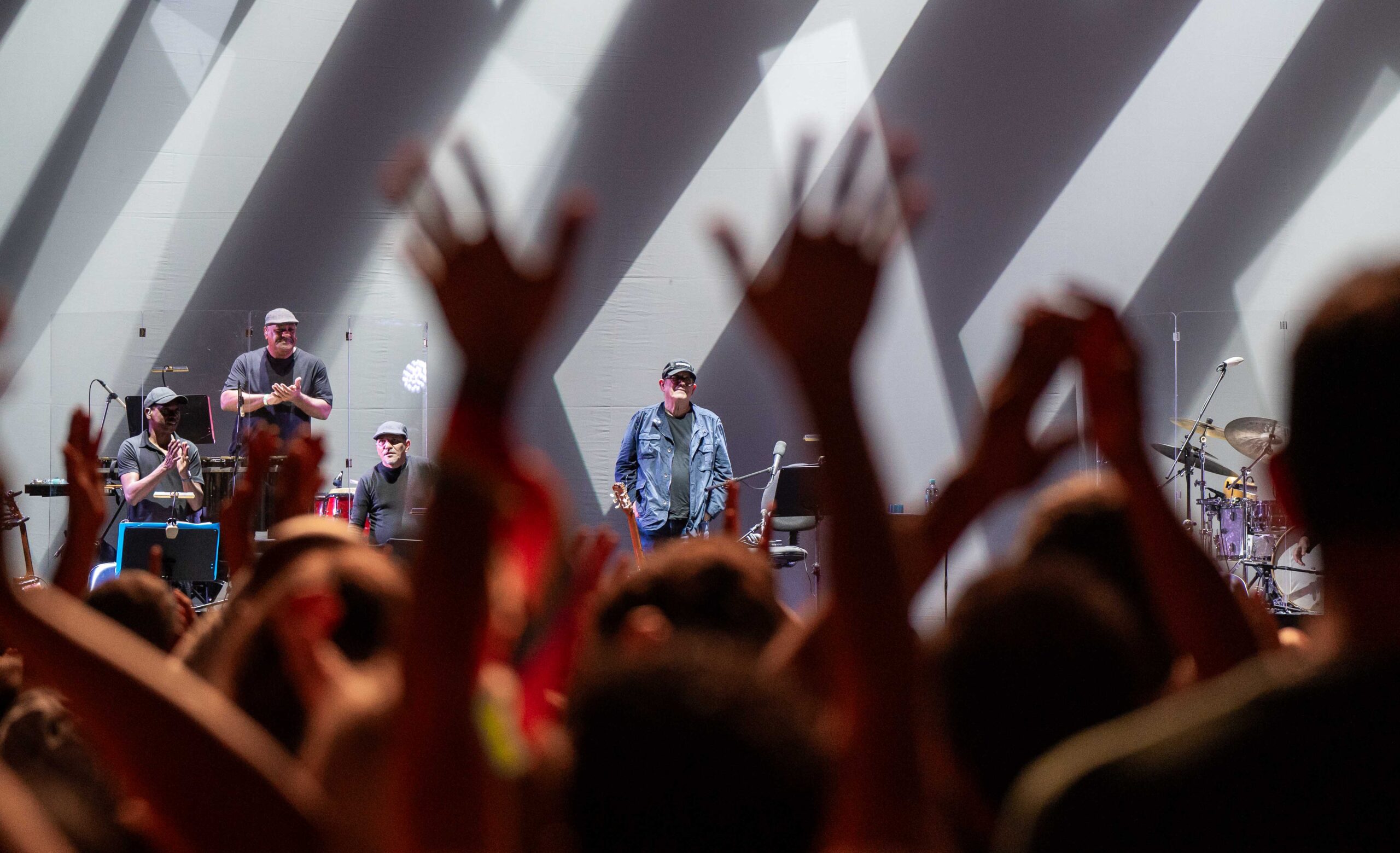
I couldn’t say how many of the 11,500 attendees who filled the Antel Arena each night were Cubans. The number, ultimately, does not matter; The figure is just a statistic. Those who were there—those who shouted “Free Cuba!” and, at the same time, they cried and sang ‘The Fool’—they had not bought a ticket to participate in a political event or to raise a flag. They were moved by a deeper fiber, more intimate than any ideology.
Perhaps many thought differently, even radically differently, but none wanted to miss the reunion with those songs that have always accompanied them, that still sustain them far from home, from family, from the neighborhood, from the Malecón.
And I fantasize that, perhaps, after the concert they went to the Malecón in Montevideo to continue trovanning with a guitar and a cheap bottle of wine, as they would have done in Havana, but with a rum from the winery.
Because a boardwalk always inspires; If not, ask Silvio how he composed “Casiopea,” one early morning on Havana’s Malecón, when he only saw the stars and a figure—whose face he never met—told him the story that gave rise to the song. Although the Montevideo boardwalk is different—cold, made of stone, with an infinite river where you cannot see the other side—that night, for many, it was once again the Caribbean Sea.
And in the midst of the distance, between nostalgia and hope, they understood that there is no possible exile when a song reminds you of who you are and where you come from.