10 employees say they use AI tools in their daily lives; However, only four in 10 perceive that their employer is making the most of that technology.
The conclusion is harsh for administrators. Adoption was born from the bottom up and the brakes are on internal governance, integration and training, according to the AI Productivity Survey commissioned by IBM.
The study, conducted by Censuswide among 4,000 office workers in the United States, Canada, Mexico and Brazil, offers a sharper contrast: 90% of Mexican employees already use AIwhile only 40% feel that their company makes the most of them.
Eight in 10 organizations say they have implemented AI, but corporate use is far from optimized; In fact, only 25% of employees use the tools their company provides.
The rest rely on combinations of personal and corporate solutions (35%) or exclusively personal (25%), a Shadow AI phenomenon that increases compliance and data breach risks.
Individuals vs companies
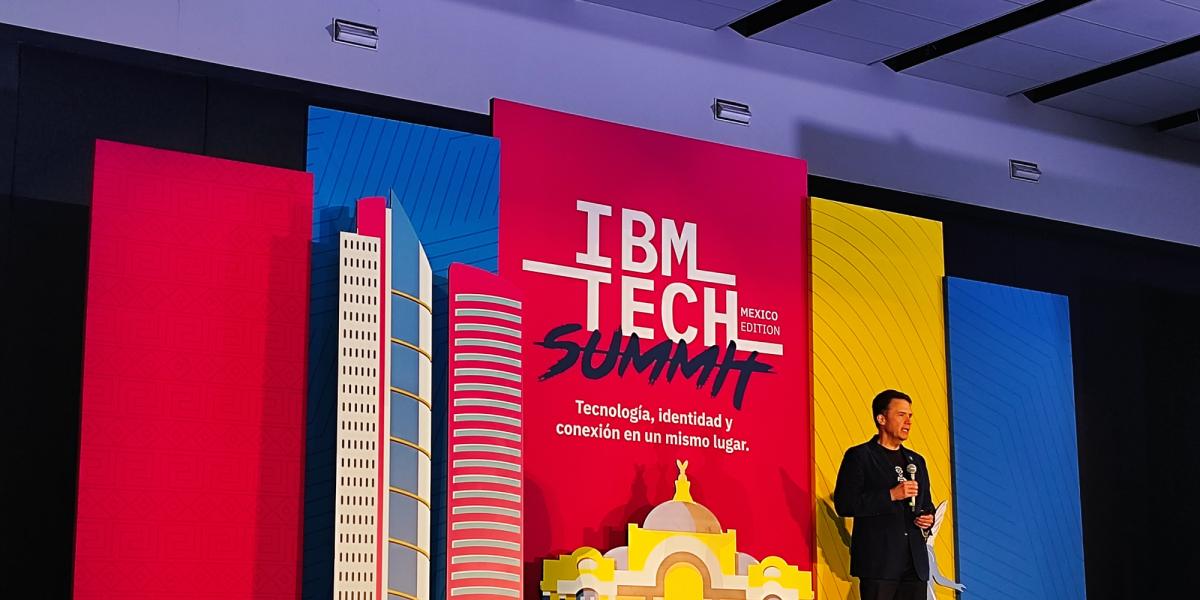
Why do individuals run faster than companies? First, because of perceived costs and risks. Mauricio Torres, president and Technology leader of IBM Mexico, warned about the importance of not staying in the novelty.
“Don’t bring me a case in which technology is cute. I want something that really means more gross profits,” Torres said at a press conference.
Second, due to a lack of capabilities and integration. Among the main obstacles identified by respondents are staff training (49%), difficulties in integrating AI with existing systems (41%) and data privacy (39 percent).
The skills gap is clear: 91% of workers feel able to use AI effectively, but only 39% say they feel confident enough to implement it in their work environment.
What do those who already use it ask for? Three very specific things: practical training (65%), real use cases (52%) and integration with current tools (49%).
Productivity
Individual productivity has become the aspect to consider when implementing an AI tool. 86% of respondents say that AI already makes them more productive and effective, with savings of one to three hours per week in 56% and up to six hours in 33 percent.
The most cited benefits are faster completion of tasks (65%); more efficient workload management (49%), greater accuracy (49%) and better decision making (39 percent).
In other words, the return is first in the productivity of the individual, not in large transformations not yet completed in the business back-office.
IBM insists on moving the conversation from the pretty demo to return on investment (ROI) by process (lower cycle time, accuracy, customer satisfaction).
“Companies must bet on reliable, transparent and human-centered AI so that adoption is safe and sustainable,” said Torres.
Shadow AI and talent
For financial and risk management, shadow AI is no longer a curiosity. One in five companies globally experienced a breach linked to the use of unauthorized AI tools.
The recommendation is not to ban, but to close the gap with better internal tools under governance, audit and compliance.
In the words of Torres, “you have to do it with governance at the side, since the reputational impact can be too strong.”
The differential is also impacting the competition for talent. 94% of respondents believe that AI will be important to their work in the next three to five years, and 67% would change employers if another organization offered better practices and access to AI tools (between 25–34 years old, the figure rises to 72%).
For the human resources area, this makes AI a retention and employer branding factor: whoever offers a usable and reliable corporate suite of AI tools will attract those who have already resolved their learning curve on their own.
AI is already part of the personal toolkit of Mexican workers and is generating measurable productivity gains at the individual level. The lag, and the economic opportunity, is in transforming this dispersed use into corporate competitive advantages, with less shadow AI and more secure, integrated and governed platforms. If the company does not offer that route, the labor market will offer it. Employees have already shown that they are willing to move to where artificial intelligence is best used.