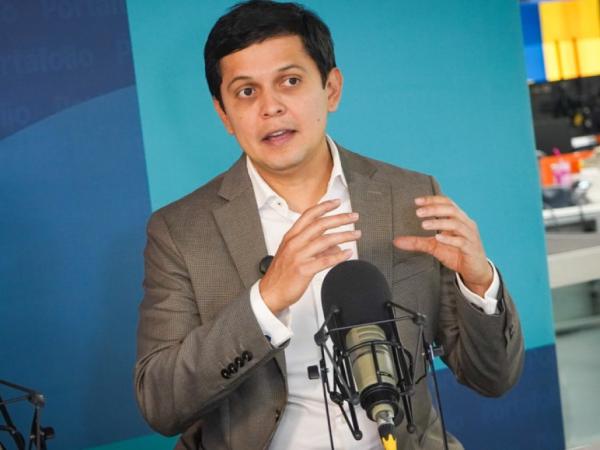
In a year marked by global volatility, the United States is beginning to consolidate itself as the main destination for Colombian coffee. According to Gustavo Gómez, president of the National Association of Coffee Exporters (Asoexport), The North American market today represents the greatest opportunity for the country.
Additionally, the union will meet in Cartagena within the framework of the 89th version of the Coffee Summit, the most important meeting of the country’s export sector, where market perspectives will be debated, the impact of the European Green Deal, new US tariffs and sustainability challenges.
(See: Director of the ICO calls on Colombia to strengthen coffee productivity)
What is the behavior of coffee exports?
So far this year, exports have grown 10% compared to last year. But what is news are the international prices; on the New York Stock Exchange it is close to US$4 per pound and that has led us to have cargo values above $3 million.
Furthermore, we are going to have the highest harvest in all of history. More than US$5,000 million will be the value of coffee exports this year, resources that reach coffee producers directly.
Can Colombia become the main supplier of coffee to the United States?
If anything has characterized this 2025, it is uncertainty. We have had tariffs, the European Green Deal, international regulations, among other things. But within all this doubt, Colombia has emerged well. The United States is the main coffee consumer in the world, representing 25% globally.
The main supplier is Brazil, followed by Colombia and Vietnam is the third. But today Brazil has a 50% tariff, while Colombia has 10%. Under these conditions, Brazilian coffee enters the North American market more expensively, so the Colombian bean, in addition to having better quality, will be much more attractive to roasters and consumers in the United States. That is being reflected in the price. Situation that generates a dynamization of the economies in the municipalities and of the coffee-growing families of the country.
(See also: Coffee departments are accelerating their exports thanks to the grain)
The international price of coffee is around US$4 per pound on the New York Stock Exchange.
iStock
How are contracts influencing the price of Greca coffee?
The price of coffee depends on three factors. The New York Stock Exchange, the quality premium and the exchange rate. We have seen that the stock market has risen a lot, but the roaster, who is the one who sells the coffee on the shelves, has not been able to rise double or triple, which is what has increased the raw material.
Thus, the cost of customer acquisition is very high and there is fear that consumption will be hit. For this reason, it has been gradually rising, but so far we have not seen it negatively impact consumption. We can find pounds of 100% Colombian coffee from $20,000 to $50,000.
If production in Vietnam and Brazil improves, where is Colombia?
It is difficult to know if the international price will remain the same or fluctuate. Brazil has good production prospects and Vietnam is also on a recovery path. Within the framework of the Coffee Summit we are going to see how Colombia and Central America are, but also how consumption is, because we have tariffs in the United States and a European Green Deal that generates an increase in the price of the product at destination. It should be noted that these are the fundamentals that will determine the price.
What challenges do your employers see?
The biggest challenge we have is the issue of security, especially in the south of the country: Huila, Cauca and Nariño. This makes it difficult for us to carry out technical assistance and sustainability operations. We develop projects for more than US$15 million in coffee-growing areas, on small farms, and we have suffered security problems that have made it impossible to reach those areas of the country.
This is a sector that is like a machine, if it stops and we cannot continue buying, transporting and exporting, the resources will not arrive. That’s a shame at a time when international prices are very good. We have been working with the National Government, with the army and the police, but efforts must continue to provide guarantees so that coffee continues to be exported.
(Read more: Juan Valdez will be the new sponsor and official coffee of River Plate, in Argentina)

Colombian coffee exports have grown 10% so far this year compared to 2024.
iStock
A few months ago there were impacts in the ports due to containers, is this continuing?
At this moment we are working with shipping companies, ports and actors in the marketing chain on the issue of containers, because twenty-foot containers suitable for food, which are where coffee is exported, are very few.
This can generate a significant challenge and even more so in seasons when other crops also grow. Also, it can affect export flows and generate defaults for our international clients. Colombian coffee is paid with that differential for quality and compliance.
How is the sector getting ready for the European Green Deal?
We have been getting ready, working with the public sector, with the ministries of Environment, Agriculture, Commerce, with the National Federation of Coffee Growers and with the European Commission to be ready. However, it seems that it is going to be postponed for another year.
I was in Europe a couple of weeks ago and the feeling is that the green and carbon issue is no longer the priority. Today everything is being directed towards security issues. The other point is competitiveness. They see China flying, the United States imposing tariffs and improving competitiveness, and Europe falling behind.
However, as a country we have to be prepared so that once it comes into force, we can have a differentiating factor, because we are ahead of many countries in Central America and Africa.
What does Asia, especially China, represent for coffee exports?
Four years ago China was the 50th destination for exports. Now it is already in the top 10, being the sixth most important country in the destination of foreign sales and when one looks at Asia in general, they have been growing by double digits in recent years. But, it is still 10% of what we sell to the United States.
The Chinese are starting to drink coffee, they are learning and new generations are doing so. This means that if one enters into this moment of consumption, one can ensure that in the future the end customer will get used to Colombian coffee and will demand the bean.
(Read: Good harvest: coffee production in Colombia reached a historical maximum in July)

The total value of coffee exports in 2025 will exceed US$5 billion.
Courtesy
What is the difference between normal export coffee and special varieties?
We all like varieties. A Bourbon Rosé, a Geisha, they are all very good. The difference is that a few years ago Colombia had a serious rust problem, which caused production to drop a lot. Since that moment, Cenicafé does a wonderful job and has been developing resistant varieties. Thanks to that, 80% of the coffee park is resistant to Rust.
This has allowed us, despite the weather, to be producing between 12 million and 14 million bags of coffee. Additionally, Cenicafé has launched new varieties, one of them is Castillo 2.0, where it is targeting not only the issue of resistance and productivity, but also the quality in the cup. That is a very interesting path and it is something that we must continue exploring, because it does not have to envy any coffee varietal.
Where is Colombian grain going?
The United States is the main export destination. We feel that this is something that is being consolidated more by Brazil’s 50% tariff. There is a change in flow where the national grain is going very much towards the United States and Brazilian coffee is looking for other destinations such as the European Union and Asia.
The second destination is the European Union, about 24% of our exports go to that destination, especially Germany. Switzerland is a very important country. And the other is Asia, which has been growing a lot. However, Colombian coffee is exported to more than 170 countries around the world.
We have done the diversification task well, but we have a very close client, the United States, and we must continue consolidating it. The invitation that we have made from Asoexport, especially to the public sector and the coffee union, is to aim for a 0% tariff with the United States and to be able to achieve more income for coffee producers in Colombia.
The Coffee Summit is coming, what topics are they going to address?
This will be the 89th version of the Coffee Summit and is the most important event for coffee exporters. There are more than 500 people who meet in Cartagena to talk about the prospects for coffee, the North American market and what could happen with the tensions and trade relations between the two countries.
Additionally, we will talk about the Green Pact, sustainability, supply and demand to see where prices could go. We are going to bring international buyers so that they can generate important business with coffee exporters and producers in Colombia.
(See: What does it mean that Colombia has officially declared coffee as its national drink?)

The 89th Coffee Summit will bring together more than 500 attendees in Cartagena to analyze prices, sustainability and the international market.
iStock
Could the tension with Israel affect coffee exports to that destination?
One of the association’s maxims is clear, stable rules and a free market. That’s all we ask for. Our message is that they let us work and the conditions are clear to be able to operate.
Israel is an important destination, all destinations have to be open, but it would not do such great damage to the country in terms of exports. But we do believe that diplomatic relations have to be maintained and tensions and individual interests should not take precedence over the common good, which in the end is the income that coffee producers in Colombia will have.
What expectations do you have in exports?
At the end of 2025, despite the rains, we will have exports very similar to last year, exceeding 12 million bags. And what one sees in the coming years depends a lot on the climate, but I think Colombia has managed to have a resistant coffee park.
The invitation that must be made to producers is to continue with the task of quality, because if the price drops, it is the way to position ourselves and generate income. Colombia must be a quality, sustainable and reliable origin.
(Read more: The National Federation of Coffee Growers reports financial and operational progress)
DIANA K. RODRÍGUEZ T.
Portfolio Journalist