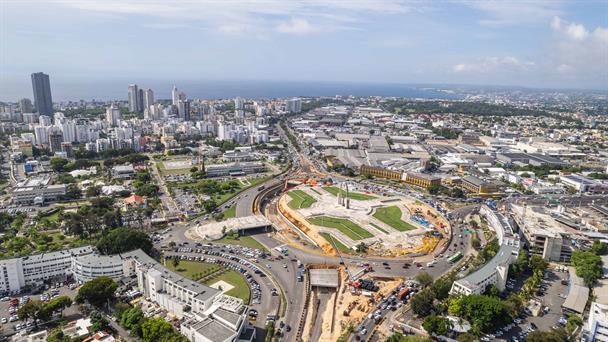
At the beginning of the 20th century some countries, mainly European and the United States, began to build roundabouts like a solution to jamto improve the vehicular flow in some cities, and since then there are those who defend that road design, while others they rejectalleging obstacles to circulation, increased insecurity for pedestrians and elimination of city brand elements.
In it National District six have been eliminated roundabouts on roads of great vehicular flowbut there are still 5, in some of which blockages form. In some countries such as France, Spain, Mexico, Argentina, Jamaica, Colombia and others, the roundabouts operate without any difficulty and is attributed to good use by drivers and rigorous application of traffic laws. transit.
For your defendersthe roundabouts are better for vehicular fluidity because most of them lack traffic lights. Vehicle waiting time is reduced, they are safer because they avoid frontal collisions, reducing accidents with injuries by 75% and fatal accidents by 90%, fuel consumption is reduced and they do not require electricity.
Those who they reject They claim that they can collapse when traffic is heavy, depending on the vehicular floware more unsafe for pedestrians and an area larger than an intersection is needed for their construction.
 https://resources.diariolibre.com/images/2025/10/17/16102025-rotondas-en-santo-domingo—luduis-tapia12—copy-04700def.jpg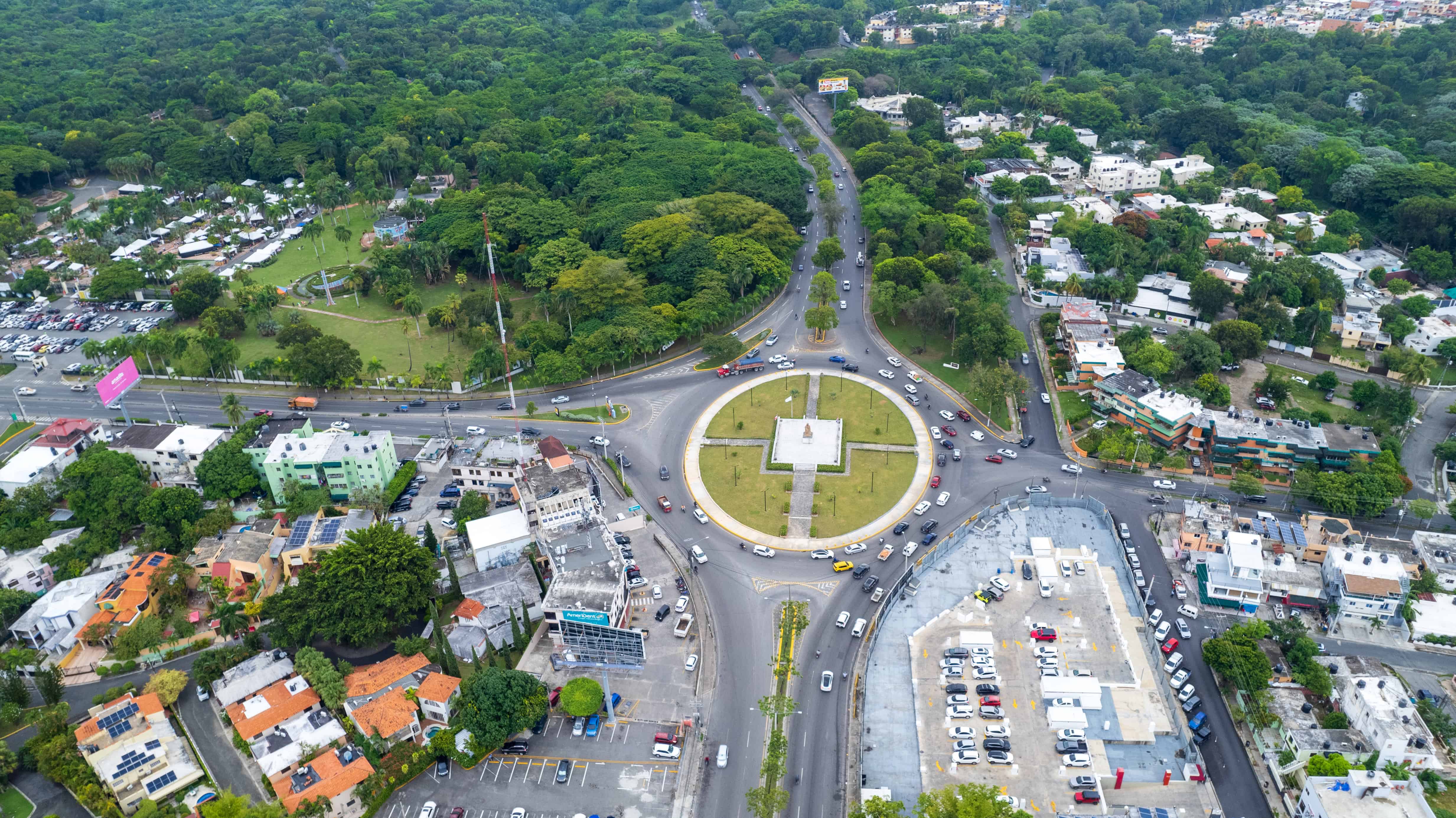
https://resources.diariolibre.com/images/2025/10/17/16102025-rotondas-en-santo-domingo—luduis-tapia12-6419643a.jpg
https://resources.diariolibre.com/images/2025/10/17/16102025-rotondas-en-santo-domingo—luduis-tapia26-44785d66.jpg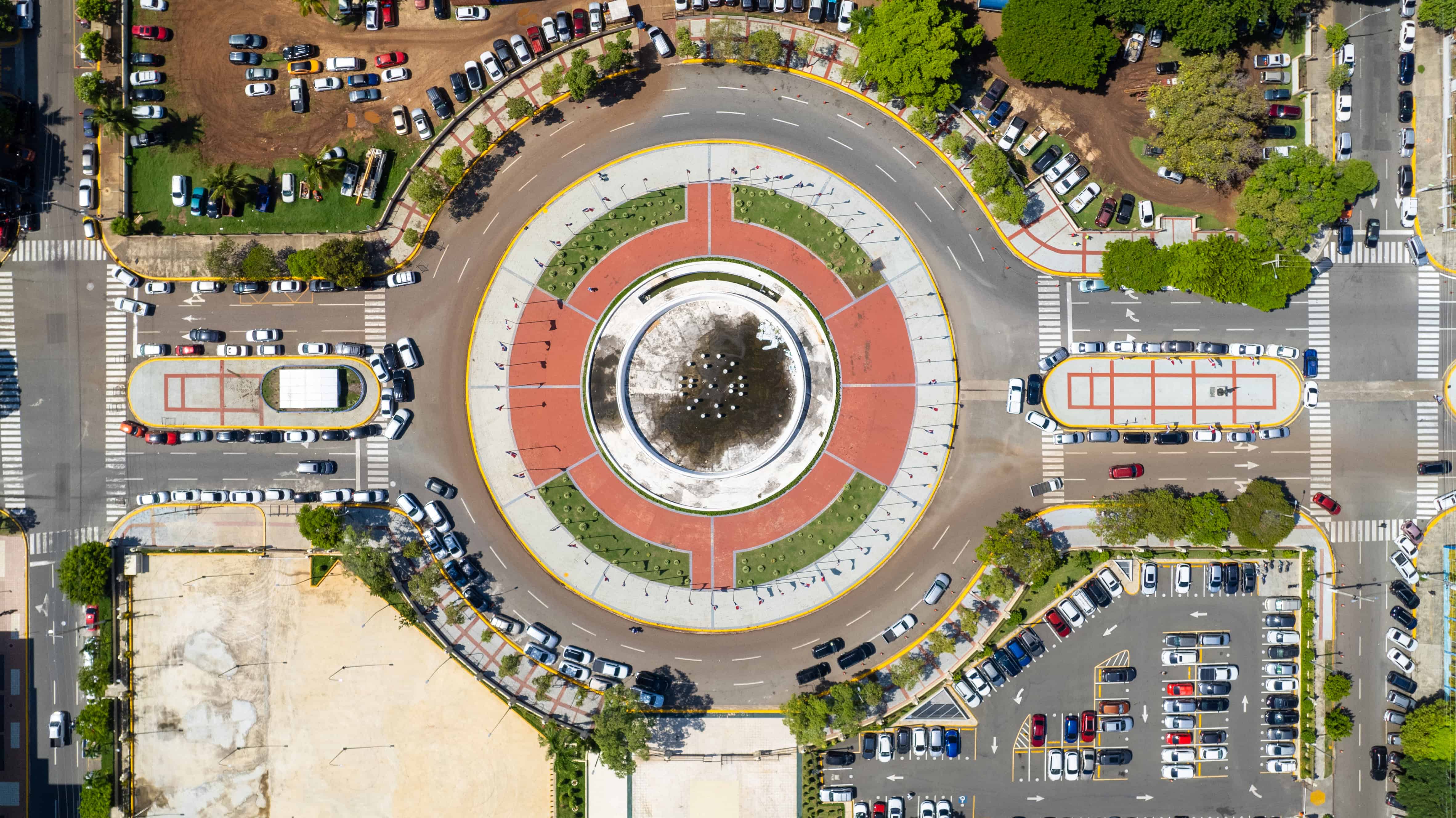
https://resources.diariolibre.com/images/2025/10/17/16102025-rotondas-en-santo-domingo—luduis-tapia3—copy-05ce1b14.jpg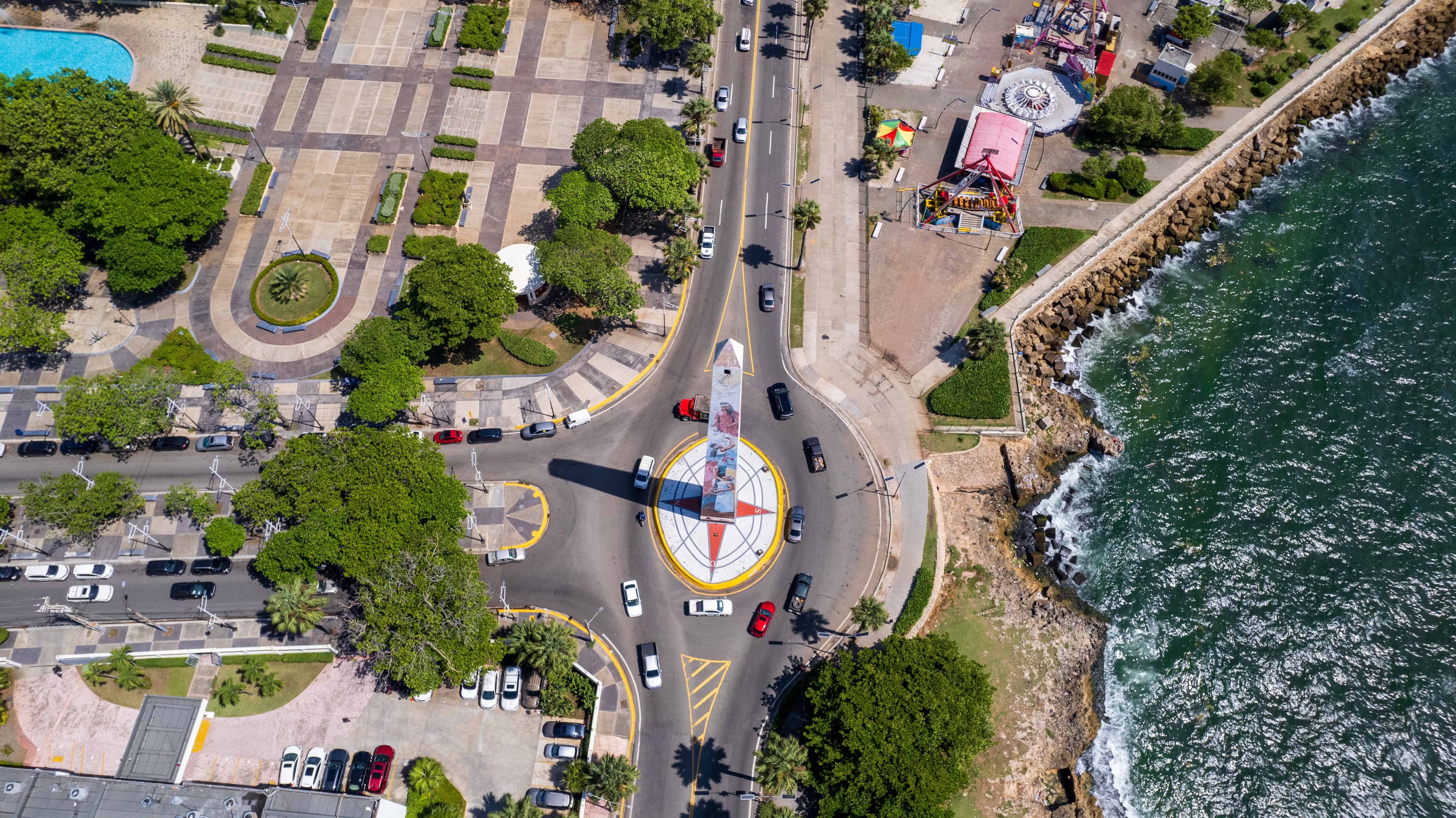


Balaguer and the roundabouts
In the Dominican Republic the rise of roundabouts started in the 70sduring the governments of the deceased President Joaquín Balagueralthough in the time of Rafael Leónidas Trujillo there were some such as the “Male Obelisk” or “Obelisk to Peace of Trujillo” built in 1936 on George Washington Avenue and the National Congress Avenue.
Roundabouts in the DN
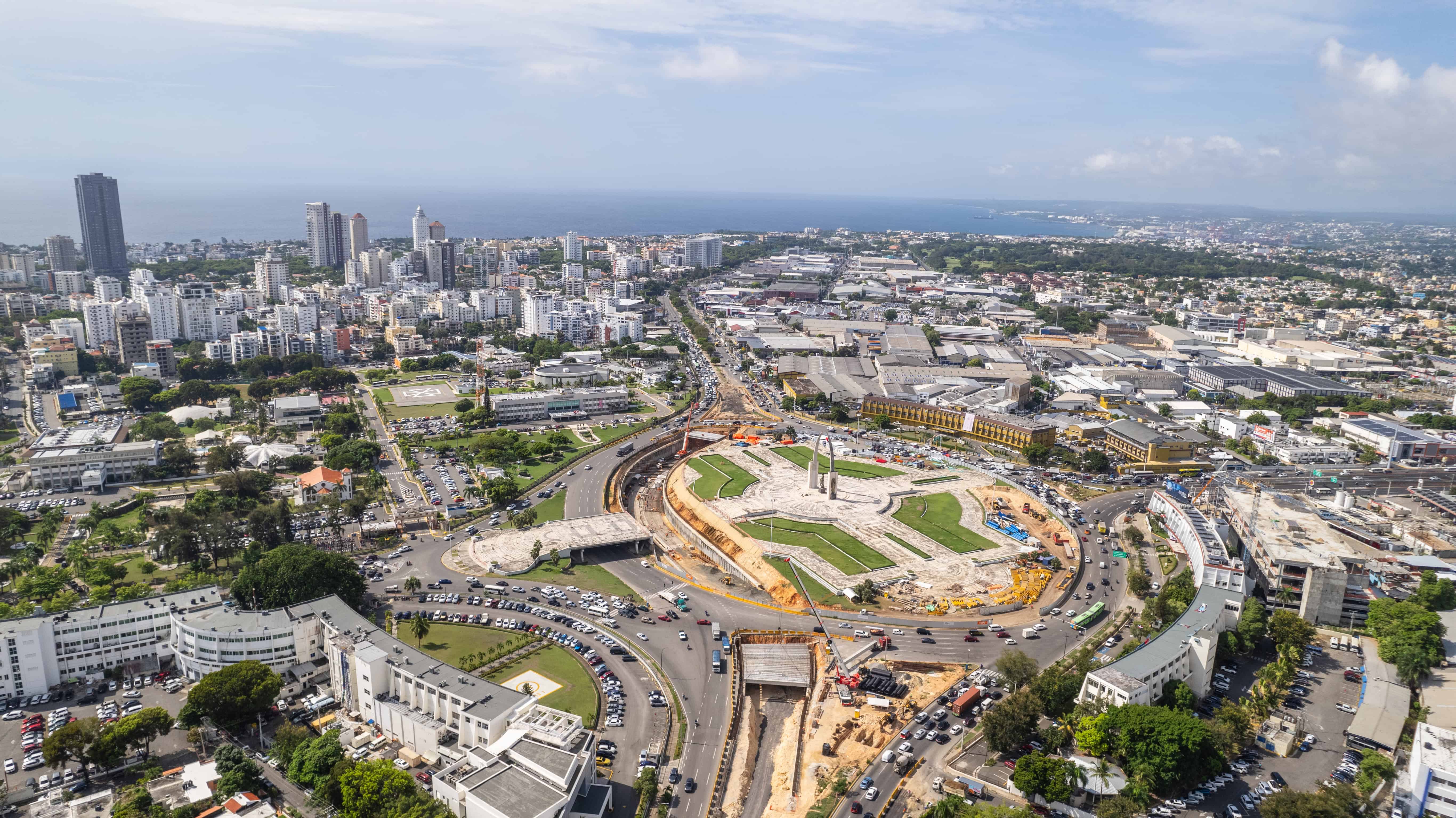
The Balaguer governments built the John F. Kennedy Avenue with Winston Churchill, Kennedy with Gómez, February 27 with Máximo Gómez, the rotunda in front of the National Congress, The Flag Square, The HeroesArroyo Hondo, Josefa Brea with Padre Castellanos and the one that existed on the Mella highway with San Vicente de Paúl.
“RD Moves”: Government launches plan to reduce traffic jams in Greater Santo Domingo
Some of these spaces were symbols of political power in electoral years: Balaguer and his Reform Party They liked to close the campaign at the John F. Kennedy roundabout with Máximo Gómez Avenue and their adversary, the Dominican Liberation Partythe one on 27 de Febrero Avenue with Máximo Gómez.
He Dominican Revolutionary Partywith its leader José Francisco Peña Gómezpreferred to show its political muscle with massive concentrations at the head of the 17th bridge that covered the cloverleaf that still exists in the place.
Those that exist today
Of all of them, the The Heroesthe Flag Squarethat of Male Obelisk and the one that borders the front of the National Congress and the Mayor’s Office of the National District.
During the first government of the former president Leonel Fernandez (1996-2000), the roundabouts began to be eliminated to make way for a new management model transit how are they elevatedoverpasses and tunnels. There was talk of President Fernández’s “Little New York.”
The architect, urban planner and professor Omar Rancier explains that the roundabouts were part of the urban elements that characterized the beginning of the construction of corridors in the 90s that aimed to improve the transit.
It was understood that the roundabouts they slowed down transit at intersections and that it was better to replace them with proposals such as level crossing, tunnels and elevateda vision of the city with which they wanted to prefer the transit rolling of cars in front of people who live in the city.
“I believe that the roundabouts They contribute and contributed; some of those that were eliminated, an important element that is the element of urban reference. All those roundabouts They had an element that served as a landmark, a reference, and the truth is that those statues were moved, they lost their category and in urban terms, the city loses an element that serves to reference or identify areas,” explains Rancier.
A alternative
The expert in urban mobility, Alexandra Cedenoconsider that the roundabouts They represent one of the alternatives to manage traffic and reduce conflicts, keeping vehicles circulating with a central island, in the case of this country it is counterclockwise to enter and exit, giving way.
For the city, its design is more complex than a rural area since not only vehicular traffic must be considered in its design but also the non-motorized mobility such as: pedestrians, people in wheelchairs, cyclists and other users of this type of mobility.
-
“For their proper use, according to the design standards and in the particular case, the American ones can be for low volume and speeds of 30 kilometers per hour up to high volume and entry speeds to the roundabout of up to 50 kilometers per hour. This means that for it to be functional, the entrance traffic must be considered and that is why on roads where daily traffic is high they are not recommended, but rather other types of solutions such as overpasses are proposed,” he suggests.
For mobility expert, Alexandra Cedeño, roundabouts are widely used in tourist and residential projects, since they are low-cost solutions. He says that in the country its use on main roads the main problem has been capacity and cites the specific case of the Los Próceres roundabout, which is saturated and there is practically no yield, which makes it inefficient in decongesting.
“Another important factor is road safety education and its misuse, due to lack of knowledge about how to use the central entry and exit lanes, internal circulation, which is regularly not carried out as it should or the right of way is not yielded, and the speed of entry to it, which is not the design speed, increases the risk of accidents.”
He concluded that the use of roundabouts can be a solution to eliminate traffic conflicts, recommended at low speeds. But in the country, due to traffic volume issues (saturated roads with axles of more than 50,000 vehicles per day) and misuse due to lack of road education, their functionality is impacted and they are no longer considered as a solution for traffic on the main roads, both urban and rural.