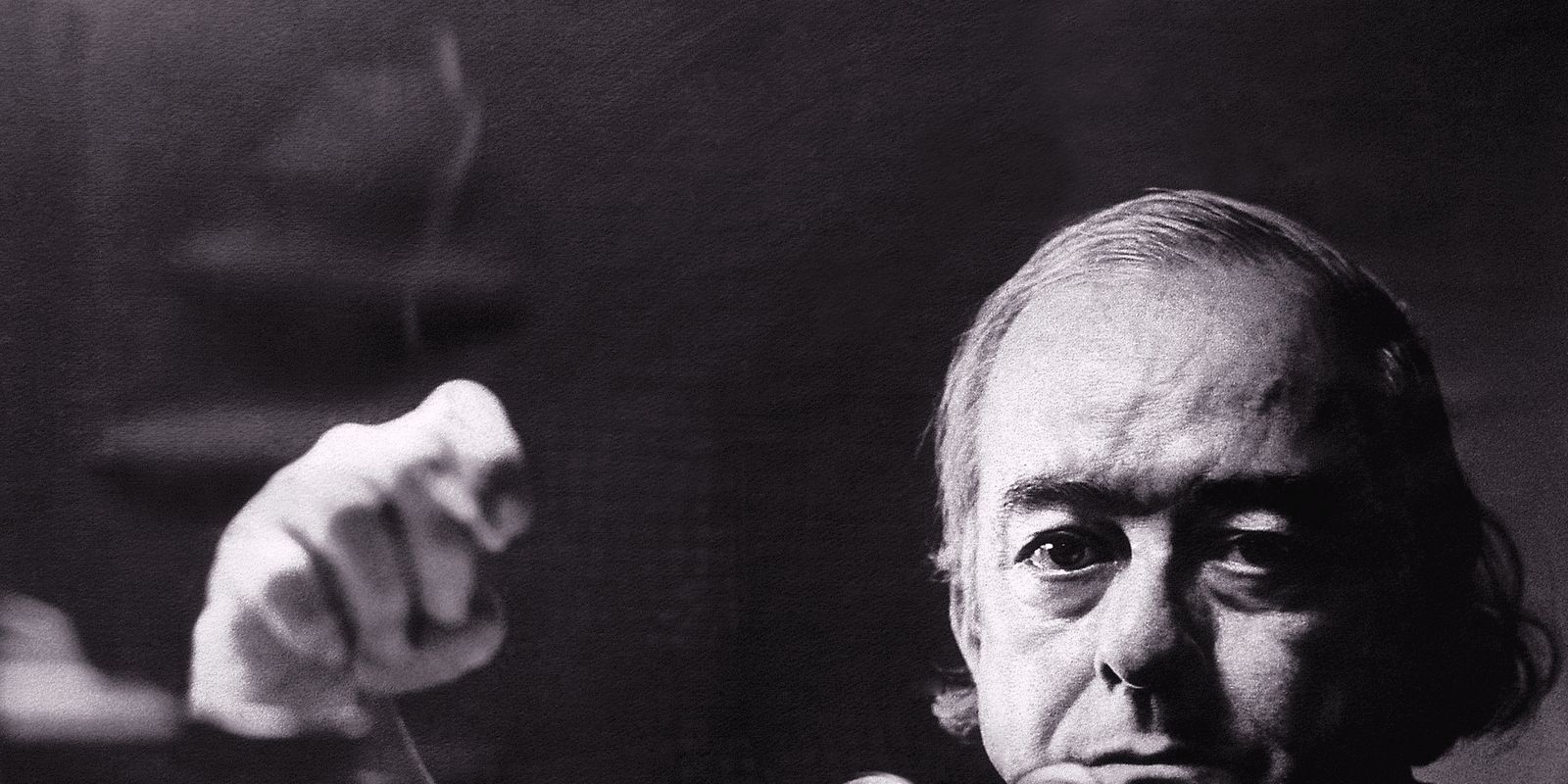
Marcus Vinicius da Cruz de Melo Moraes was born in Rio de Janeiro on October 19, 1913. And it was Rio itself that would later become the permanent setting for his poetry, his songs and his life. From childhood in Gávea to nights in Ipanema, the city would be more than just a landscape: it would be a character, muse, mirror.
This month, the Rio Art Museum (MAR) celebrates the 112th anniversary of the birth of poet, diplomat and composer Vinicius de Moraes with one of most comprehensive exhibitions ever dedicated to his work.
Bringing together more than 300 items — including manuscripts, photographs, videos, books and works of art — the exhibition offers a dive into life and creation one of the central names in Brazilian culture.
Among the highlights is the Portrait of Viniciuspainted by Cândido Portinari, exhibited for the first time in Rio de Janeiroas well as a space dedicated to Noah’s Ark, with illustrations by Elifas Andreato, which have enchanted generations since the 1970s.
At the age of nine, while São Paulo was experiencing the modernist upheaval of the 1922 Art Week, Vinicius was already writing his first verses. As a boy, he formed a musical group with classmates from Colégio Santo Inácio, including the brothers Paulo and Haroldo Tapajós, with whom he would sign his first recorded lyrics, Blonde or Brunette (1932).
A year later, he published his first book of poems, The Path to Distance. His precocious talent caught the attention of names like Manuel Bandeira and Mário de Andrade, who saw in this young poet a new and promising voice.
Even though he graduated in Law, Vinicius followed what really moved him: transforming the human experience into words and music.
Vinicius de Moraes held multiple roles throughout his life. He was a diplomat, journalist, film critic, playwright, lyricist and singer.
He served at Itamaraty between 1946 and 1968, until he was compulsorily retired during the military regime. The loss of the position, however, paved the way for a new artistic phase.
It was in musical partnerships that the poet found his most popular — and, paradoxically, most universal — expression. With Tom Jobim, he shaped Bossa Nova and the solar imaginary of Rio in the 1950s.
With Toquinho, he built one of the most beloved duos in Brazilian music, which resulted in more than a hundred songs and around a thousand performances.
According to the Central Collection and Distribution Office (Ecad), Vinicius composed more than 700 musical works, with 709 compositions and 527 recorded recordings. His work crosses love and childhood, faith and bohemia, lyricism and irony.
Among the most notable books are Form and Exegesis (1935), Poems, Sonnets and Ballads (1946), Book of Sonnets (1957) and Noah’s Ark (1970). In the theater, Orfeu da Conceição (1954) — “a Rio tragedy” — transported the Greek myth to the hill and gave rise to the film Black Orpheuswinner of the Palme d’Or at Cannes (1959).
“When they said that Vinicius was a plural being, they weren’t kidding”, recalls writer Ruy Castro, author of Enough of longingbiography of Bossa Nova.
Biographer José Castello, in Vinicius de Moraes – The Poet of Passion (1994)defines the Sonnet of Fidelity as “one of the most beautiful definitions of love ever produced in the Portuguese language”.
Even among the giants of Brazilian poetry, Vinicius occupies a unique place.
“He has the breath of the romantics, the spirituality of the symbolists, the expertise of the Parnassians and the cynicism of the moderns”, wrote Carlos Drummond de Andrade.
Vinicius de Moraes died on July 9, 1980, aged 66, a victim of pulmonary edema.