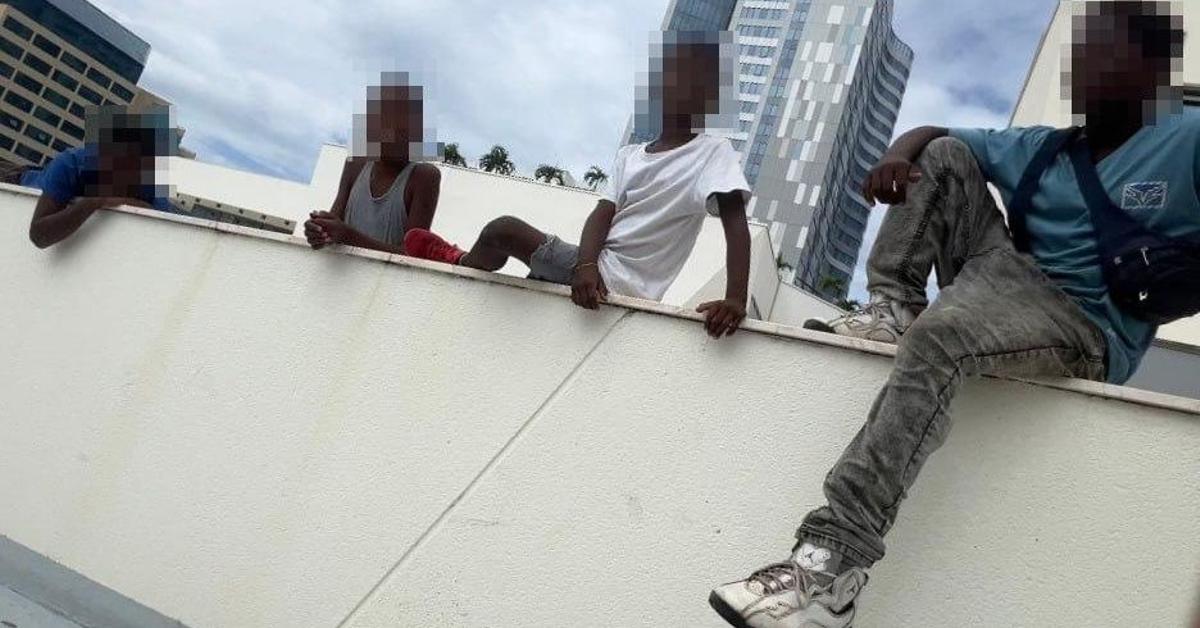
Havana/The recent publication of a judicial note in official Cuban media, with the full names of those accused in a case of corruption and abuse of minors, breaks with the usual pattern of opacity of the authorities. While the country is still commenting on the scandal of the children sleeping on the ground floor of the supermarket on 3rd and 70th, the news reported by Havana Channel and reproduced by Cubadebate seems to respond to the State’s need to control the story about abandoned children, showing an exemplary and carefully chosen case.
The official note details that, on September 29, 2025, the Popular Municipal Court of Arroyo Naranjo held the oral and public trial against Daima Rodríguez Núñez and Carlos Díaz González for crimes of corruption of minors, acts contrary to the comprehensive development of minors and sexual abuse.
In this case, four girls – ten, seven, four and one year old – had been victims of abandonment by their mother and abuse committed by their partner. The court handed down eight years in prison for Rodríguez Núñez and ten for Díaz González, in addition to suspending the mother’s parental rights.
The unusual thing about this news is not only in recounting the judicial process, but in how it was communicated. State media do not usually publish the names of defendants in cases of this type, even less so when they involve minors. Nor do they usually offer such specific details about the victims or the family dynamics. This time, however, the note bears the institutional signature of the Popular Provincial Court of Havana and mentions without reservation the full names of those involved.
The response of the official apparatus has been to publish this court case as proof that “the system does act.”
The temporal coincidence with the scandal about children sleeping under the supermarket in 3rd and 70 dollars does not go unnoticed. That story, published hereby Just a few days ago, it revealed the existence of abandoned minors in the Cuban capital, sleeping among cardboard, asking for food and money, without visible intervention from child protection institutions. The image of those children – without name or official face – became evidence of a State absent in one of its most basic duties: protecting childhood.
Faced with this media blow, the response of the official apparatus has been to publish this court case as proof that “the system does act.” The implicit message: when a case of abandonment and abuse is detected, the authorities respond firmly. But the reality on the streets of the Island contradicts the institutional narrative.
The communication strategy also seeks to transfer responsibility for the tragedy of Cuban childhood to “deviant” or “antisocial” individuals, instead of recognizing a structural problem. The official discourse paints Daima Rodríguez Núñez and Carlos Díaz González as monstrous exceptions within a society where childhood is supposedly protected.
The mass exodus has aggravated the situation of thousands of minors throughout the country, after the emigration of their parents
The emphasis that “procedural guarantees were met” and that the law “most beneficial to the accused” was applied seems less directed at national public opinion – which has little access to real appeal mechanisms or judicial transparency – than at international observers. In other words, it is not only about sanctioning two people, but about projecting an image of institutional legality.
Furthermore, the publication coincides with a context of growing visibility of the phenomenon of abandoned children living in extreme poverty in Cuba, an issue that for decades was swept under the propaganda rug. The mass exodus has aggravated the situation of thousands of minors throughout the country, after the emigration of their parents.
The visibility of the sentence in the official press – eight and ten years in prison – contrasts with the silence about dozens of other cases that never reach trial or remain in administrative darkness. It also differs from the absence of effective public policies to prevent children from ending up living on the streets. State abandonment is not a crime classified in the Cuban Penal Code, but its consequences are visible and daily.